Blog

  • A Farmer’s Ode to the Cabbage

    A Farmer’s Ode to the Cabbage

    IMG_3737
    Prepping dinner in late February.  Note “green onions”, carefully harvested from some storage onions that decided it was time to start sprouting.

    Note:  This post the product of a farmer itching for the snow to melt, of Lisa Richardson’s gentle encouragement to not be ashamed by my lack of posts since last May, and also a plug for a new page on our farm website that talks about VEGETABLES.

    It tries to answer questions like “What’s this?” or “How can I cook that?” or “Can I freeze these?” that I get asked from time to time as a CSA farmer.  I also admit to eating cabbage for breakfast on a regular basis.  Feel free to have a look if you’d like.  http://fourbeatfarm.ca/news/

    IMG_3723.JPG
    A breakfast option for the Pemberton loca-vore.  Includes an average portion of cabbage, pickled garlic scapes from last summer, and some additions from friends at Spray Creek Ranch.

    Now, to ramble…

    Last week, the spare room where I store my personal supply of winter produce had its annual conversion into a spring “grow room” for this year’s seedlings.  Anyone else have ~8000 allium roommates right now?  No?  Oh well, just me then.  We will be co-habitating for a few weeks until the seedling greenhouse gets set-up and temperatures climb a bit.

    Because of this new roommate situation that I have come to believe is normal, I spent a few hours picking through the bins of winter storage vegetables.  Since I haven’t been to the produce section of the grocery store all winter, there wasn’t much left.  I salvaged the best to cram into the fridge and imminent meals, and that about took care of it.  Let me begin by saying that, despite my attention to detail when it comes to processing and storing vegetables in the main farming season (destined for CSA and farmers market shoppers), my winter set-up for personal use is…well…simple.  Or lacking.  Depends how you look at it. Let’s call it “rustic” to be nice.

    It’s a small room in the house.  It’s separated off and slightly insulated by a blanket over the doorway to avoid wasting woodstove heat from the hallway.  The window stays cracked open to let in cold air and keep the bins of veggies comfy.  When we get a cold snap, I make the crack smaller.  When we get a mid-winter thaw, I open the window a bit more.  If I remember.

    This has successfully kept beets, carrots, turnips, watermelon radishes, cabbages, rutabaga, celery root, kohlrabi potatoes and onions in fine shape until at least early March.  There are some sprouty bits.  Occasionally one will turn to mush and cause a small amount of slime to touch those around it.  These now-slimey neighbours get rinsed off and put in soup or fed to the draft horses (onions exempt, they go direct to compost and bypass the horse trough).

    DSC_0529
    Winter storage veggies at their prime for fall CSA members.  Mine do not look like this now.

    By March, things kept in such un-fancy conditions tend to look a little tired.  Rutabagas are starting to sprout wild hairstyles.  Celery roots are looking a bit shrivelled.  But the cabbages?  Oh, the cabbages.  They’re like a breath of fresh air.  Dozens of them have been sitting in a Rubbermaid bin in the house for nearly four months and they are still crunchy, juicy, sweet, and willing to join in to up the freshness factor of just about any meal.

    If you’re looking for ideas about vegetables, recipes, or curious about how this particular farmer likes to eat her veggies year-round, I’d welcome you to check out a resource we are growing to help our friends and CSA members with the age-old question “What is this?”  (holds up a cabbage shaped like a cone, an alien-resembling kohlrabi, or a yellow beet).

    http://fourbeatfarm.ca/news/

    Seriously though, those cabbages.  They’re just what a farmer needs this time of year.

    IMG_3751
    A friend of mine called this a “Winter Glory Bowl”.  Not sure if she was joking or not, but we’ll take it.  Canned salsa from our summer tomatoes, refried beans from some shelling beans we grew and froze, sweet curry zucchini pickles, and roasted rutabaga.  I don’t know if they’ll be serving it at any restaurants anytime soon, but it was a perfect sweet & sour,  hearty & crunchy combination of food from the farm for a post-snowshoe lunch.


  • Mini Open-Faced Chicken Pot Pies

    Mini Open-Faced Chicken Pot Pies

    “I only had one bite but it was amazing.” – Austin, age 9

    These mini pot pies were a hit with my age 9-12 year old kids cooking class I teach each week. I also teach a teen class. The pot pies can be adapted to throw in many different veggies, and they might be a good addition to the lunch box. Keeping them open-faced means they are less stodgy, with more protein and veggie filling to focus on, instead of excessive pastry. Enjoy!

    Mini Open-Faced Chicken Pot Pies: (Yield: 24 muffin cup-sized pies – you may have leftover filling and pastry for a large standard pie plate-sized pot pie also)

    ½ cup to 1 cup pure olive oil

    3 medium yellow potatoes, finely diced

    2 cups parsley, finely chopped

    1 large yellow onion, finely chopped

    3 stalks celery, finely diced

    2 Pemberton carrots, finely diced

    1 large red pepper, finely diced

    3 cups brown mushrooms finely diced (you could try other varieties)

    2 lbs chicken thighs (boneless and skinless) chopped into small pieces about 1 cm in diameter

    2 tbs butter

    2 tbs pure olive oil

    3 cups no-salt chicken broth

    2 tbs spelt flour

    2 tsp pepper

    2 tsp salt


    Pastry:

    1 box Tenderflake lard

    5 cups spelt flour

    1 egg

    1 tbs white vinegar

    2 tsp salt

    Water

    Method:

    Sauté veggies. Heat ½ cup pure olive oil in large pot and sauté all veggies, order not important but all veggies need lots of time to sauté. When well caramelised, add 3 cups of chicken broth and spelt flour.

    In separate pan, sauté chicken pieces in 2 tbs butter and 2 tbs pure olive oil, until cooked through. Add 1 tsp pepper. When cooked thoroughly, add chicken to finished veggie mixture.

    Make pastry:

    Measure flour and salt into large bowl. Add lard. Mix until incorporated. Add one beaten egg in a liquid measuring cup with 1 tbs vinegar and fill the rest to the one-cup mark with water. Mix together. Roll out. Cut into circles about 5 cms wide. Place into muffin cups and press down snugly to form a cup.

    Fill cups with veggie and chicken mix.

    Bake at 400F for 20-25 minutes.

    Cool and eat. Enjoy!!

  • Turning the Page on Winter! — Rootdown Organic Farm

    Turning the Page on Winter! — Rootdown Organic Farm

    The first transplants are up and the greenhouse is quickly filling up with great potential! Although at times, it has felt that winter would never quit, we are now seeing the early signs of spring, the first robins have returned, warmer temperatures and even some nighttime lows forecasted above freezing in the next week! Here […]

    via Turning the Page on Winter! — Rootdown Organic Farm

  • Tips and tricks for starting seeds

    Tips and tricks for starting seeds

    With the promise of spring just around the corner, starting seeds initiates the growing season. Nothing conveys more optimism and hope for the future for a gardener.  Seeds are amazing, wonderful little specks of embryonic life.They are relatively easy to start, but these few guidelines can increase success.

    1- Store seeds properly in a cool dark place. It sounds detrimental but apparently the deep-freeze is best. That’s how the seed banks preserve them.

    2- Read the package for info, or better yet Google it. This will tell you timing, depth and whether they need light (sprinkle on top) or darkness (cover with newspaper). Some seeds have special requirements such as pre-soaking.

    3- Check the date packaged and find out how long they are viable for. If you’re not sure you can pre-germinate them in wet paper towel.

    4- Make sure you have the appropriate-sized container with drainage holes. Generally bigger plants and seeds will need bigger containers.

    5- If you are recycling containers, always wash and disinfect them with diluted bleach or hydrogen peroxide to kill moulds, bacteria, diseases, critters and their eggs.

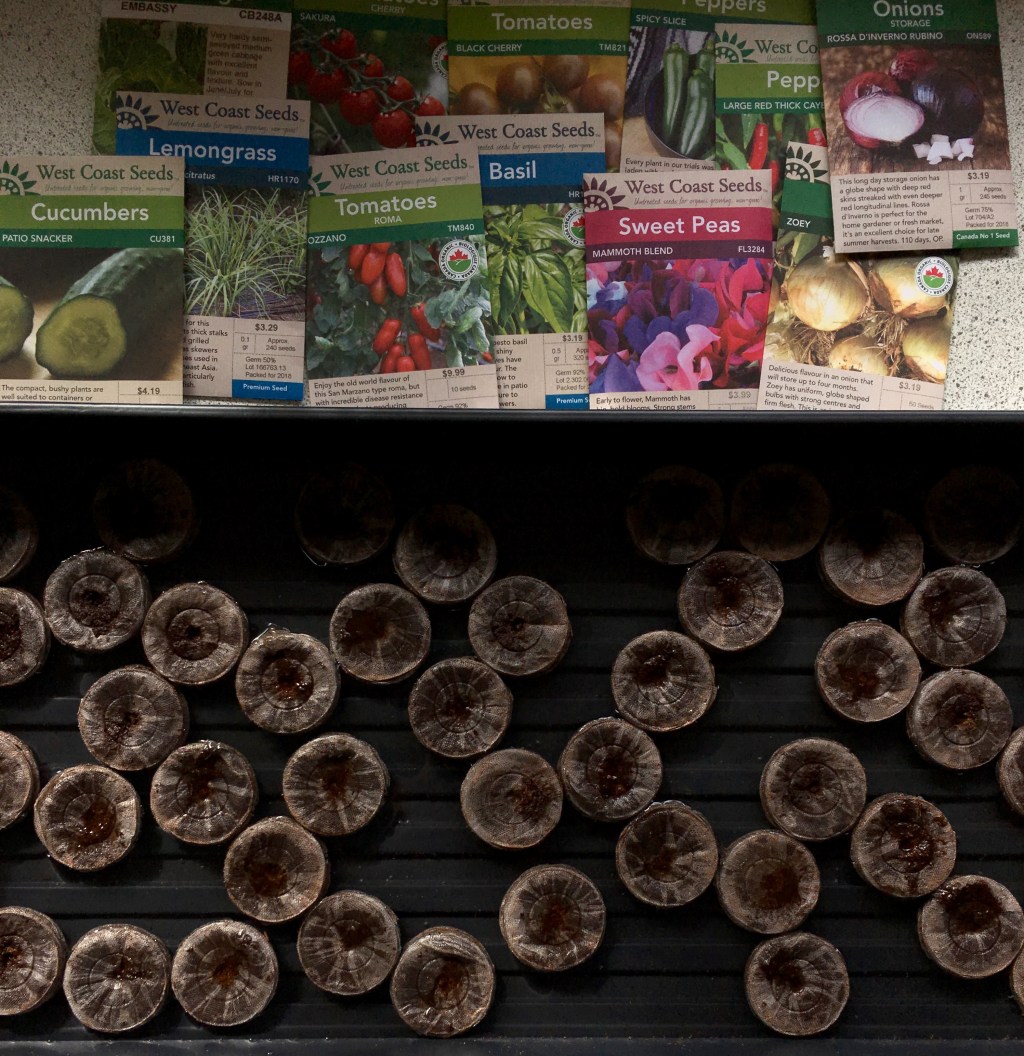
    6- Always use a fine sterilized potting mix (peat moss, perlite and vermiculite) or peat pucks. Never use dirt from outside or recycled mix. All it takes is a few eggs or spores to create an infestation indoors. If you do encounter bugs, isolate immediately, discard or treat with insecticidal soap.

    7- Use a tray without drainage holes to capture excess water and to encourage roots to go down to get it.

    8- Line the bottom of the tray with perlite to provide aeration and somewhere for the roots to thrive should they outgrow their container. This is especially useful when using peat pellets.

    9-Grow more than you will require, there will usually be casualties and you can always trade or gift them. A staggered seeding schedule can increases your odds and provide a varied harvest in the future.

    10- Cover with washed sand to fill in the nooks and crannies. Newly sprouted seeds will easily push through this layer. When the sand dries on the surface they need water. Never overfill the container as the water will run off instead of soaking in.

    11- Label and date them. It’s easy to forget what you started if you have many trays going. Be patient. Some seeds take weeks to sprout but most are 5-7 days.

    12- Place somewhere with bottom heat until germinated. A heat mat or on top of the fridge works great.

    13- Cover with a dome or plastic film to retain humidity and heat.

    14- Use a spray bottle to keep starts misted and let water percolate to the bottom of the tray. A watering can will probably be too much for the sprouts.  The larger the plant and container the more water it will need.Never let the soil dry out, but also don’t over water.

    15- Place in a bright spot but out of direct sunlight. Place a fluorescent light a few inches above. This prevents stretching. A timer on 18hrs will promote more growth and give them a few hours to rest.

    16- The starts will eventually need ventilation, opening a window is good but an oscillating fan on low will help stiffen the stalks and prevent mould and damping off (a condition where the plants rot and fall over at the base from cold, damp soil and stagnant air).

    17- Tall plants may need staking – wooden skewers and tape work great. Pinching the tops can also promote a shorter bushy habit.

    17- Up-pot or transplant as soon as they outgrow their containers.Make sure there is no risk of frost before putting outside.

    18- Acclimatize them by slowly increasing light and decreasing temperature.
    Harden them off before planting by putting them out in the day (weather permitting) a week before slowly increasing duration.


    19- Feed them every second or third watering. Liquid seaweed is great – it has all the micro and macro nutrients they need at first. Start with 1/4 strength and slowly increase dosage. Remember, potting soil has zero nutrients.They can only survive so long on their own stored energy.

    20- Treat them like helpless, fragile babies, after all thats exactly what they are.

    Good luck and happy gardening!

  • Farm Story: The Biodynamic Ice-Break

    Farm Story: The Biodynamic Ice-Break

    Would you mind if we talked about Biodynamic farming?

    LEX158_Biodynamic_FINAL_FIXED-5715

    There. That’s how you keep your readership small. Those of you still with me have fought through eye-glaze and eye-roll and have resisted page turn. You will notice that even I am struggling a bit to stay on topic, and if only you could see the amount of squirming and fidgeting I am doing as I try to find the right way to write about one of the more under-simplified and over-complicated farming methods of our time.

    There is no way around this fact: Biodynamic farming methods involve focussing the power and influence of the entire universe on the health and productivity of the soil, plant, farmer and consumer. The sun, the planets, the galaxies beyond ours: they all matter. The position of the moon matters. It’s complicated. It’s off-putting.

    Screen Shot 2019-03-11 at 3.24.48 PM

    And yet, quite simply, it works whether you understand why or not. In fact, the less time sorting that out, the more time there will be for actual work and that is what really matters.

    We do need to talk about it, though. Biodynamics is an approach to farming that combines science, philosophy and common sense and it should not be avoided. Something like this could easily become the future of farming.

    You should know that it is a popular farming method in Germany, which has the highest concentration of scientific-minded farmers in the world, a fact I completely fabricated but which I believe could be used for emphasis without harm. I have (in actual fact) heard German farmers speak in excruciating scientific detail about soil science and crop management and then mention in a self-consciously off-hand manner that they also use Biodynamic preparations. Pressed further, they become extremely and remarkably vague about the details. I find this fascinating: farmers like that would not waste their time with something that wasn’t working.

    Our farm has been Biodynamic in practice and often certificate since the mid-nineties when my parents attended a conference on the subject and were impressed with the practical experience of the speakers. We have slowly incorporated some methods into our farming practices- and avoided talking about it as we really don’t understand it well enough to explain.

    slow food brochure (C) MC Bourgie 006
    Photo courtesy MC Bourgie

    To be honest, I really have not been paying much attention to the whole thing, content to let my parents and sister tell me what to do. It seemed more important to learn things like welding, mechanics and fertility-building cover-crop management. Although I have certainly not mastered any of that, I have gradually pushed Biodynamics up higher on the “things-to-learn-that-will-probably-be-helpful” list.

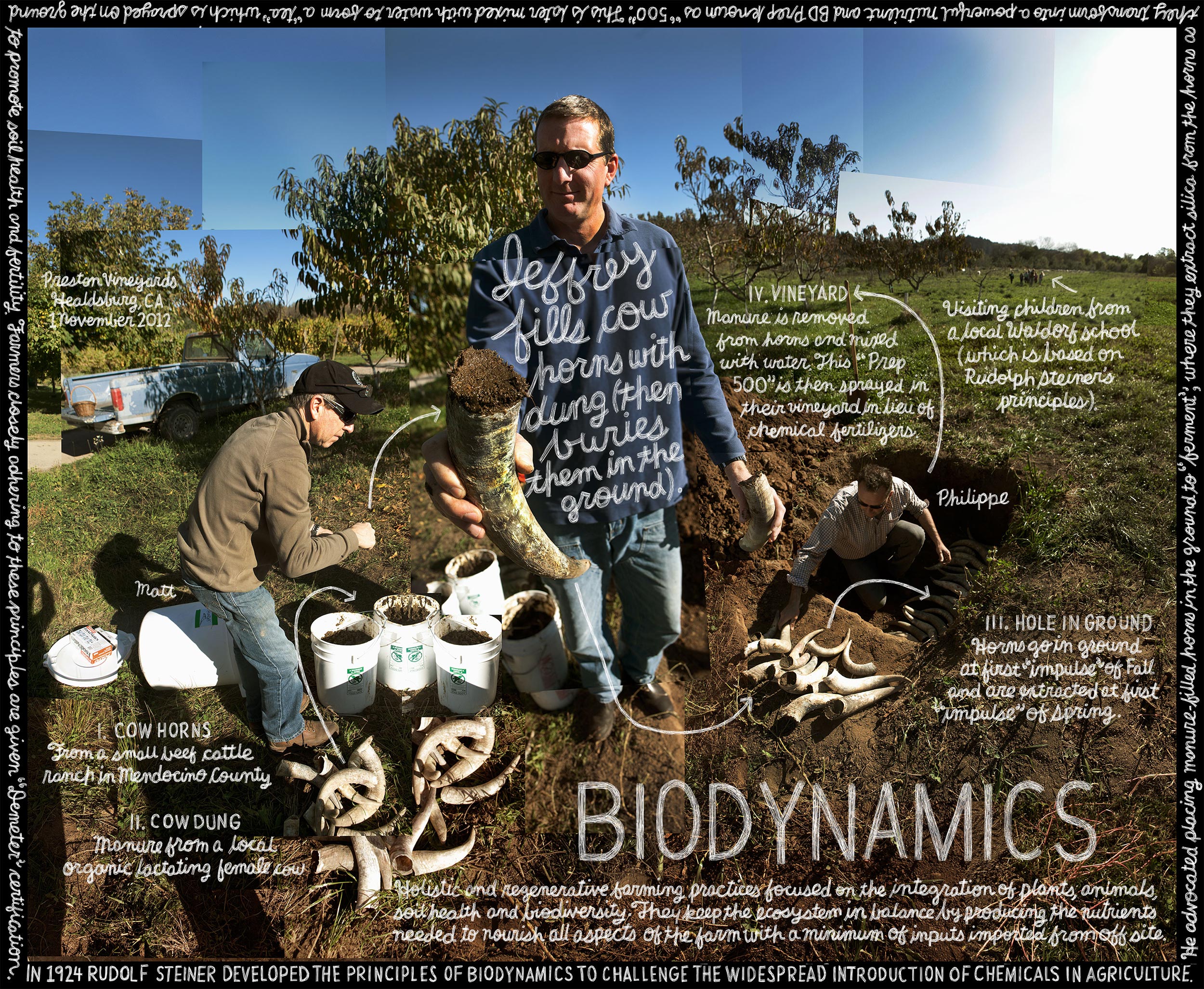
    Some Biodynamic practices have been incorporated thoroughly into our farm routine. Mom’s Biodynamic compost heaps, for example, could probably turn old cars into nice, rich, loamy soil. Tree branches certainly presented no difficulty. I follow her directions to build the heap, and I add the preparations (yarrow, chamomile, nettle, oak bark, dandelion, valerian) and marvel at the result a few months hence. It seems like magic, but really it isn’t.

    My sister annually buries cow horns stuffed with manure and that becomes the preparation we apply to the carrot field every year. It’s very simple: if we do it, we get great carrots. If we don’t, they are normal.

    My mom boils it all down quite nicely: it is a fun way to farm.

    Our Biodynamic practice does not extend far beyond this. It really should, or at least could. It is time to experiment with a few more methods, acquire some knowledge, become conversant. Most of all, I want to write about it in a way that can be easily understood. Is that possible? Can we keep it fun?

    slow food brochure (C) MC Bourgie 008
    Photo: MC Bourgie

    I am starting at a very, very basic level of celestial understanding. This point cannot be over-emphasized. I cannot even tell you for certain what my birth sign of the zodiac is. I just never found it important. In terms of blind faith however, I am on more solid ground. I can “witch” water wells, for example, and fully support the protection of random wild areas on our farm because grandma said there were a lot of fairies living there. I guess the fact that I now believe with absolute certainty that it is quite likely that plant health is influenced not only by the phases and position of the moon but the universe beyond isn’t such a stretch after-all. You commoners will have to struggle to keep up.

    My first self-assigned task has been to read the original lectures, delivered in 1924 at a German agricultural convention by Rudolph Steiner, a philosopher with a practical bent who is also known for starting the Waldorf school system. This I am doing until the snow melts and I don’t have time for reading anymore. Looks like I might be able to make it through the whole works.

    Contained in a book called Agriculture, the lectures were commissioned by a group of farmers who had recently begun to use chemical fertilizers. Although the yields of certain cash crops were reaching unheard-of levels, they noted a significant decline in the health of their soils, and the overall productivity of their farms. Alarmingly, they could no longer produce very much at all without the use of the new chemicals.

    So far, for about 95% of what I have read, I have not a clue what he is talking about. Every once in a while, however, he talks about potatoes, and I certainly know what they are. They are the hook that keeps me focussed. I keep reading, hoping he will mention them again.

    Another point of light is his reasoning for considering the universe in the first place. You can’t describe a person based on the last joint of their little finger, nor describe a farm using one plant in the far corner, but they are strongly related to the whole. If we allow for the possibility that we are the little joint of the little finger of the universe, if becomes obvious that there is a lot going on that matters to us.

    We are part of something much bigger.

    Stay tuned for the next exciting installment. I am going to be building compost heaps and seeding celeriac at a time suggested by the Biodynamic Calendar: the sun will be in Pisces and the moon in Virgo. I don’t know what this means but hopefully the plants can sort it out.

    Anna Helmer farms potatoes in the Pemberton Valley with her family and friends who know she can cook if she must.  

  • Cannabis Cultivation (aka Growing Weed) Then and Now

    Cannabis Cultivation (aka Growing Weed) Then and Now

    scan 31CANADA-POT

    With legalization finally here, and the stigma of using cannabis diminishing, I’m not incriminating myself to confess I’ve been growing my own for decades. Even though this ancient herbal medicine has been around in most cultures for millennia, the evolution of what is now viewed as a huge agribusiness is very recent. This is a brief history as I perceive it. I’ve had the privilege to witness this progression from early on.

    I grew my first plant as a teenager in our backyard. My parents were liberal-minded and my mother had a green thumb and offered advice. It was my first experiment in growing anything. Keeping the plant alive was straightforward with a little direction from my mom. The end result on the other hand was poor at best. Acquiring seeds was easy, there were literally hundreds of them in every bag. Unfortunately it was impossible to duplicate the conditions of the countries the seed came from. It was a lose-lose and everyone who attempted grew what was known simply then as homegrown – Yuk.

    50690278_2254837127880400_6871468879235776512_n
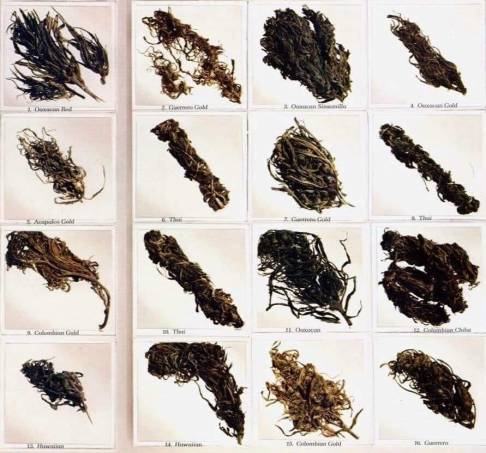
    It’s hard to believe now, but pre-mid 80’s there was very little documented information for anyone that had any experience in cultivating this non-native plant in Canada. The only thing available was imported brown crap. Any pothead over 45 will confirm it was weak, full of twigs and seeds, and tasted like mouldy hay.

    Was it really that bad? In retrospect yes, but no one knew the difference. Technically the plant wasn’t as bad as the growers and handlers were. You see, those farmers in those undeveloped countries knew about as much as a Canadian teenager in the suburbs when it came to the horticultural techniques of breeding, growing, manicuring and curing pot. The only advantage was they usually had a longer growing season. It was still just a hardy cash crop, growing in a field by a peasant farmer, baled like hay and shipped on a boat. It tasted mouldy because it usually was.

    It was the Dutch who revolutionized cannabis cultivation. Being, in my opinion, the best botanists, horticulturalists, gardeners and innovators in the world, they researched, experimented and took it to the next level. They gave it the respect it deserved. They literally domesticated a wild plant that grew in many temperate and sub-tropical parts of the world. The first thing they did is realize that the female plant flowers have the most active ingredients and flavour. They also found if it was unfertilized and therefore seedless it was even better. Except for breeding purposes, they got rid of, or isolated the useless males. Secondly they figured out that light duration played a significant role. They noticed that with 18 hours of light the plants grew vigorously – under 12 they slowed down and went into flower. 2 short months later the fruiting buds were ripe. They also quickly figured out that if they grow indoors under lights they could force a plant into doing what they wanted it to do, in a controlled environment.

    The Netherlands’ climate, similar to western Canada’s was not really suited for the available strains of this plant outdoors. They also discovered that different strains reacted differently to these cycles depending on their origins. It is believed that Cannabis originated from Central Asia – Indica, adapted to cooler northern climate and seasonal light cycles of northern India; Sativa on the other hand, from the drier middle east had less fluctuating cycles being closer to the equator. A common misconception is that Cannabis likes the tropics. Wrong. The light cycles there are too constant, the humidity too high and the pests unmanageable.

    There is a third unrecognized strain – ruderalis, that has adapted and hardy in areas not suitable for either of the former ones. It is day neutral and is unaffected by light cycles. This is what is better known as hemp and had already naturalized North America as a bonafide weed. Farmers were encouraged to grow it to supply material such as canvas and rope for the war efforts. After prohibition it became invasive and wild.

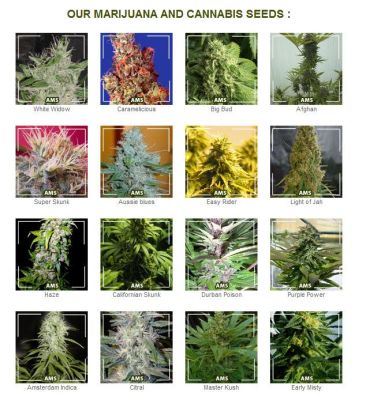
    With this new found botanical knowledge, the Dutch travelled the world collecting seeds from places that had been growing this herb for centuries. These pioneer growers could now modify their indoor growing conditions and cross breed all 3 species and dozens of varieties into hundreds (and now maybe thousands) of hybrids. They bred mostly for potency (THC) and quickly doubled and even tripled the strength. Flavours and taste that come through as turpines were modified to create spicy , fruity or ammonia undertones. Clones were made of the best ones and given catchy names such as Skunk #1 for its smell, Juicy Fruit for its taste, Northern Lights for its hardiness or Durban Poison reflecting its origins. Coffee shops openly marketed these new potent strains to the world’s tourists. The open-minded and business-savvy Dutch, proud of their horticultural talents turned a blind eye to the use of this still illegal, recreational drug. Seed companies began distributing, a few how-to books were published and hydroponic equipment became available. The domestic cannabis industry was born.

    56fcbc0746b8263ac87a269c5511ad1f
    It didn’t take long for these seeds and these new techniques to make their way to North America in the luggage of hippies and stoners. The hip areas of Northern California and Oregon were also suitable for some of these strains to perform well outdoors. With a little extra breeding and mixing in a little ruderalis these varieties acclimatized to more northern areas. The Cannabis wave reached BC in no time. There they also combined the horticultural knowledge of the Dutch with cheap hydro, and infused some California strains to perfect the legendary BC bud both indoors and out. Vangroovy became Vansterdam.

    The medical marijuana movement, and the research debunking harmful effects and supporting its usefulness in treating many diseases, was what truly paved the way for legalization.

    Once the Supreme Court granted legal access to this medicine, the floodgates burst wide open. Anyone with almost any ailment could now get a doctors prescription. In city centres, dispensaries became more abundant than coffee shops. Legalization became inevitable. The government wanted in on that tax revenue. Conservative white collars, generally opposed to the subculture, quickly became the big investors. The Mom and Pop operations are being eliminated. Sound familiar?

    You might ask what this hidden activity has to do with local farm culture?

    Plenty!

    Pemberton with its favourable growing conditions has long been a hot spot for outdoor growing. Many legal medical licences and even more illegal grow ops have existed for years. The infusion into our local economy has been immeasurable yet substantial. With warehouse factory producers in Squamish, Whistler and two huge ones coming on line in Pemberton, Cannabis is set to become sea to sky’s largest agricultural product. A recent start up , Whistler Medical Marijuana just sold for $175 million!

    While in theory, legalization, in my opinion, is a step in the right direction, I question the corporate factory farming business model. The very people that established this economy are being replaced by shareholders, and workers in lab coats. It’s over-priced, resource-intensive, often heavy in chemicals, unsustainable and treated as a commodity. If you want to support this business model, that’s your choice. I’m surprised that Whistler /Pemberton has not embraced retail recreational Marijuana yet. I won’t be a customer just like I avoid fast food, but it needs to be readily available for any adult just like alcohol. There also needs to be a local, organic, homegrown paradigm shift to counteract this generic approach. Why support an inferior product when most of the profits leave the community? This is exactly what happened to the food industry. The shift to local and organic took time and I’ve seen that progression as well. There is hope.

    In a way I will miss the adventure of guerrilla-growing my secret patch of personal in the bush. Luckily each household will now be able to legally grow 4 plants. Hopefully a new homegrown renaissance will occur. We now have the knowledge and the strains to be self sufficient. If you can grow tomatoes on your deck, you should be able to grow marijuana. After all it’s just a weed. If you would like any info on starting your own legal plants email me at mikoiko66@gmail.com. I know a thing or two and can set you up with the right strains.

  • Just a couple of cupcakes!

    Just a couple of cupcakes!

    Monday 25th February was National Cupcake Day. Well, it was for SPCAs and Humane Societies across Canada, who encourage the baking and selling of cupcakes as a way to raise money.

    As Qanik was fortunate to have one of his images chosen to be part of the 2019 campaign it seemed only fair that I do my bit too.

    So, having chosen the Victoria Humane Society as my nearest participating society, I had to decide on what cupcakes I was going to make and then get people, mostly work colleagues, to purchase them!

    I decided on giving potential buyers the option of three different flavours:

    The orders started making their way to me and, on Sunday, I spent most of the day baking and icing 89 cupcakes! The flavour that received the most requests was the Dark Chocolate with PB Frosting so here it is for you to make and try for yourself!

    Ingredients

    For the Cupcakes

    •  8 tablespoons unsalted butter, cut into 4 pieces
    •  2 ounces bittersweet chocolate (finely chopped)
    •  ½ cup Dutch-processed cocoa powder
    •  ¾ cup all-purpose flour
    •  ½ teaspoon baking soda
    •  ¾ teaspoon baking powder
    •  2 eggs
    •  ¾ cup granulated sugar
    •  1 teaspoon vanilla extract
    •  ½ teaspoon table salt
    •  ½ cup sour cream

    For the Peanut Butter Frosting

    •  1 cup icing sugar
    •  1 cup creamy peanut butter
    •  5 tablespoons unsalted butter (at room temperature)
    •  ¾ teaspoon vanilla extract
    •  ¼ teaspoon kosher salt
    •  cup heavy cream

    Directions

    1. Make the Cupcakes: Adjust oven rack to lower-middle position and pre-heat to 350˚ F. (If you are using a non-stick muffin pan, heat the oven to 325˚ F.) Line standard-size muffin pan with baking cup liners.
    2. Combine butter, chocolate, and cocoa in a medium heatproof bowl. Set the bowl over a saucepan containing barely simmering water; heat the mixture until the butter and chocolate are melted and whisk until smooth and combined. (Alternately, you can microwave the mixture at 50% power, stirring every 30 seconds until completely melted.) Set aside to cool until just warm to the touch.
    3. In a small bowl, whisk together the flour, baking soda and baking powder.
    4. In a medium bowl, whisk the eggs then add the sugar, vanilla and salt and whisk until fully incorporated. Add cooled chocolate mixture and whisk until combined. Sift one-third of the flour mixture over the chocolate mixture and whisk until combined; whisk in the sour cream until combined, then sift remaining flour mixture over and whisk until batter is fully mixed and thick.
    5. Divide the batter evenly among the muffin pan cups. Bake until a skewer inserted into centre of the cupcakes comes out clean, approx. 18 to 20 minutes.
    6. Cool cupcakes in the muffin pan on a wire rack for 15 minutes. Remove the cupcakes and set on wire rack to cool to room temperature before icing, about 30 minutes.

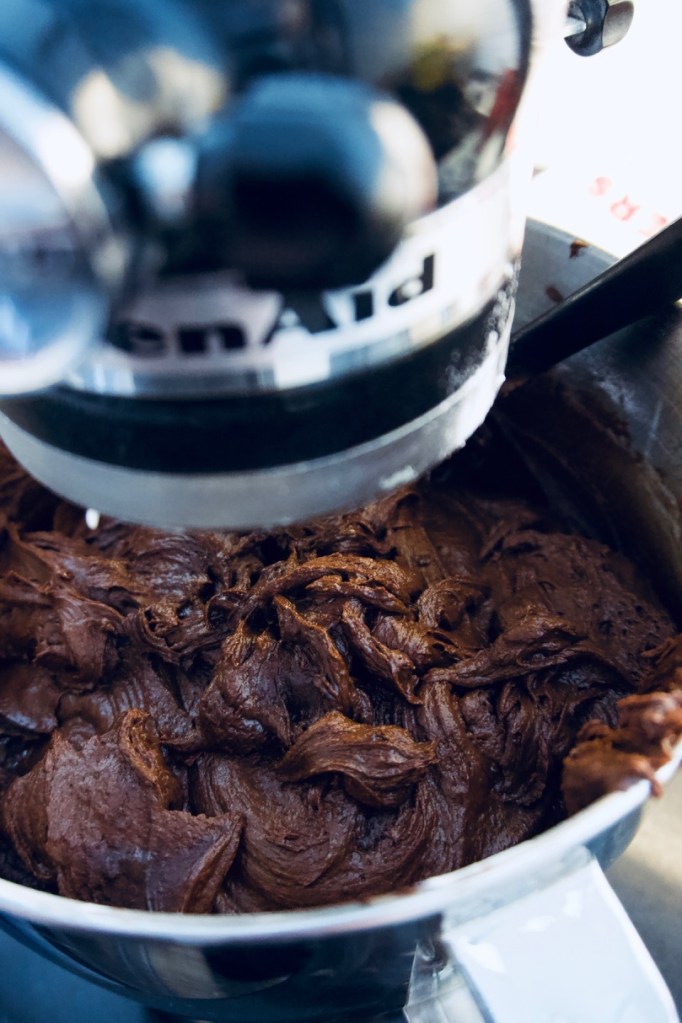
    1. Make the Peanut Butter Frosting: Place the icing sugar, peanut butter, butter, vanilla and salt in the bowl of an electric mixer fitted with a paddle attachment. Mix on medium-low speed until creamy, scraping down the bowl with a rubber spatula as you work. Add the cream and beat on high-speed until the mixture is light and smooth.
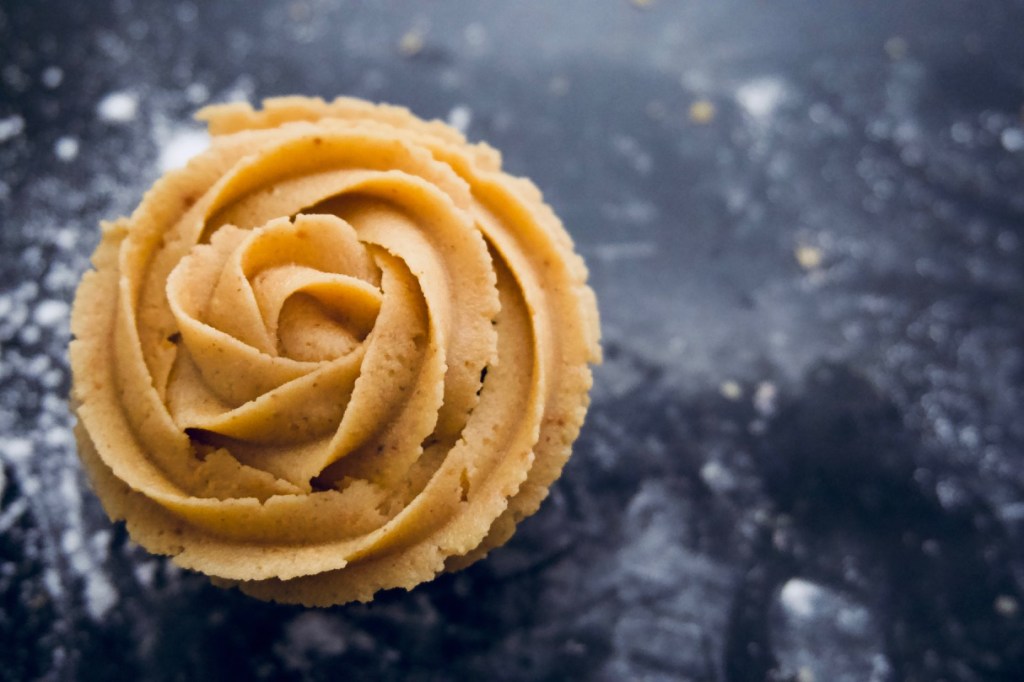
    2. Assemble the Cupcakes: Frost the cupcakes with an offset spatula, or with a decorating tip (I used a Wilton 1M tip and a rose pattern). Store at room temperature in an airtight container for up to 4 days.

    Want to know how to frost in a rose pattern? Check out this quick video tutorial.

    My cupcakes were a success and I managed to raise over $300.00 for my chosen charity. Next up are muffins and dog treats for Treat Week for the Sea to Sky BC SPCA!

  • Happy Anniversary, to me.

    Happy Anniversary, to me.

    It was a year ago to the day while consuming a couple tasty Steam Works IPAs in a Richmond Irish Pub en route to a family vacation in Mexico that I took the plunge and joined the Traced Elements family. Maybe it was liquid courage that egged me on because at the time I was scared to dive into a world I knew nothing about: writing. The only constant I had to offer was my deep love for gardening. As luck would have it I learned I also loved to write – or maybe this whole endeavor came into my life when I needed a new outlet more then I realized at the time.

    Regardless: it’s one of my favourite decisions to date.

    The winter’s sun, as of late, has been flooding my living space with a warming heat reminiscent of sandy beaches and margaritas while the arctic air swirls around outside. My cheeks are constantly blushed in colour having been kissed by the cold. Overall, I welcome this false warmth; it’s a perfect excuse to devour a bowl of spicy miso ramen, everyday.

    As the days get longer I look forward to my garden springing to life, even if they are currently blanketed in more snow then I can recall in the valley in years, my thoughts are hopeful, green and full of blooms. Many days I get lost and overwhelmed by the potential of things to grow as I browse numerous websites. Basically, my urge to propagate as many cool things as possible usually wins. You already know if you’ve read my other blogs that I’m a firm believer in the, “there is no harm in trying” experimental method.

    Seeds; they fuel everything. (A little bit of love doesn’t hurt either.)

    Plant anything and something good is bound to come from it. Sometimes there is growth and sometimes there are failures; either way you’ll learn something.

    I have been carrying the following quote with me for years but it is only now that I finally feel like I am acting on it (after all spring ushers in rebirth). So, in the words of Byron Pulsifer I leave you with this,

    “Passion creates the desire for more and action fuelled by passion creates a future.”

    …get ready to see some really cool things from me.

    #summerofmeesh


  • A Six O’Clock Solution for Deer Meat…You’re Welcome.

    A Six O’Clock Solution for Deer Meat…You’re Welcome.

    After many years of trying to incorporate deer meat into quick last-minute dinner dishes – and failing – I am happy to report that I have a solution to those last-minute woes. The answer is a jar of Classico pasta sauce – the Italian sausage variety! By chance I tried it one night and it actually complements deer meat.

    I have turbo-charged it with a whole cauliflower and some parsley for flavour. But this is an easy last-minute dinner for anyone with deer meat in the freezer. Unfortunately I’ve had to throw out many deer meat experiments over the years. So here’s hoping you enjoy this one, as deer meat has a particular flavour that does NOT mesh well with any old jarred sauce!

    Quick & Delicious Pasta Sauce for Deer Meat:

    3 tbs pure olive oil

    1 large yellow onion, small dice

    1 cup chopped parsley

    1 whole medium cauliflower, small dice

    1 tsp pepper

    Salt to taste

    1 lb ground deer meat

    1 jar Classico pasta sauce (Italian sausage, peppers and onions variety)

    Method:

    Sauté onion parsley and cauliflower in olive oil over medium low heat until caramelised. Add pepper.

    In separate fry pan, brown deer meat.

    Add meat to cauliflower mixture.

    Add sauce.

    Simmer 5-10 minutes.

    Serve over a whole grain pasta such as spaghetti or penne. Enjoy!

  • The Miracle of Seeds

    The Miracle of Seeds

    Now that I’ve described how plants have sex (see last post on Plant Porn), it wouldn’t be a sex education lesson without also stating the consequences of such activity. Yes, plants get pregnant as well! Seeds are described technically as “the fertilized ovule containing the plant embryo.” If these terms don’t sound familiar you weren’t listening back in middle school health class.

    When these seeds sprout they are birthing new plant babies — seedlings. How adorable! I find this miraculous, topped only by witnessing the birth of my own children. No wonder plants flowering, fruiting and going to seed are as beautiful as a glowing pregnant woman and gardeners are like doting proud parents. Plant starts are often helpless dependents. They need us as much as we need them to survive. Co-dependence, constant nurturing, vigilance and the trials and tribulations of raising offspring – it’s very similar to parenting, where being self-centred, lazy or unavailable caregivers results in more complications.

    There are two main types of seeds – monocots and dicots. Without getting into too much detail, they predetermine traits such as types of flowers, stems and leaves. Hybrids “occur by crossing two genetically different yet compatible plants.” Their offspring will contain genetic traits from both their parents and recessive genes from their ancestors, creating glaring differences. Just like a litter of mutts. Its’ all in the DNA. Just as every child is an individual, so is each plant. Humans, however, have been able to purposely cross-breed many plants until the desired traits are achieved. The hybrids can then be stabilized by crossing it with itself many more times or by propagating clones. The idea is to produce better and better strains over time, creating higher yielding, more attractive, disease-resistant and drought-tolerant plants. Heterosis is “the tendency of the progeny to outperform both parents.” I see this in my own children, in that my son is more athletic and my daughter is more academic than both myself and their mother. Perhaps their great-great grandparents were similar, but most likely they are evolving by learning advanced concepts and doing extreme sports that didn’t exist back then. Environments, botanical science and technology are also constantly changing for plants. Humans play a huge role.

    We have also the technology to genetically modify almost all species further by inserting the DNA of sexually incompatible species as well as animals, chemicals and diseases. There is great debate about the unknown ramifications of this technology. Although I love horticulture and botany, I’m not a fan of GMOs. I feel that whenever we get too involved with screwing with Mother Nature, she bites back to put us in our place. It’s still taboo to alter or clone human DNA, but for some reason it’s common in the plant sciences. Good luck with that Monsanto.

    Seeds themselves are a great protein-rich food source for birds and animals, including humans. Such creatures provide many dispersal methods from spilling, burying and forgetting them, digesting and excreting or purposefully sowing them, as we do. Seeds have evolved to drift or fly in the wind or stick to the fur of animals. It’s all about spreading those genes as far as possible and finding other suitable environments. Natural selection dictates that the strongest, most resilient and adaptable species thrive. We get to witness evolution in action on a scale we can observe and actually participate in. Creating and witnessing the miracle of life!

    Watching a plant sprout, flourish, mature, reproduce and die is a metaphor for all living creatures. There is nothing but hope encapsulated in that tiny speck of life. Seeds patiently wait for the optimum conditions before they sprout. Each seed species intuitively knows the perfect temperature, light cycle, humidity, time and other environmental factors to germinate. Some need fire, floods or being digested by animals. After all they are designed to re-establish themselves even after natural disasters. They offer the advantage for a species to store ancient memory and to preserve its own survival. There are many seed banks that are providing future security by storing frozen seeds to hopefully prevent extintions of species. You never know – some exotic plant may help save the world by providing a future cure to a disease, become a new nutritious food source, natural resource or environmental solution.

    To think that a tiny seed could eventually become a majestic oak, a delicate flower, a delicious fruit, or a new medicine at a future time is nothing short of a miracle, to me. It gives me great pleasure to be involved in fulfilling my purpose in life. I’m a breeder and nurturer and there’s something about babies that tugs at my heartstrings.