Category: Uncategorized

  • Nootka Rose Jelly

    Nootka Rose Jelly

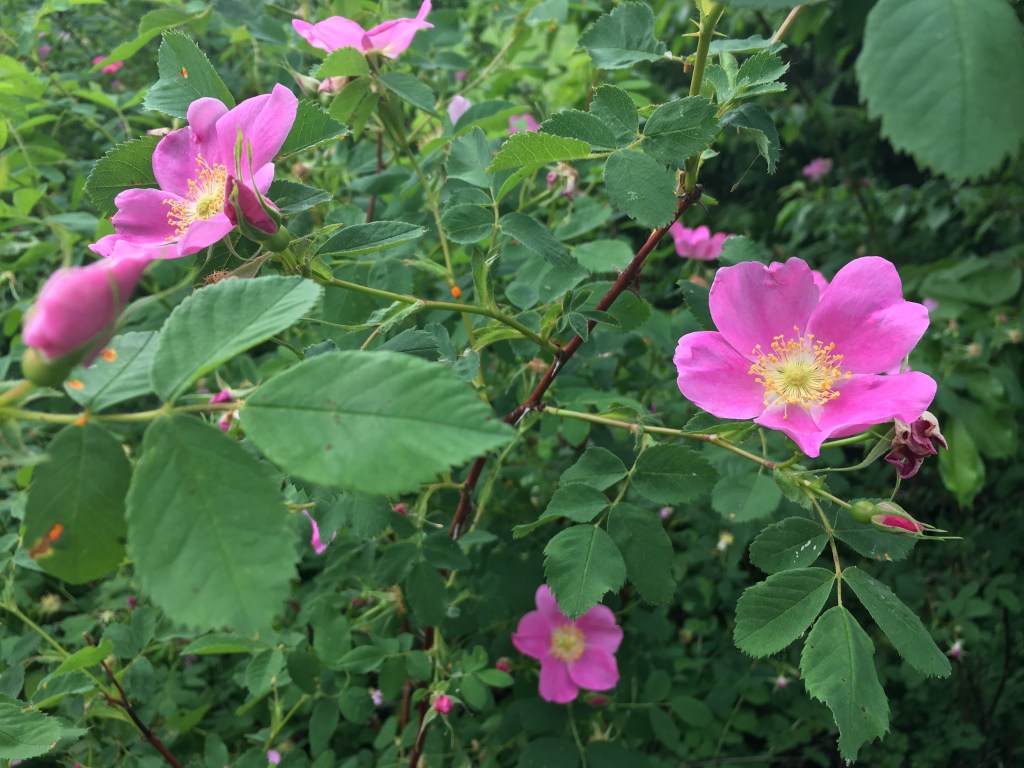
    For me the art of slowing down and smelling the roses has turned into taking advantage of the surplus of this native shrub behind my house, plucking their petals and creating something delicious. As it is in my garden where I rarely follow my planting plans the same holds true to my style of cooking; recipes are but a base. I’ll admit my first batch, from a recipe I followed, did not set. This led me to taking matters into my own hands, going with the flow and trusting my strong sense of jamming. So, queue up some Bob Marley as I guide you to making your very own wild rose jelly.

    INGREDIENTS

    ≈4 cups wild rose petals, lightly packed

    4½ cups boiling water

    ¼ cup fresh lemon juice

    5½ cups sugar

    2 pkgs liquid pectin

    Other: cheesecloth, jars, lids, tops, a big pot & lots of love

    Start by foraging for rose petals: try to pick in areas away from the roadside and pick higher then a dog may pee! Give them a small bath in the sink to get rid of the majority of bigger bugs and pick out any of the greens. Don’t stress too much about getting everything, as you’ll end up straining the lot later. Place them in a nonreactive bowl, cover with the boiling water and allow steep for 1-2hrs. The petals will lose their colour and look quite dull but patience is key here.


    While your petals are steeping prepare your jelly vessels. This recipe makes approximately 8-9 cups of liquid gold; I use a mishmash of 125ml and 250ml jars and usually prepare a few more then what’s needed, just incase. Wash every thing then put the lids and tops in a pot submerged in water and place on the stove over medium-high heat. Jars can go on a cookie sheet in the oven at 250°F. You want these to sit in their respective mediums for at least an hour.

    When you’re satisfied with how long the petals have steeped or you can’t wait any longer get ready for some magic. Add the lemon juice and watch the water go from blah to vibrant pink! It’s science.


    Pour the petals and water through a strainer lined with cheesecloth straight into a big pot squeezing all the liquid out that you can. You want 4 cups of rose water; if you’re a bit short just add a bit of filtered water. I found this recipe made the right amount of water so you should be fine but feel free to measure if you’re not sure. I like to wing things. Add the sugar and bring up to a boil, stirring to ensure all the sugar incorporates into the rose water. Once at a  hard boil keep it here for 2 minutes skimming any foam off the top. After the time has elapsed remove from the heat, add the pectin and stir to combine for 5-6 minutes – no less – more is okay but no less.

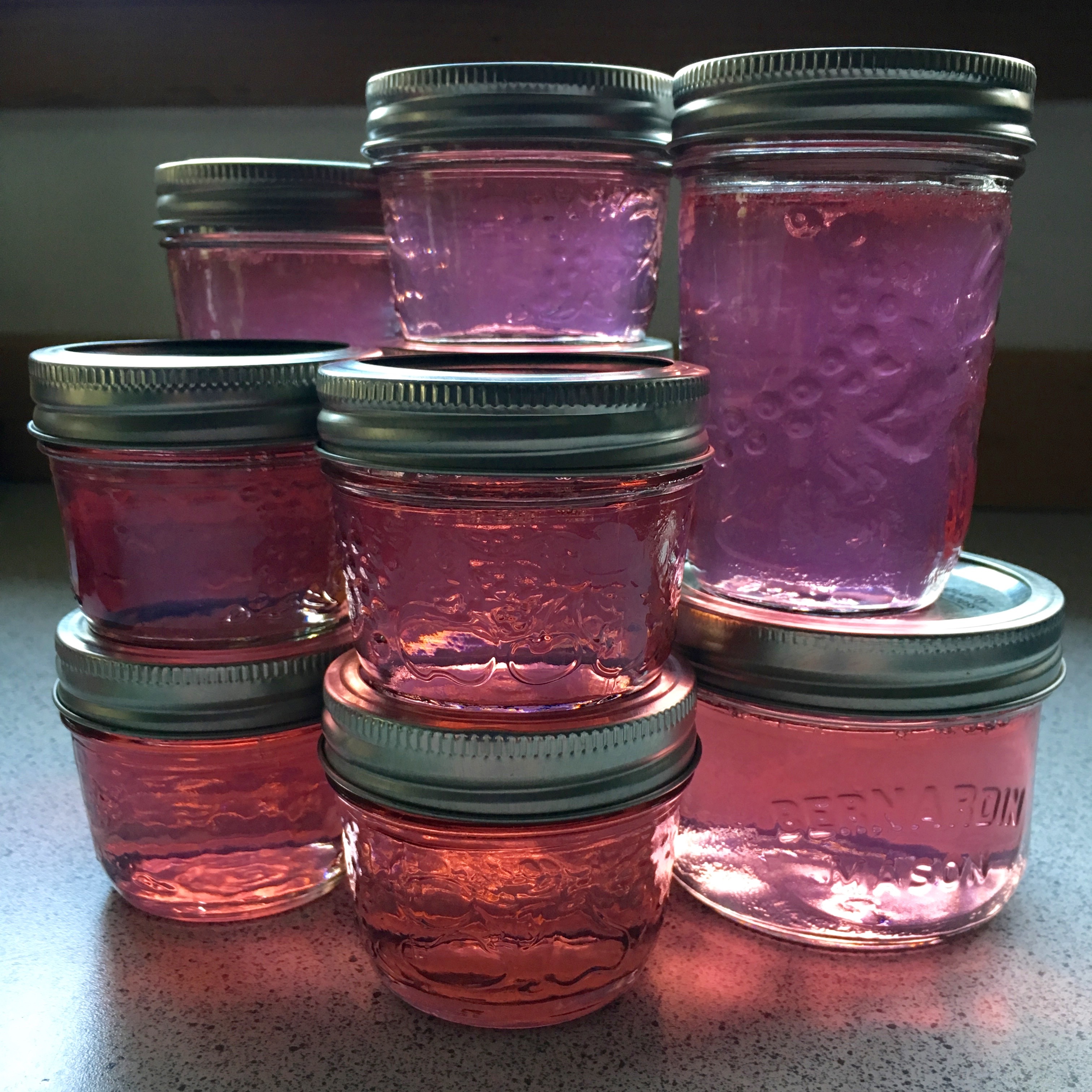
    Now you’re ready to put your creation into jars and await the sweet satisfying sound of popping lids. Some recipes call for a water bath to finish the canning process but I’ve never done that. I just go with what my mom taught me, which is what’s outlined here, and it’s never failed me just like her.
    IMG_4022

    This simple tasty treat can be enjoyed may ways but my favourite thus far is on coconut ice cream or straight out of the jar… Happy jammin’!

  • Where There’s Smoke…

    Where There’s Smoke…

    Summer is almost officially here, although it’s basically felt like summer this past month with the weather we’ve been having. The sun is out, the flowers are blooming, and the rain clouds have stayed away for the most part. While this is incredibly enjoyable, it makes one remember what else comes with sunny, dry weather.

    Fire.

    According to the BC Wildfire Service, since April 1st of this year there have already been 242 fires, with an area of over 37,000 hectares affected. And that number is only going to grow. Just last week the historic Ladner Creek trestle bridge went up in flames from a simple, discarded cigarette butt. I will never forget the wildfires from three years ago that caused smoke to hang like a pall over our beloved valley, mixing with the 40°C weather to create an uncomfortable miasma. I imagine that most of you, like me, feel some trepidation when hot weather lingers, and look to the horizon with dread for signs of smoke.

    But thankfully, unlike the old adage, smoke doesn’t necessarily mean fire. If you are heading up Reid road to Mosquito Lake this summer and happen to smell smoke, don’t panic. It’s probably coming from our house, and it’s not a fire.

    My boyfriend’s birthday was this past week, and I gave him a new digital electric smoker. He’s over the moon. Visions of smoking everything from bacon, salmon, trout, and even mac n’ cheese are dancing through our heads. Our first creation was this beauty, smoked pork shoulder, and it couldn’t have been easier. A simple spice rub, a five hour stint in the smoker with some apple and hickory chips, and the occasional spritz with an apple cider vinegar and apple juice mix, and voilà. And yes, it tastes just as good as it looks.

    This summer, I sincerely hope the only smoke I have to reckon with is the kind that produces delicious results like this.

    pork

  • How Farming Chose me

    How Farming Chose me

    The awkward question often arises when meeting people: “What do you do?”

    While in any given day I could list at least a half a dozen of the different things I have accomplished, I’m always hesitant to call myself a farmer. How did this happen to me? I certainly didn’t foresee this while in University studying Landscape Architecture. Problem is I couldn’t sit still at a desk. I needed to be in the dirt with a shovel in my hand rather than a pencil.

    I do come by it honestly having spent my entire adult life landscape gardening. It’s in my blood. I started mowing lawns and gardening at 15. My company was called “Shovels and Rakes.” Researching 400 years of homesteading history in Canada, almost all my ancestors’ occupations are listed as “cultivator”. I’m programmed to grow and nurture plants and be a steward of my little piece of this earth – my attempt at some form of authentic sustainability. It’s my happy place, my spirituality.

    But farmer as occupation is just not glamorous (except at the Farmers Market). As a business model, it rates as one of the lowest paying, highest labour and riskiest endeavours. Unless you are part of the mega-agribusiness, (no thank you), the odds are against you and the competition is fierce. There is no salary, no pension, no paid holidays, no insurance, no benefits or any security whatsoever. You are at the mercy of nature’s elements.

    So why? I know I could use my skills elsewhere, make good money set myself up. The reality is that I have to accept that this life chose me. I am set up! I breathe clean air , access the best water, have a family that is awesome and involved. We eat the freshest food, and spend our days just making a living in the purest sense.  It is not a job, it’s a lifestyle. Oh, and by the way in the winter months, I’m a snowcat groomer. 27 years as a snow farmer as well.


  • Bees?   Why not!

    Bees? Why not!

    Several years ago my Aunt had honey bees. My sister Lia, @pembeehives, was cuckoo about those bees. I thought they were pretty cool until I started walking up to the hive and had a massive panic attack. I was certain they could feel my fear and that the whole hive would ascend on me and sting me to death. Death by bees, no thanks!! Since then I have had ZERO interest in raising bees. My sister, on the other hand, has only grown more fond, more bee crazy.

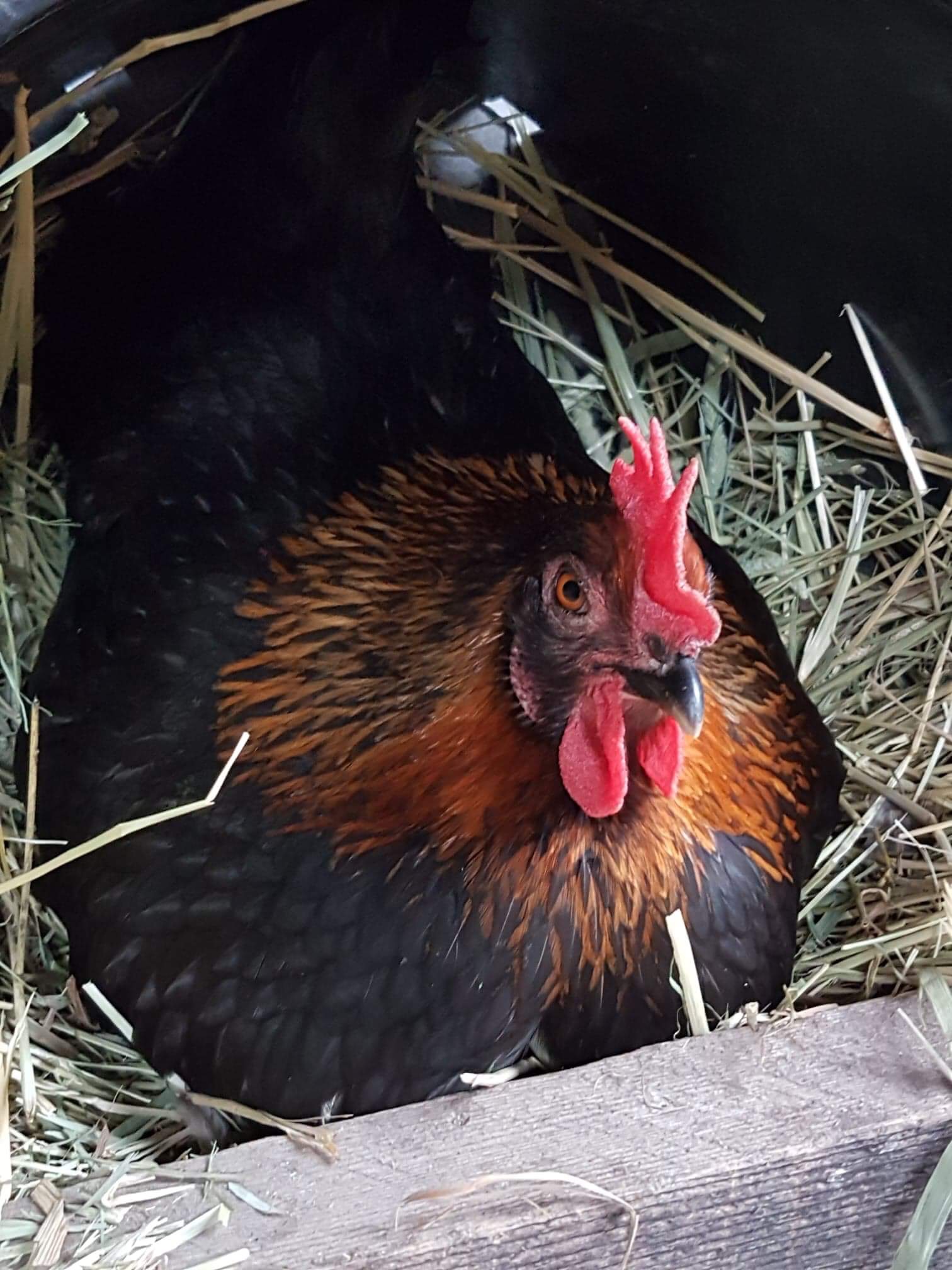
    Last fall, my kids and I moved back into my childhood home. A little house on 2 acres. A small green patch of freedom to plant, grow, raise, and love. I brought my chickens, added a few more to the flock, and then a few more and maybe a few more after that! I also got 2 more horses so that my boy Banjo wouldn’t be lonely.

    B1E27E28-83AD-42F7-93F9-FC24B9F49373

    Horses and chickens, dogs, cats, rats and kids. I was set, and I am busy!!  Then I had a thought. My sister loves bees, maybe she would like to get some bees and they could have a little spot here and she could be the crazy bee lady and I will be the crazy chicken lady and everything would be fantastic!

    Bees? Why not!!

    I forgot about the fact that I was terrified of a colony of bees coming after me while I weeded my garden or fed my horses, stinging me while I was just minding my own business. Lia, @pembeehives, was all in! She was already dreaming of hives, long before I offered.  She and Alex built hives, they brought them up and she painted them with my kids.

    DD4B840E-22C3-4837-9183-7452E7E6B4DF

    The 2 nucs (boxes of bees) were ordered and the site for the hives planned, changed, replanned, changed and planned again. Still, here I am scared of bees. Terrified.

    604D0238-4D5B-40E3-B555-077B48827A2B

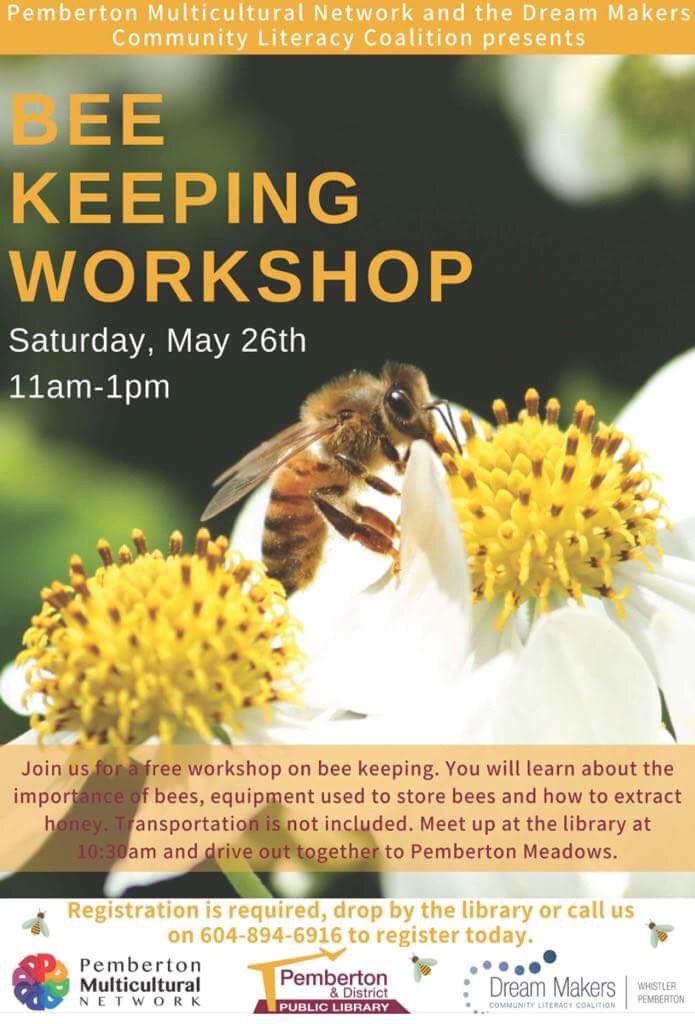
    On Saturday, Lia and I went up to Delores’ for a bee keeping workshop. A few hours of listening to Delores talk about bees, watching her take the hives apart, standing closer to a swirl of bees than I ever thought I would, and I discovered that I am no longer afraid of bees!  They are fascinating!

    9A1E2AB7-B7FF-421A-9729-4E6FC3662614

    When I first put our names down for this bee-keepers’ workshop, I was going into it as a non-interested party. I was going for my sister, so that when she wasn’t around I would have a bit of knowledge and if anything needed to be done while she was in Vancouver I could help the hive out.

    In the end, I have had the chance to face my fears and now I can go into this as a partner, not just a watcher. I can go into this beekeeping adventure with less fear and more enthusiasm, though I think I will let Lia hold the reins, and stick, for the most part, to being a crazy chicken lady.

    2F4C3888-B17D-4BD2-91D0-982037710278

    Meg
    Once a farm girl, always a farm girl.

    Follow my farm adventures on Instagram @once_a_farm_girl


  • May Two-Four

    May Two-Four

    There are essentially a couple groups you would’ve fallen into this past weekend: camping, working or planting your garden (ideally a combo). No doubt in my younger years I was way more into packing the truck with a tent, sleeping material, coolers full of beer, sausages, buns, ketchup, cans of beans and chips – lots of chips – and getting the hell outta of Dodge. Now as I age “gracefully” my focus has changed or maybe temporarily wandered and there is also that work thing. The exception is chips; there will always be lots of chips.

    But let’s focus on gardening… What is it about the May long weekend, no matter where you are in Canada, it’s viewed as “the time to plant your garden”? Surely it’s some sort of phenomenon or maybe a myth.

    Firstly, I’d like to draw your attention to a key fact. Our growing zone here in Pemberton is radically different from that of my family in Kenora, Ontario and those in Nova Scotia and Newfoundland. Yet, we all assume it’s totally kosher to plant tomatoes and basically everything else outside the same weekend. We can all also agree that one of our garden’s biggest nemeses is frost. So really, by accepting this planting time frame we are all pretty much assuming that frost is off the plate as of May long weekend. Hereby committing our plants to a life outside producing us a bountiful harvest.

    It’s as if the universe is giving us a chance to all exist on the same plane for a mere moment in time; I’ll take it.

    Here in Pemberton the mercury levels on our thermometers have been reading higher then normal for May. Which has made it easy to get crazy and just start sowing things. And, of course, I am all for this and 100% participated. It speaks to that whole experimental element in gardening that I love. You just have to be ready to face the fact that some things may not survive. Like a game of Monopoly; sometime you pass go and collect $200 and sometime you go to jail. I’m willing to bet the vegetables that prefer the cooler growing season of spring are probably wondering this year like the rest of us why it’s July’ing in May.

    IMG_3880

    Early direct sow experiment with Borage… Status: alive & thriving. Stoked to have this gem in my garden this season.

    Don’t get me wrong, I’m not complaining about the sunshine and the extra early lake dips but I am hot and bothered that my garden already needs to be watered twice a day… I genuinely miss Spring – She was super cool.

  • Wildflower Gummies!

    Wildflower Gummies!


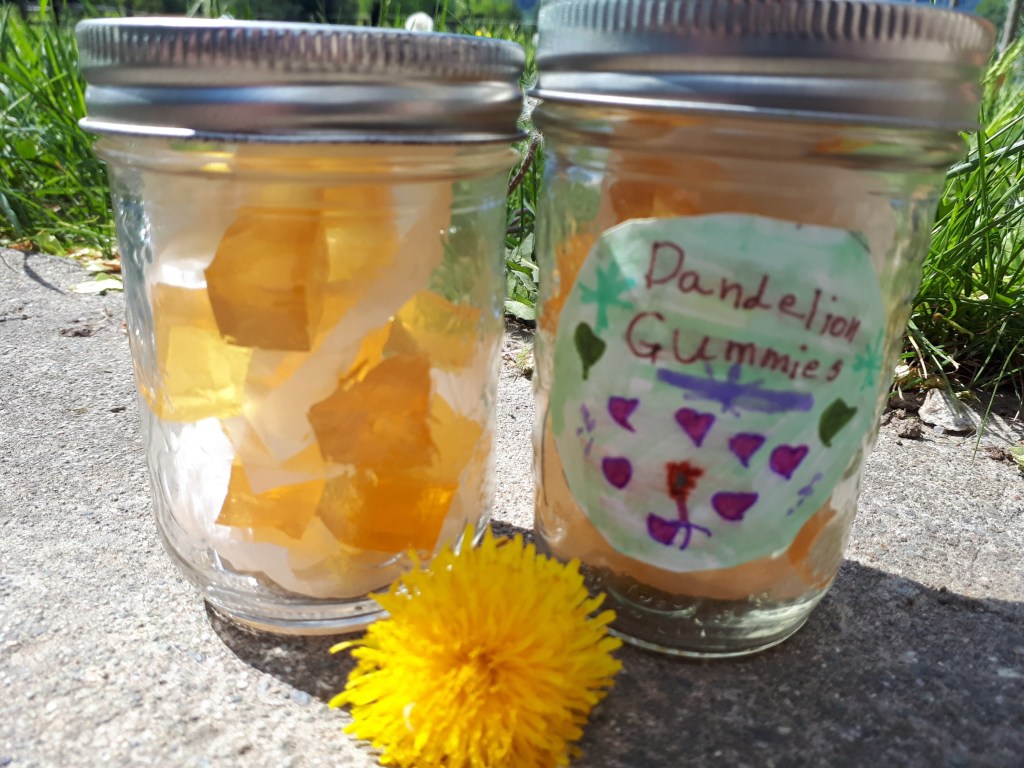
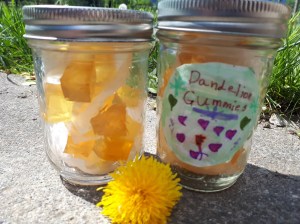
    20180509_1701241On May 11, I hosted a camp where we were supposed to make dandelion jelly. I had all these beautiful ideas in my head about the kids picking a huge bowl of blossoms out in the back field with the bees and other pollinators, their, fingers becoming stained yellow with pollen… how romantic. Of course, this is not how it happened in real life.
    “Jelly, what’s that?” one of the girls asked.

    “Well, it’s like jam, except there are no chunks in it, and we can make it from flowers!”

    “THAT SOUNDS GROSS!!” They replied in chorus. “EWWWW! WE ARE NOT MAKING THAT!! DISGUSTING!!”

    Well, that stumped me. For a moment.

    “Wait… we could make dandelion GUMMIES. Would that be better?”

    “YES!!” It was unanimous. GUMMIES were obviously WAY better than jelly.

    While we were waiting for our gummies to set in the freezer, we went outside and picked dandelions in the front yard. I showed the girls something my dad taught me when I was a little kid: that if you pick the largest dandelion stem you can find and take off its flower, it makes a noise like a kazoo! It takes a bit of patience to find the right stem, and sometimes you have to break it shorter and shorter before it will start to make  noise. It’s some kind of magic that happens when the dandelion milk in the bottom of the stem starts to vibrate, so it helps to have a juicy one! Two of the girls got bored and wandered away to play tag with Vinnie the sheep. But Avery was very excited about playing dandelions. “This is the best day of my life!” she exclaimed. “Now I can annoy everyone FOREVER!”


    20180511_142337
    Our gummies after being cut into bite sized morsels!

    As we cut up, divided up and packaged our very own homemade dandelion gummies, I realized this gummie making is an incredible way to get even the most squeamish of kids interested in the world that is growing all around them. If seasonal edible flower gummies can lead them to being able to identify a few species growing in their own back yard, then they learn to have a relationship with that particular plant, and that relationship can be a gateway to curiosity. In what other ways that plant can be used? What kind of environment does it like to grow in? Knowing a single plant intimately is enough to make the natural world come alive. I bet that even from reading this post you will notice dandelions more. Your awareness of them will become sharper, more open. And this kind of curiosity- this relatedness- is precious. It leads to a sense of belonging to the maze of green abundant life that exists outside our windows, the same way that knowing a friend in a crowd makes being amongst that many strangers less overwhelming. So if all we need is a few cups of cane sugar to kindle this relationship, then so be it!

    20180511_1432542
    Posing with our finished product!

    And don’t worry, I am going to give you recipes. I am also going to acknowledge I am leading you on a little, as dandelion season is almost completely over in Pemby. Don’t worry, you can use any edible fragrant flower to make your gummies. That means, lilacs = yes. Peonies = yes. And those wild roses that are just starting to bloom? Yes, you can use those too!!

    First, you need to make a flower syrup. I make mine in big batches, as I like to be able to keep some to make into summer drinks (a few tbsp and a bit of mineral water over ice on a hot day = heavenly). Please note that the syrup recipe is not intended to be canned, as the proportions are not tested for safety. So please keep your syrups in the fridge! I am confident you will use them up before they have a chance to go bad. This recipe makes about 6c of syrup, which is quite a lot. You can always halve or quarter the amounts if you want to make a smaller batch.

    Wildflower Syrup:20180509_165901

    2c flower petals

    4c cane sugar

    5c water

    1 organic lemon, sliced

    1. Prepare your flowers. It is best to harvest them in full sun at the height of the day. (From noon to 3 pm.) That way the flowers will retain the most potency and fragrance. Whichever kind of flower you are using, do your best to use only the petals. (In the case of dandelions, this means removing the green base of the flower.) Use flowers as close as you can to the time of harvest, as they will lose potency as soon as they are picked.
    2. Bring the water to a boil and add the cane sugar and stir until dissolved.
    3. Add flower petals and sliced lemon and cover your pot or bowl with a tea towel or cheesecloth to keep out flies, and leave out at room temperature to infuse for 2-4 days, stirring once per day. You want to optimize the length of your infusion without your syrup starting to ferment. If you see lots of bubbles or you are happy with the flavour, it’s time to move onto step 4…
    4. Strain and bottle your syrup. Enjoy!


    Wildflower Gummies 20180511_1440321

    1c flower syrup

    3pkj (3tbsp) gelatin*

    1. Find a mould for your gummies. I used the bottom of a tupperware container and cut them into squares, but you could get super creative here. You don’t need parchment or non stick spray or anything.
    2. Heat your flower syrup until just before boiling. Separate 1/4 -1/2 c of syrup and shake or whisk the Gelatin into it. (I used a small Mason jar and shook it to combine the gelatin, then strained out the residual lumps using a tea strainer as I feel you get less foam this way.)
    3. Add the gelatin mix to the rest of your syrup, stir well to combine, then pour it into your mould. If foam has accumulated on top of your gummy, skim it off with a spoon.
    4. Let your gummies set. I put mine in the freezer, but if you are not in such a rush you can just leave them out.
    5. To get your gummy out of the mould, dip your mould into warm water for a few minutes (being careful not to get water on your gummy). Then run a knife around the edge of your mould and you should be able to pull it right out. Don’t be afraid to use your fingers to pull it out of the mould- you won’t wreck it.
    6. Now you can cut your gummy into shapes with a sharp knife or cookie cutter. You could also roll them in sugar and leave them out for a few days is you want a chewier texture. I was happy with mine as they were as I found them already quite sweet. If you don’t go the additional sugar method, I would keep your gummies in the fridge as they do have quite a bit of moisture in them and will mould if they are not devoured within the first few days. Enjoy!

    *I used Knox Gelatin which comes pre-portioned in little paper packages, but I saw Stay Wild has boxed gelatin that is also gluten free!

  • And GO

    And GO

    It is a busy time in the life of a vegetable farmer, especially with the hot sunny weather we have been having!  While the motto of April may have been “hurry up and wait”, May is definitely the month of “don’t stop moving” here at Four Beat Farm.

    Most hours of the day (OK and the evening too sometimes) are devoted to preparing the fields for planting, transplanting and seeding the earlier vegetables, planning for markets and harvest season, keeping an eye on the early salad plantings to ensure that the weeds do not take hold, and putting the final tweaks onto those “spring projects” that somehow never did quite get finished.  It is still spring in the calendar, though the temperatures might indicate otherwise.  There is little time for reflection or lounging around, yet there is a sense of fun and excitement in the air as the days grow longer and momentum starts to build.

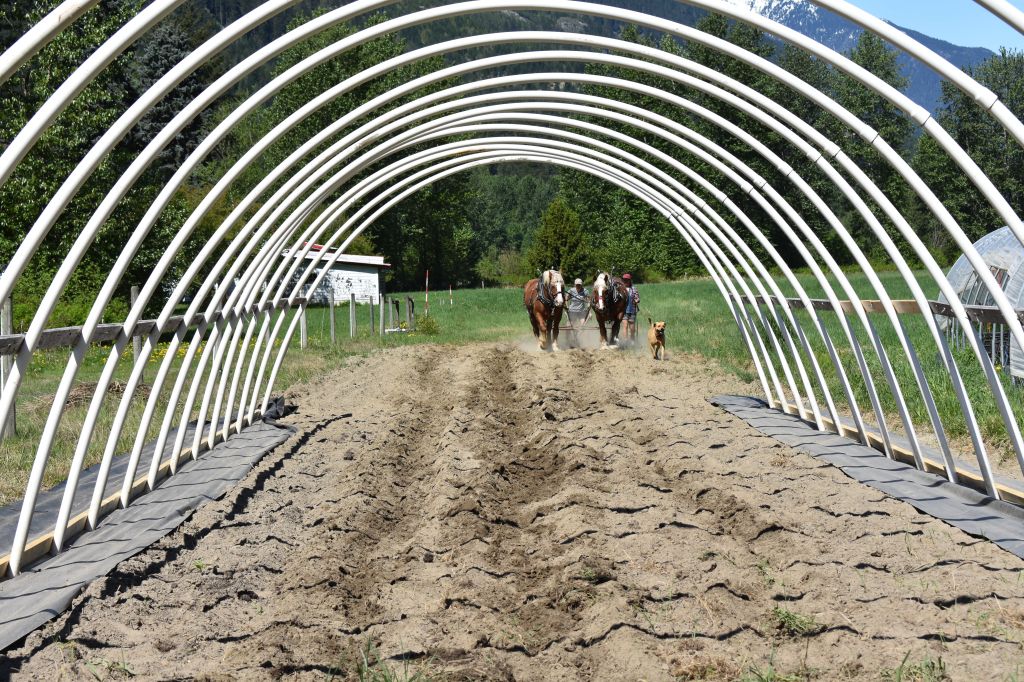
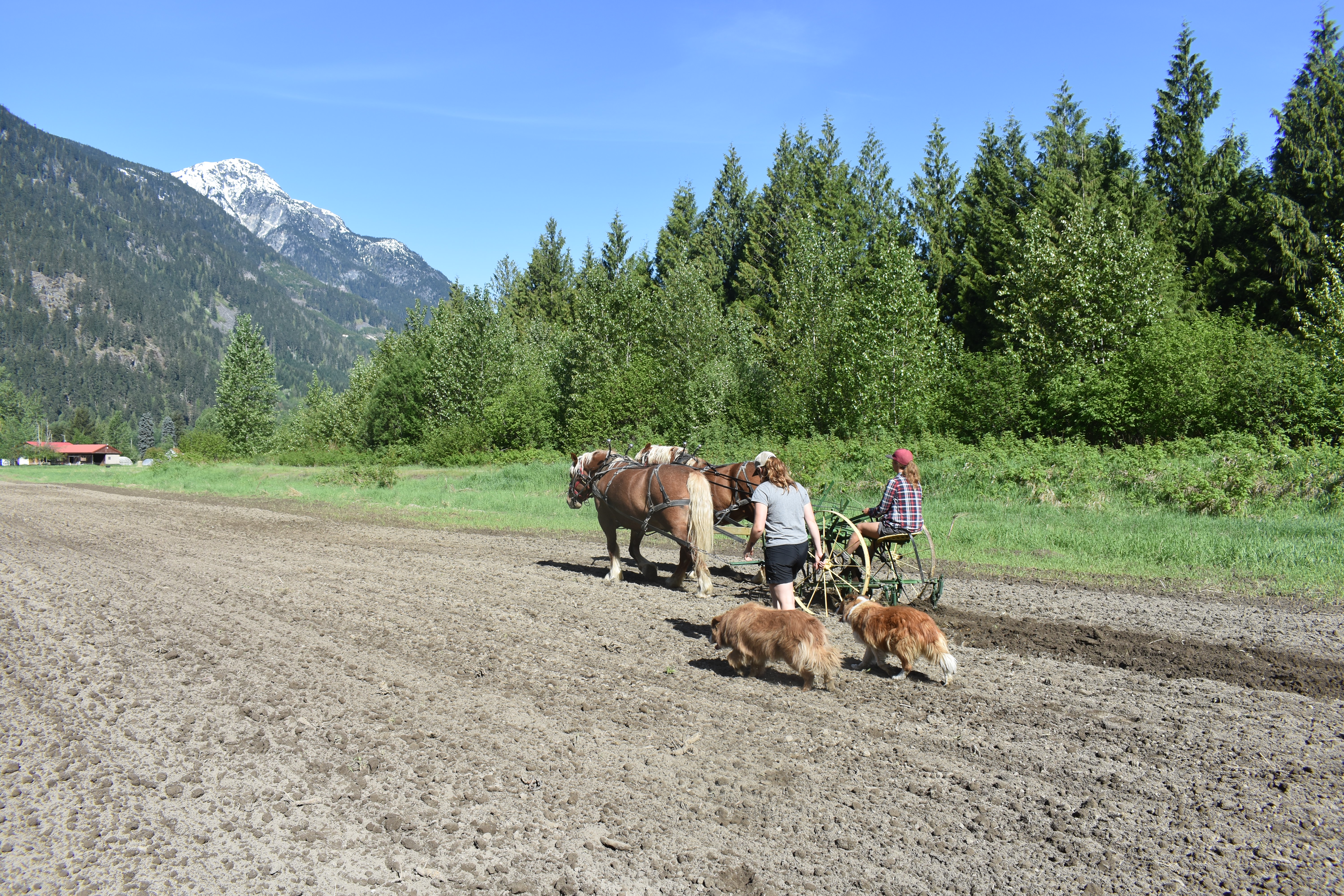
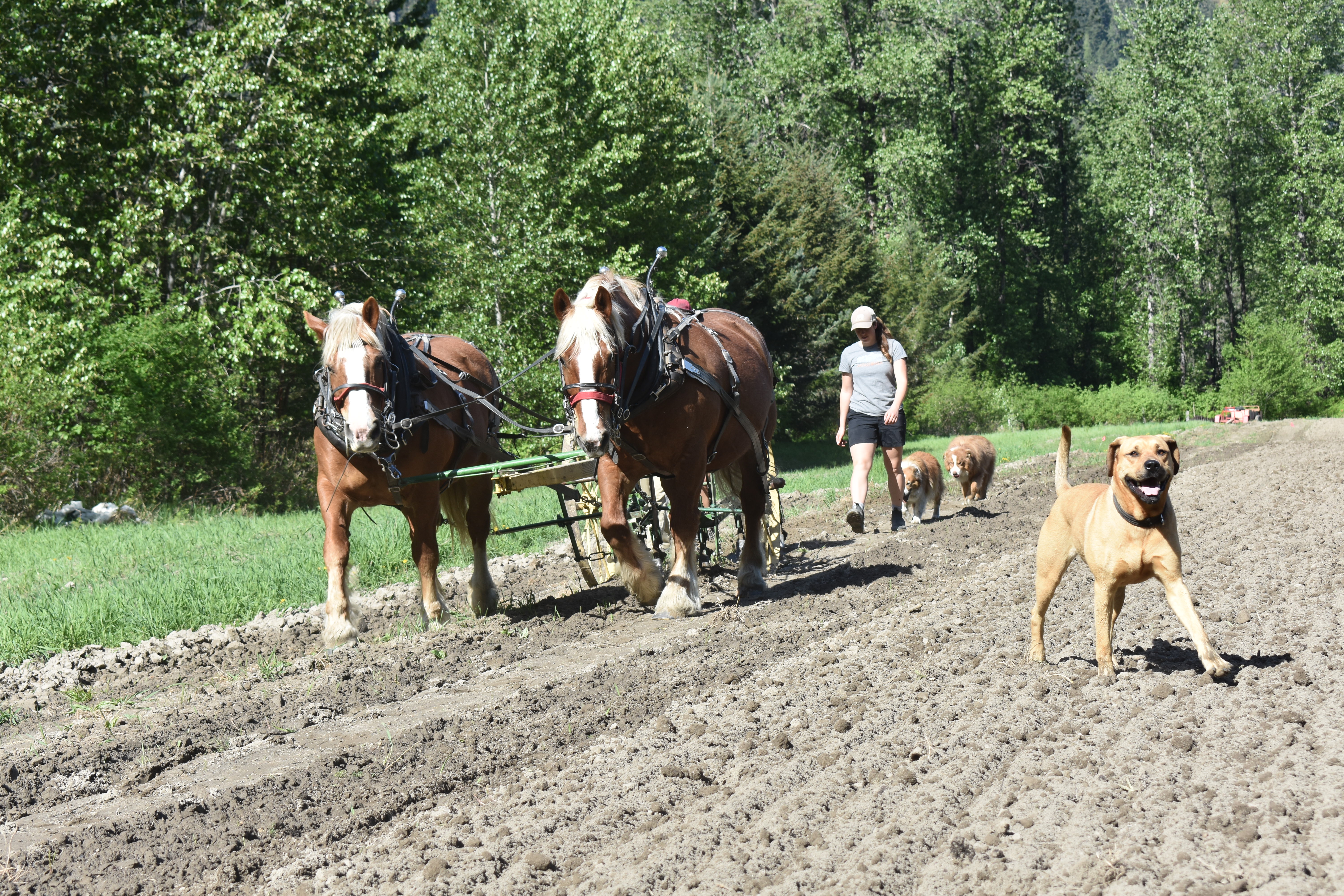
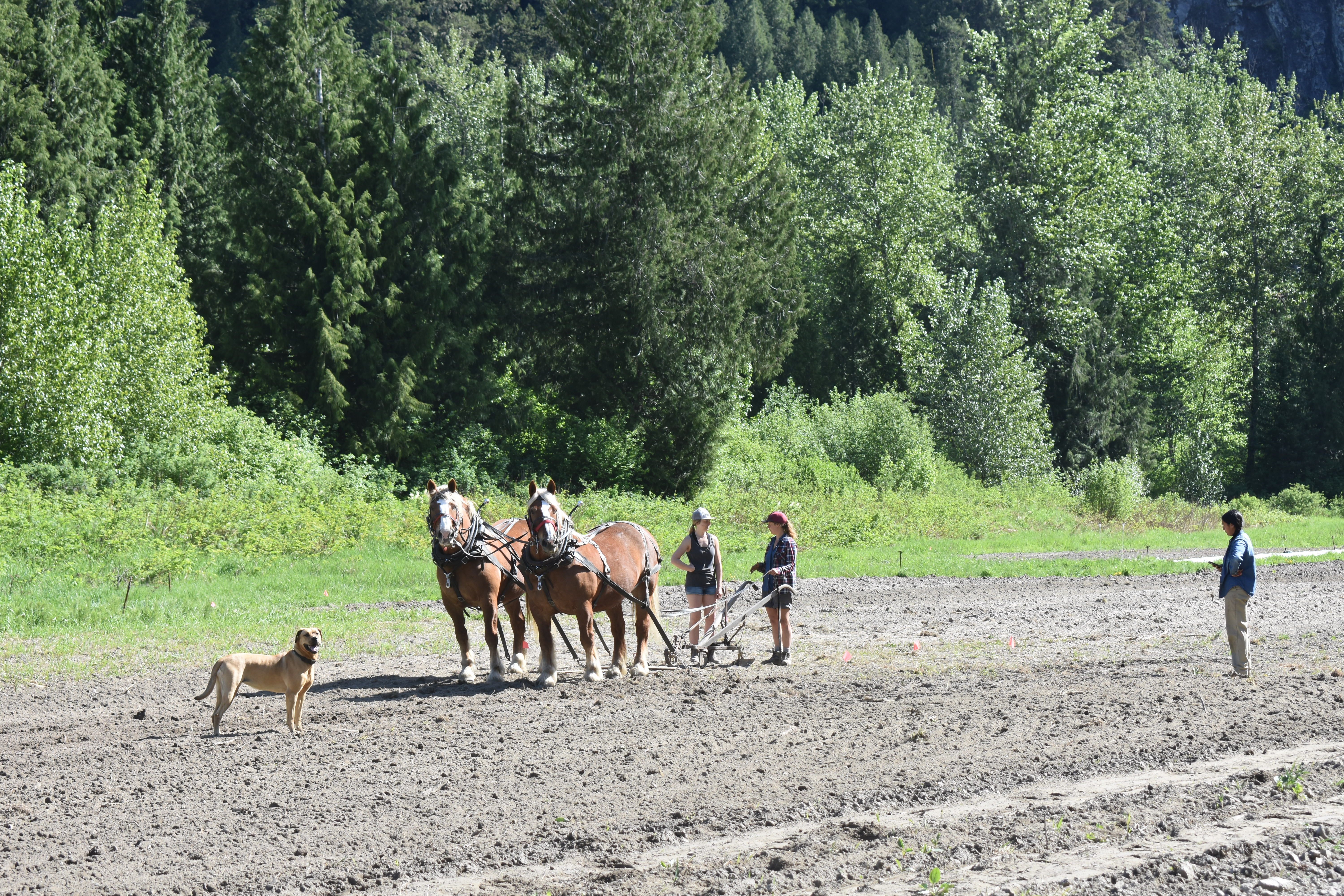
    Even though there does not seem to be much time to go for a hike at the moment, there is fun to be had in the field, such as on this Saturday morning with some canine, equine, and human friends testing out a few new (to us) ways of cultivating in the vegetable field.

    DSC_0351DSC_0355DSC_0439DSC_0381DSC_0454DSC_0462

  • Garden Shadow

    Garden Shadow

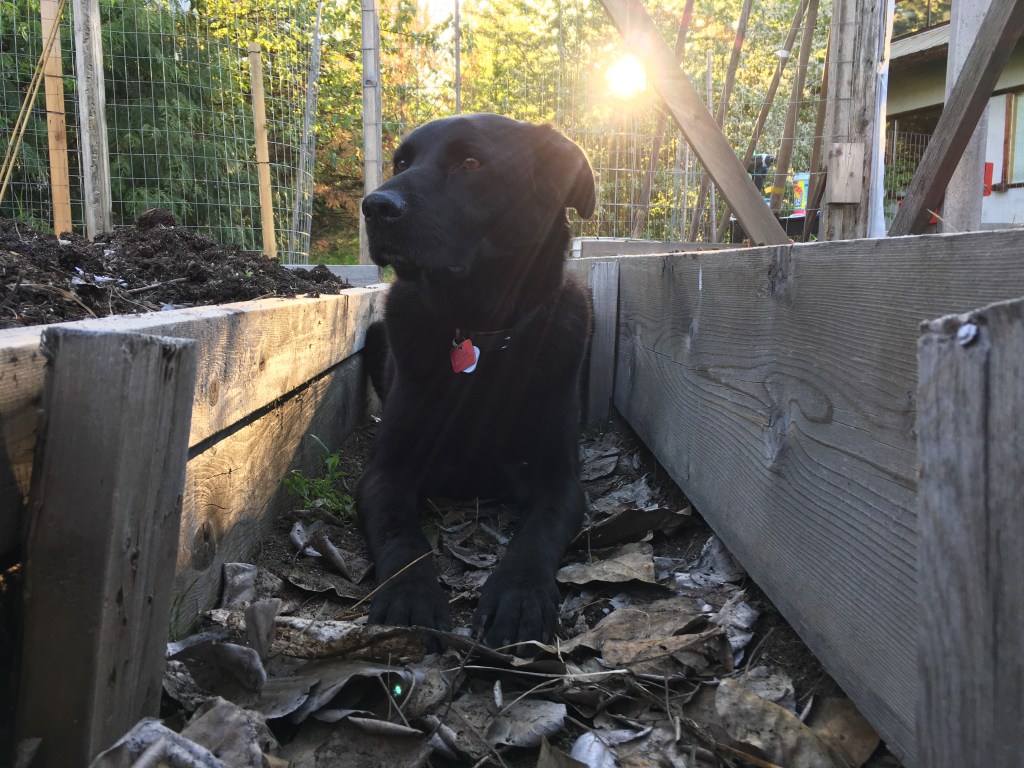
    I am not a scientist (although my current course on soils may turn me into one). Nor am I a psychologist; at best I’d classify myself as a horticulturalist. There is one thing I have come to acknowledge more then ever over the last few weeks… my dog’s intuition is more on point then most people I know. She came with the name Shadow and it suits her to a T – LITERALLY.

    So, allow me to introduce you to #shadowruffruff.

    IMG_0944

    (Need a laugh? Follow this Hosta lover’s hashtag on Instagram for guaranteed good times.)

    Here’s the skinny. Shadow was surrendered to the SPCA in Prince George where her puppy life was basically non-existent; she was quickly moved to the West Vancouver division for rehabilitation. We fell in love with her photo on their website and promptly pinned it down Hwy 99 from Squamish to meet the then 2½ year old Black Lab x Boarder Collie. Instantly we knew she’d be a perfect fit for us and she’s been melting hearts ever since.

    She is not stick or ball obsessed (thankfully). She didn’t swim until she was 4 and it’s only because there was a duck to chase. Her ability to find food and crumb around is so good she should be paid for cleaning the floor. She is extremely smart and loves to tell stories. She took up minnowing at age 10 and has been a pro field mouser for years. She is nearing 13 now and still loves to come on biking, ski touring and hiking adventures. She is showing minimal signs of slowing down. Maybe she’s stubborn like me. Grey hairs you ask? Nope. Only a few visible on her chin but most are hidden on the bottom of her paws. A lady never tells or really shows her age.

    (Minnowing obsession, recovery biking, Chief Pascal ski tour & Rohr Mt. summit)

    You might be wondering how this plays into gardening but be worried not for this hound loves veggies as much as the rest of us. When I crack my container snack vegetables she’s usually at my feet before the lid is off. I have to pack extra knowing she’ll eat half of what I brought. But don’t try to feed her kale unless it’s been massaged because she’ll look at you like you’re crazy! Smart dog. You have to watch her around the blueberry bushes, raspberries, strawberries and cherry tomatoes; anything at her level is fair game. She is a phenomenal forager. And, of course, all the thinned out carrots rightfully belong to her dirt and all.

    IMG_3649

    Since my bike crash I have been tripping over her even more times then I can count. A friend gave her the nickname “Underfoot” for good reason. I have been spending most of my time in my garden healing my concussed brain because that’s what feels good and Shadow has been there every step of the way. Therapy dog. Keeping the cats out, barking at the deer and warning me when the bears are close long before I actually see them. Again, her intuition is impeccable on all levels. She is the keeper of my garden, paid in full with vegetables.

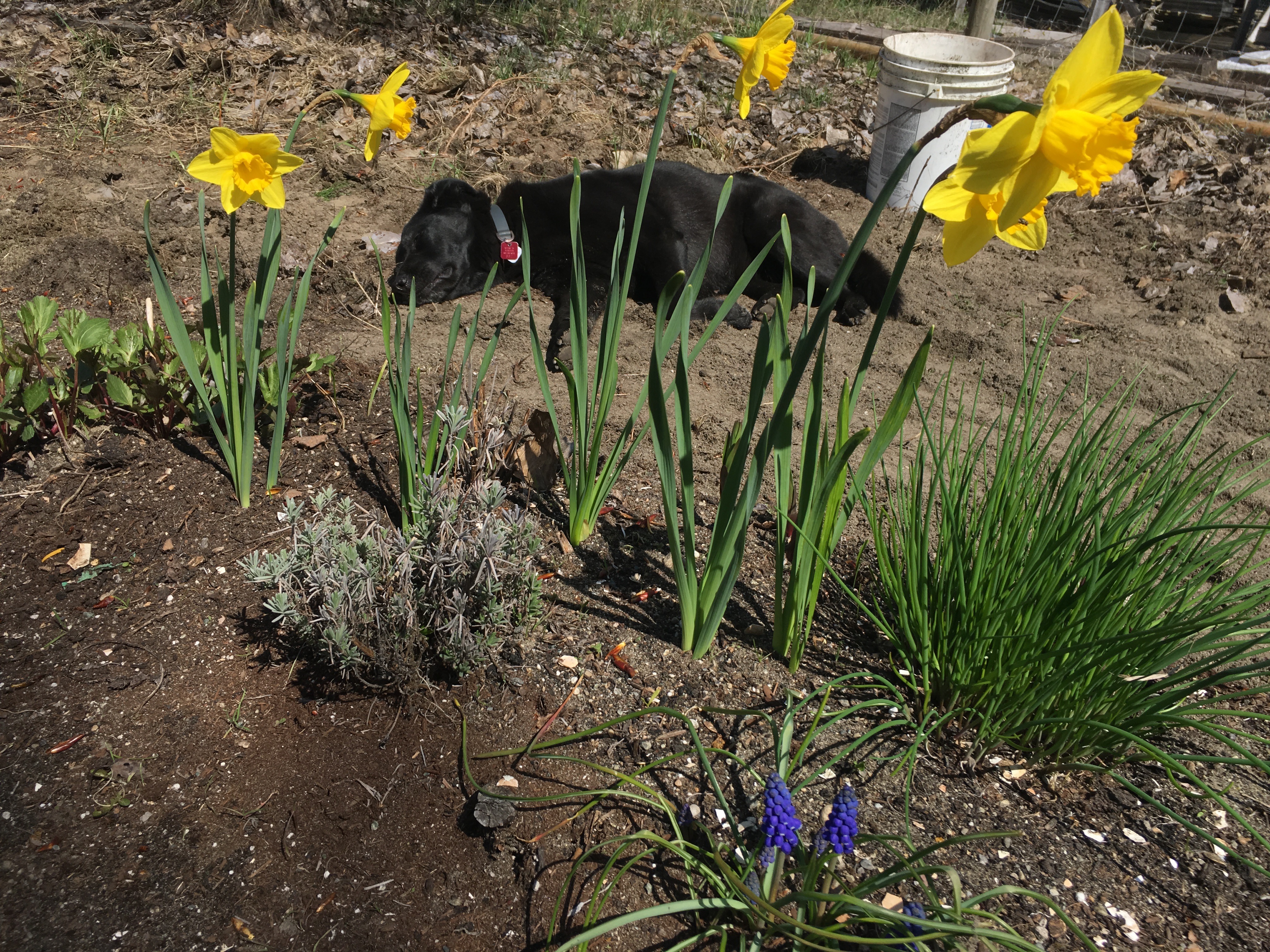
    Besides, someone has to test out the fresh raked dirt to ensure its level.

    IMG_3321

  • Garden Journals

    Garden Journals

    Hello everyone, my name is Anni Kolbe and I work for the Sea to Sky Community Services (SSCS) in Pemberton.  My job title for SSCS is a Settlement and Outreach worker for the Pemberton Multicultural Network. So what that means is I help immigrants settle into life in Canada and meet other people.

    In order for people to meet I plan and implement life skill workshops.  Throughout the years I have learned that people in Pemberton will attend your workshops if it relates to food and gardening.


    I wanted to share a workshop I did a few weeks ago at the Pemberton Public Library on garden journals and companion planting.


    A garden journal is a great way to keep track of important information about your garden such as the weather, pests, what you planted and when you planted.  Those are just a few things you can keep track of.

    Take a peek through the slide show to get more ideas of how to keep a garden journal.

    PMN new good logo

  • The Joy of Hummingbirds

    The Joy of Hummingbirds

    The first time I saw a hummingbird was in Sooke, on Vancouver Island, while visiting my boyfriend’s parents. They had several feeders around their property, and the first time one of these minuscule, zippy birds approached, I was completely rapt. I’ve found them fascinating ever since, but we lived in Vancouver, where no hummingbirds dared venture.

    When Nathan and I moved to Pemberton four years ago, his mother Lisa gave us a hummingbird feeder as a housewarming gift. It was December at the time, and I couldn’t wait for spring to arrive to set up our feeder.

    hummingbirdAnd now every year, as much as I look forward to spring for the fresh green scent of new growth and the return of warmer weather, what I really look forward to is the return of the hummingbirds. I get immense joy from putting out fresh, homemade nectar for these precious visitors, and take special care to ensure my feeder is always stocked. (I haven’t planted my garden yet, but I’ve already refilled my feeder twice.)

    Part of my joy comes from being able to watch these fascinating birds closely, as the feeder is located right by our living room window. But a good portion of this joy is from the feeling that I’m helping these tiny creatures by providing them with food. Especially at this time of year, when the flowers are still just returning and nectar is low, and they are vying for the attentions of potential mates. (It must take a lot of energy to execute those dive-bombing shows the males use to impress the ladies.) Since moving here, I’ve learned there’s plenty of wildlife you shouldn’t feed, but thankfully the hummingbirds aren’t one. It gives me joy to feed these birds, while they in turn feed my joy.

    Hummingbirds can be seen as a symbol of lightness, for the incredibly light way they move about their world. They can help remind us to try to use similar lightness in the way we move through our world. To leave gentle footprints on the Earth, to care for one another, and to treat everyone with gratitude and respect. So here’s to spring, here’s to joy, and here’s to the hummingbirds.