Category: Uncategorized

  • Taking My Own Medicine

    Taking My Own Medicine

    Every October I sort of lose my mind. I could choose to call it seasonal affective disorder, depression, pieces of shadow I have not eaten. But I am careful not to put it into any of these neat little boxes, because then I would stop extending my most compassionate curiosity toward this strange seasonal storm. I want it to remain a wild thing, an unknown tempest of fury and flying sticks, because every time it shows up it serves a purpose. I’d even go so far as calling it sacred, because each time I allow it to sweep my floor clean, something I have been praying for enters.

    There’s a pattern here. A seasonality. Every October, I used to migrate like a swan. As soon as the last of September’s warmth sank over the horizon, I blew up my life, put the pieces in a backpack, and left. Later, when I stopped traveling to far-off countries and instead moved in a series of lunges across the North American continent, October became the month I put everything I owned into my car (or my truck, or a suitcase in the underbelly of a Greyhound bus) and drove until I hit a coast and had to stop.

    Now that I’ve rooted myself in the kind of life that contains four horses, one sheep, one pig, one dog, twelve ducks and two roosters, the ferocious energy of THE MIGRATION THAT SHOULD BE HAPPENING no longer blows me across the continent. Instead, it bowls me over. This year, I looked out over the crazy abundance of harvest season, my belly full of squash and roast duck (all the incredible generosity of the natural world!) and was so irrevocably angry that nothing made sense anymore. The anger burnt until there was nothing left but nothingness. While all around me trees dropped their leaves in an incredible display of letting go, I was furious at them for making it look so easy. This is insane, no?

    How does this connect to Pemberton food culture, you ask? Well, it doesn’t. But it does. Because a couple of days ago, before this year’s particular loss of mind levelled out and let me think with something akin to clarity, I opened my medicine cabinet and saw this:

    medicine cabinet

    “This” is the library of wild-foraged tinctures I’ve created over the past 4 years. (Their labels are double-sided, so the essence of the words can seep into the medicine.) As I read their labels, I realized something: I created each of these medicines in October. Each was created as a support for weathering that particular year’s energetic storm. As I felt into their contents, I realized that looking at the interior of my medicine chest was like looking at the growth rings of my own evolution, as well as my connection to this wild part of the world I call home.

    2015: Love, Compassion, Congruence. Usnea longissima: the long, delicate single strands of lichen that hangs from trees like the animate glowing trees in Avatar. Potent antiviral and immune support, grows only where the air is pure and the forests contain old growth.

    2016: Changes toward Infinite Potential. Again Usnea longissima, this time with Lungwort Lichen (Lobaria pulmonaria.) I was still working with air beings, still striving for lightness. This one recognized the animus of the invisible transmission of air as connector between the animal and plant realms and between all beings. (If I breathe in air a tree exhaled and then YOU then take in the air I breathed-)

    2017: Liberation. Atonement. Unity. This was a graduation ceremony from air to earth, something I created specifically when I moved from Squamish Valley to Pemberton. Devil’s club root and bark (adaptogen), willow bark (for deep pain and calling in receptivity and remediation).

    2018: Belonging, Lightness, Radiance, Love. This one I made in secret after hiking up to Tenquille Lake with Pemby herbalist Evelyn Coggins this summer. We were not supposed to take any plants. (Evelyn, I am sorry I am so terrible at obeying rules.) There’s a chance a few flower heads of Valerian and River Fireweed (along with a few hemlock tips, a piece of old man’s beard (another Usnea!), and a piece of quartz may have made their way into my pocket on this hike. (Barely a handful of plant matter, I swear…) Covered in 100 proof vodka and shaken every day for 20 days, this one is light and floral but POTENT. Holy $^%&. The first time I tried it I almost fell asleep in the library. It’s for taking before bed, to encourage new neural connections to form through dreams…

    Then I had a conversation with myself that I’m embarrassed to disclose. But I will anyway, because I think we all have these sorts of conversations from time to time. It’s just not something we talk about.

    “Well Kera, you should try to remember to take some of these. That was the point of making them.”

    “Humph.”

    “??”

    “Oh, right. Okay, okay.”

    “And you know that St John’s Wort tincture you have in a mason jar under the kitchen sink? You should take that too. Because you made it SPECIFICALLY for coping with Octobers. Remember?”

    “Um, yeah. Yeah I did.”

    I did. I do. I am. Taking them. Ten drops in the morning of Liberation/Atonement/Unity and 6 drops of Belonging/Lightness/Radiance/Love before bed. Could the prescription be anymore poetic?

    Pharmaceutical companies, take note. You could do better.
     

  • Our 2018 Farming Season in a nutshell:  Part 2 (Late Spring/Early Summer)

    Our 2018 Farming Season in a nutshell: Part 2 (Late Spring/Early Summer)

    This is the second instalment of Mike Roger’s recap of the rollercoaster farming season of 2018. For part 1, click here.

    So, here we are at the end of April, with a grow room full of tiny, compromised seedlings (see part 1).  Our hydro bill is through the roof and we have a lot of expenses. Most farmers have already tilled up their beds and are starting to plant the hardier varieties outside. We are feeling defeated. Why bother turning the soil if we don’t have anything to plant yet? It’s only an open invitation for weeds.

    In farming, if you’re not an optimist, you’ve already lost the game, so despite it all, we prepare our beds, not knowing what or how much we’re going to grow. We cover the fresh soil with drip irrigation and bio-mulch, a bio degradable plastic film to suppress the weeds and wait for whatever seedlings have survived to mature enough to transplant.

    Our only farm income in the spring is our annual Mother’s Day plant sale. Less than a month away, things are looking grim. Our neighbours have come to count on us to find heirloom varieties of tomatoes and other starts you may not find at the nursery. Luckily the tomatoes fared better than the delicate exotic flowers that we spent a lot on seeds for. Miraculously we had a successful sale, factoring in our perennials such as raspberries, rhubarb and herbs.

    Farming is so profoundly weather-related — the nicer the spring, the better off you are. Well, not in our case. May was extremely unseasonably hot (aka “Maygust)”. We knew we had to get our starts in for the traditional Victoria Day holiday deadline. We literally watched our tiny compromised transplants shrivel in the hot sun. The top of the soil would be bone-dry midday  and watering at this time often magnifies the sun’s rays. We lost even more plants and were forced to direct seed in the blank spaces between the survivors. We also had to resort to purchasing expensive starts from the nursery for many plants we couldn’t wait to sprout.

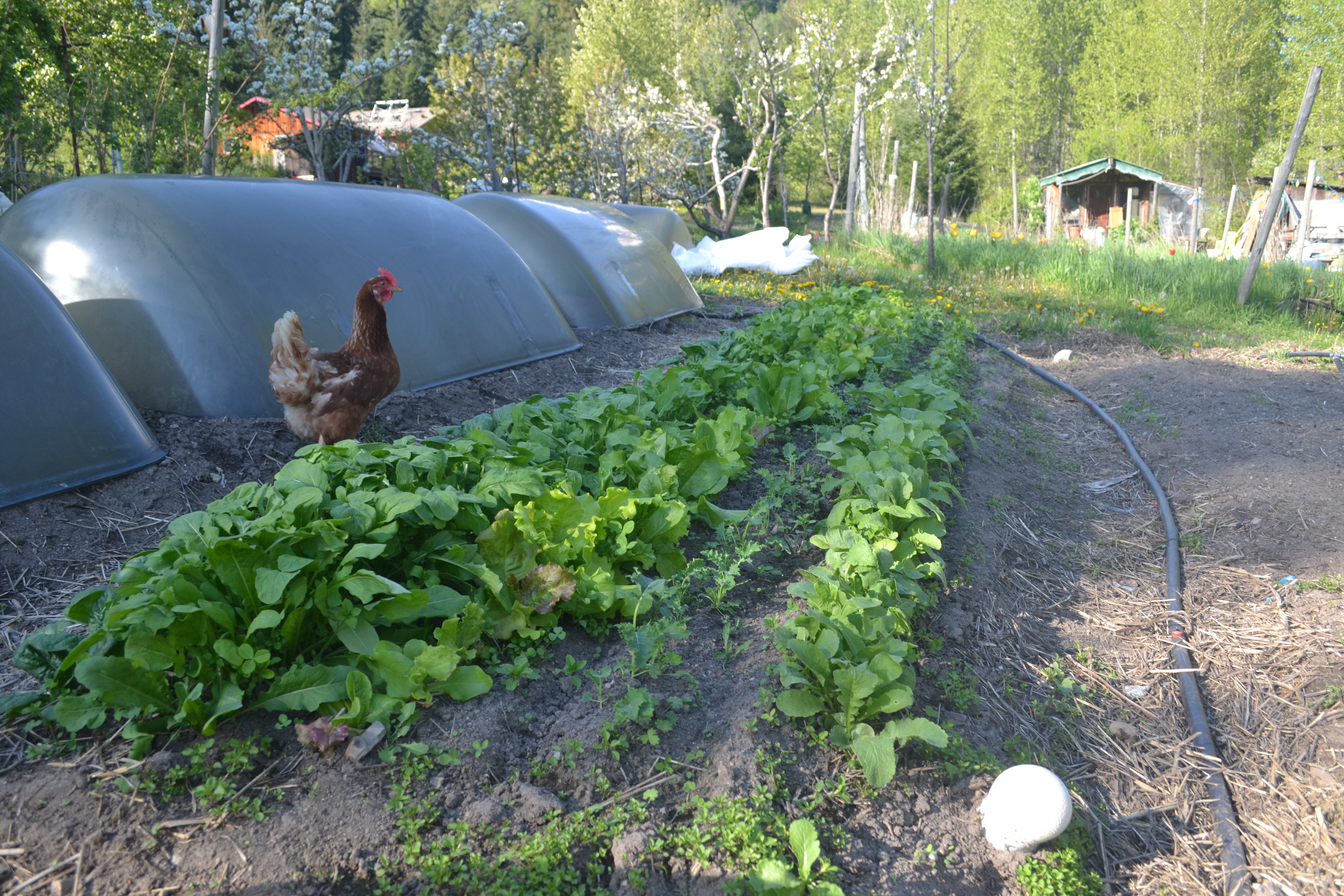
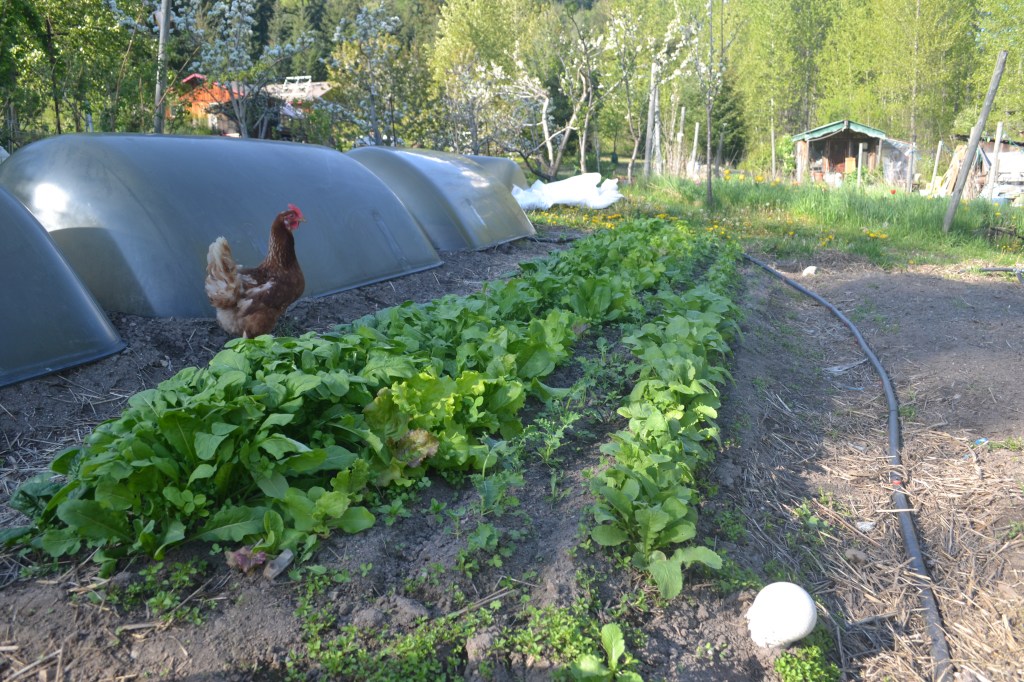
    Most of the things we focus on growing in our niche market are late season – heat-loving and slow-ripening – such as fruit, berries, tomatoes, flowers, and garlic. June is a make or break month, weather-wise. It sets the stage for yields by establishing buds and  deep roots to prepare for the summer.  A cold spell in June, for some reason, has become common here in recent years. This is fine for those growing brassicas, spinach, radishes and early season crops. During June, however, this weather pattern (Juneuary) lasted the entire month! It seems we got hit worse in Birken than in Pemberton. A few hundred feet in elevation results in a few degrees which can make a huge difference. The general rule is that below 6 degrees C, most plants just stop growing.  The nightly lows were often around 7 in Pemberton and less than 5 in Birken. We were burdened with covering  the plants up at night (with bubbles from the old Wizard chair), something we normally did in April.

    DSC_0021

    Farmers Markets have become big business. There is pressure to extend the season on both ends, regardless of what’s available from the weather dependent farmers. Again, this is okay for cool weather crops and artisans, but not for us. Nonetheless, we have to  book and pay for our markets long in advance.  So here we are into July and we’ve got nothing  fresh for our scheduled markets. Do we just cancel? No! We need money to keep the farm running! We had to somehow pull a rabbit out of a hat. We  quickly made some twig baskets and rustic coatracks (hence the Willowcraft name), packaged some dehydrated garlic and apples, made some vinaigrettes and raided our kitchen garden of herbs and greens. Of course, our stand looked awesome and our customers were unaware of all our challenges.

    In farming, if you don’t adapt quickly, you’re done.  It’s not like there’s a choice. It’s a life-long lifestyle. I wasn’t going to abandon everything and get a 9-5 job to pay for bills. If it weren’t for credit, I don’t think there would be a single farm in existence.

    Stay tuned for part 3, in which we’re overwhelmed as everything ripens at once, and underwhelmed by the performance of our cash crop, garlic. We finally somehow salvage our difficult season finishing on a (spoiler alert) positive note.


  • Down to the Dregs of the Apples…Use Them Up!

    Down to the Dregs of the Apples…Use Them Up!

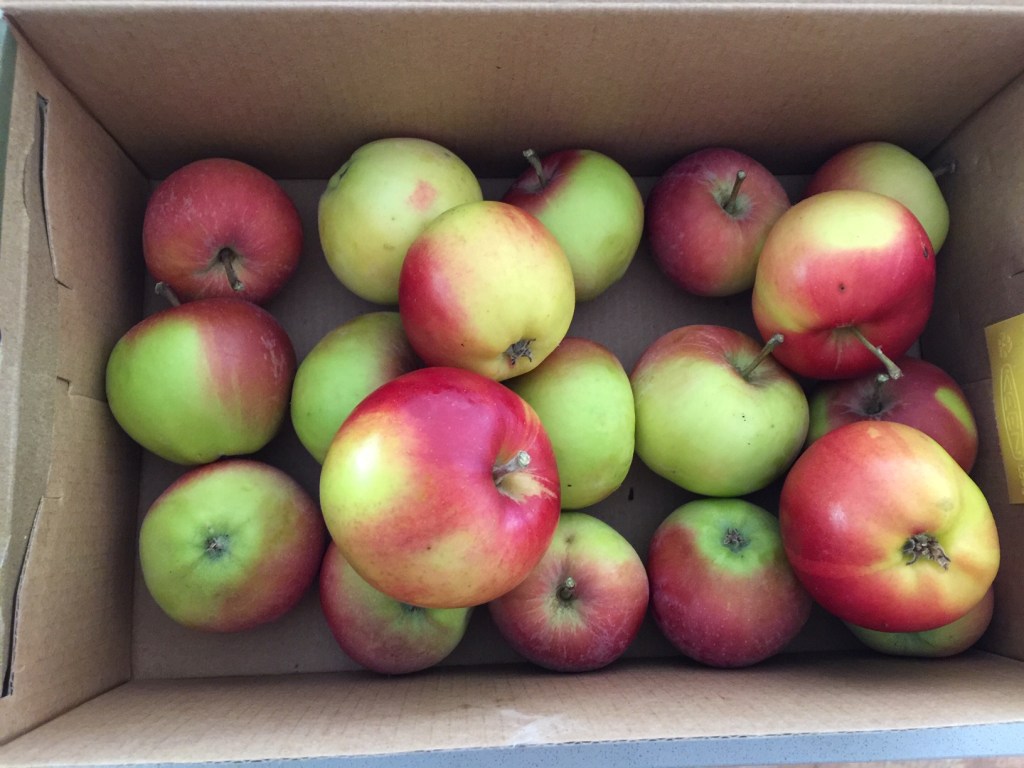
    If you are not lucky enough to have effective cold storage, your harvest supply of apples may be looking a little tired right now. If so, I have two fantastic recipes that take advantage of less than perfect, small, slightly shriveled apples that you might be tempted to compost.

    Also, I made tarte tatin recently with a fresh supply of delicious coastal apples that were perfectly ripe, and freshly picked. The recipe was from Martha Stewart’s Baking Handbook and is available at the Pemberton Library. I adapted her Pate Brisee recipe by using spelt flour and the results were tasty!

    We are also onto the “dregs” of cricket chirping. Cricket chirping is one of my favourite sounds. They started in late July and almost mid-October I hear a forlorn cricket or two at night. They sound kind of lonely. Cheers to the persistent crickets who usher in shorter days and frosty weather.

    Here are two recipes to use when you have processed all your nice large apples and are left with tiny ones that aren’t much use. These recipes just call for tiny pieces of apple and you don’t need to peel them first. Also the tuna patties are super quick, and also portable for lunch on the go. The rice pudding recipe is cooked for 6 hours in the slow cooker and is so easy and a real treat on a frosty evening. One is fast, one is slow, but both simple and easy.

    Quick Tuna Burger Patties:

    2 cans drained flaked tuna in water

    ¼ cup real mayonnaise

    ¼ cup almond meal

    1 egg

    1 tbs Dijon mustard

    ½ tsp salt

    ½ tsp pepper, or to taste

    ¼ cup chopped fresh dill

    ¼ cup finely chopped apple, unpeeled

    Method:

    Mix all ingredients together and form into 6 patties. Fry on medium low heat in 2-3 tbs olive oil until nicely browned on each side. The longer they cook, the better they will hold together so don’t rush the frying.

    Slow Cooker Rice Pudding:

    2.5 cups whole milk

    ½ cup whipping cream

    1/3 cup Arborio rice

    1 tsp cinnamon

    ¼ cup white sugar

    ½ cup finely chopped apple, no need to peel first!

    1 tsp vanilla

    Method:

    Place all ingredients in a 2 quart soufflé dish and put that dish into a slow cooker crock. Cover with lid and cook on LOW for 6 hours. (Do not cook on high heat as the milk won’t cook as nicely.)


    Tarte Tatin recipe can be found in Martha Stewart’s Baking Handbook, published by Clarkson Potter and available at Pemberton Library.

    IMG_9589.JPG
    Rice pudding prior to cooking
    IMG_9810.jpg
    Tarte Tatin: doesn’t look as good as a slice of pie, but the flavour is rich and texture is dense!
  • #falltimealltime

    #falltimealltime

    It’s the most wonderful time of the year – or at least it’s MY favourite time of the year.

    Colours start to pop as the foliage begins its natural, beautiful progression to death and my appreciation for the warmth of the sun on my back is revived. Praise arises for the rainy days as reason to stay in, make soup and stock the freezer with food. Then there is also the rush of the game to see who gets to the fruit trees first – me or the bears. I go to bed with an extra blanket but leave the windows wide open while the coyote’s howl echoes through the night. Of course the dusting of snow on Mount Currie gets me pretty excited too! And, most importantly, my garden is still delivering the goods.

    This time of the year, I also sit back and think about my garden; what worked, what I want to do more of and what I can do away with next year. Journaling for the win: do it, do it now. So, what I thought I would do is share some of my favourite photos of the summer complete with commentary.

    First up is purple daikon radish. I pickled the shit out of these guys while in season. When a vegetable randomly forms heart shape upon cutting into it you really can’t help loving it. More will be planted in my garden next year, their spicy flavour is beyond delicious.


    Melons. Who doesn’t love a good melon. Previously I had tried watermelon but with little success there, this year I tried cantaloupe. Gave it a sunnier spot and was rewarded big time. Go figure: #shadowruffruff loved it too… juicy and flavourful beyond both our expectations!


    I have mentioned that kohlrabi was the undisputed heavy-weight champion in my garden but my Borage babes blew my mind; turns out they’re MASSIVE! They helped pollinate my butternut squash and many other things in my garden, plus the flowers were delicious in salads. This year I trained my squash to grow along the fence in hopes it would take up less space overall. As it turns out this move was a game changer. I will incorporate this method next year as well, perhaps to even shade something that requires less sun. And for the bee’s sake, borage will forever be in my garden regardless of the space it takes up.


    You know you’ve made it to the big time when your whole pasta sauce has been sourced from your backyard… I mean it’s SO good you want to share but really not really. Last season was the first year where I grew my own Roma tomatoes, celery, carrots, garlic, onions, basil, rosemary, thyme, oregano and cayenne peppers. I basically vowed from then on this was the way forward every year; always plant enough to make sauce for Dbot. I will also openly admit I have a love affair with fried green tomatoes served with soft poached eggs – you would too, if you’ve had it. Never underestimate the power of a green tomato.


    Does your cilantro bolt like crazy in the heat of the summer even if you’re giving it shade from the hot afternoon sun? No problem. Let them bolt and go to flower. The coriander seeds born from the delicate white flowers will produce the best ground version of this spice you’ve ever had. I guarantee you’ll start to plant cilantro just to let it go to seed!


    Fall is also the time when members of the brassica family shine. I remember being amazed when I learned how Brussel sprouts grew, so they became a yearly addition to my garden (just be sure to give them plenty of space). New this year was Savoy cabbage grown from seed and it’s sure to make my cabbage rolls go from A+ to A++. Another tip for cabbage is to space out their planting times then you don’t end up with a whole bunch at the same time even though they keep quite well.


    Flowers… I will plant way more flowers in my garden next year both perennials and annuals. Some of my perennials are ready to split which benefits both the plant and my wallet. Plus, having fresh cut blooms in my house just makes me smile.


    I feel like I could carry on for a long time but as I write the weeds are still growing and they sure aren’t picking themselves! So I’ll just leave you with this last photo that I call, “The Mushroom that had all the Thyme in the World”. #dadjoke #sorrynotsorry

    IMG_5862

  • Fall in Pemberton: a Full Fridge and Pantry!

    Fall in Pemberton: a Full Fridge and Pantry!

    Hello everyone and happy fall. Welcome back to routines and merino wool clothing! Yay!! There are lots of new faces walking around town. This makes me happy. A few years ago it seemed everyone was leaving this valley.

    This is the time of year that a ton of stuff is ripening: apples, pears, zucchini, beets, chard, winter squashes, Lillooet tomatoes (yay!) and grapes. Also hazelnuts – which are my kind of harvest: no weeding or watering!

    In light of the abundance of food ripe and ready at our farmers markets and our own backyards I have a seasonal recipe this month plus a few tips for newcomers.

    First the tips:

    In Pemberton, fall is the time that field mice want to find a warm and cozy place to call home for winter. They leave the fields and will set up nest in your home if they can. If you live near a field be extra vigilant. This is NOT the time to store cardboard boxes of granola bars or Stone Wheat Thins in your garage fresh from a Costco trip. Or for that matter, any paper towel or toilet paper. If a mouse and his or her relatives find a way into your garage, this nice supply of items will be destroyed. I know all about this from personal experience. Keep your TP in a dry and clean place in your house proper, not the garage. Keep cardboard packages of food in your kitchen cupboards, or, if in a pantry, you may want to consider storing these items in hard plastic salad boxes or Tupperware bins.

    Second tip: If you keep a yard compost bin and put apple trimmings in it or other fruit waste, your yard may attract bears. So at this time of year I usually avoid putting fruit waste in the compost bin, and use the compost bin for coffee grounds and other non-bear attractant compost.

    Finally: do not discard beet tops: Blanch them and freeze in Ziploc bags. They can be added to soups all winter – when you cannot face the depressing looking and expensive imported greens!

    Recipes: Pemberton Fall Samosas

    I recently made a fresh batch of samosas – this time using seasonal ingredients – any time I can use up large zucchinis I will. They were delicious.

    Dough recipe can be found here.

    Filling:

    1 large onion, small dice

    3 cups yellow zucchini, small dice

    2 cups chick peas

    2 cups cooked chicken, small dice

    2 cups cilantro, finely chopped

    ½ can full fat coconut milk

    2 tsp cumin

    2 tsp coriander

    2 tsp allspice

    1 tsp turmeric

    2 tsp salt

    2 tsp pepper

    Method:

    Make dough according to directions in this post. I use spelt flour instead of wheat.

    Make filling by sautéing all the veggies and spices, until soft and caramelised. After this has occurred, add your coconut milk, chick peas and chicken.

    Stir and cool.

    When dough is ready cut out 6-inch diameter circular squares of dough and fill with ¼ cup filling and fold dough over in a half moon shape and pinch the rounded side so it is sealed. You may have leftover filling to freeze for another batch later.

    Bake in a 350C oven for 30 minutes.

    These make great portable lunches and snacks!!

    For dessert:

    Track down Shelley Adams first cookbook: Whitewater Cooks, and make Joey’s Apple Cake. It is an amazingly moist and flavourful spiced apple cake.

    Another one to try is Tarte Tatin. Recipes can be found online. I made it recently but the pastry was not flaky enough for my taste, so I won’t share that one, but I am going to attempt a Martha Stewart version soon and see if it is better. Tarte Tatin is an upside down apple tart baked in a cast iron fry pan.

    Best of luck with your fall produce!!

  • Sky Camp Kohlrabi

    Sky Camp Kohlrabi

    There’s something to be said for being in the right place at the right time.

    Over the consumption of tasty beverages at the Beer Farmers, my girlfriend was casually asked if she’d like to host a bunch of mountain bikers at Sky Camp (one of Tyax Adventures’ most balling backcountry locations). She was quick to mention that I could cook and would be a great addition to the hostess-with-the-mostest team and it took me about 0.01 seconds to agree to this union. As of yet I had only heard the tales of this remote location and recognized that it was an opportunity one should not shy away from.

    Allow me to create a visual for you: Board a floatplane that takes you deep into the South Chilcotin range to a fully set-up cabin. This location comes complete with wood-burning sauna, canoes/kayaks/paddle boards, hot showers, the sound of loons atop a lake full of trout, adventure Crocs, old school board games, guest tents stocked with flannel sheets & duvets and nothing else but the silent sounds of the forest. Everyone in favour of glamping, raise his or her hand! Easily 90% of you just did.

    A simple, delicious menu was drawn up for us and I couldn’t help but raid my garden for a few extras to tie in to the plan. My spare time has taken a hard hit lately (aka neglected garden) and there are a few species that have gotten massive due to this lack of maintenance – or someone has secretly been feeding them steroids. So, may I introduce to you the current, uncontested, and very underrated, heavy weight champion of my garden… kohlrabi.

    Out came the biggest bulb, a leek, the dried coriander seeds from my bolted cilantro plants and a cured garlic bulb; all grown in my backyard and all destined to become a side-dish served with salmon. What follows is a rough outline of how I cooked it via an old school propane oven.


    • Pre heat oven to 375°F. While that is happening, lightly toast your coriander seeds then grind them with a mortar & pestle to desired texture.
    • Cut the kohlrabi into ½” cubes and place them into a medium-sized mixing bowl.
    • Add in some sliced leeks, minced garlic, the ground coriander, salt & pepper to taste and then drizzle with olive oil; tossing to combine.
    • Pour the mixture into a cast iron pan and place in the oven for 30-45 minutes. Make sure to take the kohlrabi out of the oven and stir it around every so often to avoid burning.


    The key ingredient for making this dish tremendous, aside from the fact it was grown with love, is the company it was shared with. For some it was their introduction to kohlrabi and that alone makes it a success.

    Sky camp is a magical place: you arrive unplugged and leave fully charged.

    IMG_5580

  • Gratitude

    Gratitude

    Mother Nature is neat. She gives and she takes: it comes down to how we choose react to each facet in our open relationship with her that matters. Seems odd to me that we’re becoming more accepting the smoke shows each summer and that the map of BC resembles the Lite-Brite I used to play with as a kid. Yet, there are still folks out there that say climate change isn’t real.


    This is only one of the reasons why I feel so strongly about the importance of growing our own food, saving seeds, choosing local and preserving. By teaching people easier ways to manage what they grow we can prepare for any surprises thrown at us, have a taste of summer all winter long and make difference.


    We are so lucky to live in a valley rich in good dirt for growing and farmers that know how to use it. Every time I pedal out the meadows for a meander I am in awe of the beautiful fields full of vegetables. The Slow Food Cycle that is hosted here every August come rain, shine or smoke is great for educating us on who grows what and other local goods available. Every year there are new and exciting vendors showing us what’s possible if you experiment a little in your backyard. But it’s in these simple connections where the subconscious is fueled with ideas and relationships are forged.

    So buy a big bag of carrots from Helmer’s, buy a bag of pickling cucumbers from Laughing Crow, go to the garlic festival this weekend, fill your growlers up at the breweries, stop at the food stands on the side of the road, heck, why not just join the Pemberton Food and Farm Facebook page to see who has surplus of fruit and veggies and take full advantage. Stock your freezer, stock your pantry and feel good about where your food has come from. You can definitely believe if it’s come from anywhere in this valley it’s grown with love and that my friends will leave the best taste in your mouth.


    I am grateful that I love to garden (and seem to be good at it) and have the want to share my knowledge and I am so in love with this community… and, I am very grateful for Hazy IPAs on hazy days.

    IMG_5381

  • Software for Wild Intelligence

    Software for Wild Intelligence

    “Seeds are software, and we have the seeds” -Representative of the chemical giant Seminis, just before selling out to Monsanto

    Usually, plantain is a quiet, unobtrusive little plant. She is known for her excellent healing properties, her usefulness as a spit poultice, and her excellent nutritional properties. She is generally soft spoken, and most people are surprised to notice she has been underfoot all along. She is like coffeeshops in Vancouver: ubiquitous. But lately plantain, sometimes called ‘white man’s foot’ for the way she has followed our footsteps across North America, has been shouting at me. She is poking me with her seed spears. Every time I turn around, there she is. Usually when this happens it means the particular plant that is ‘shouting’ has some particular medicine I need to pay attention to. My resistance is generally high. You think I would actively cultivate some sort of porosity towards these sorts of encounters, but no. When a plant is trying to get my attention (or most things, for that matter) my first response is resistance. When I finally let plantain in all I do is look at her for a moment, but that look takes a photograph that embeds her in my mind and from there she begins to communicate with me.

    plantain
    Plantain

    Because of the way the summer has gone- hot and dry- Plantain is setting seed earlier than usual, and with an abundance I did not notice last fall. Perhaps she is foretelling the future, but it is more likely her actions are a reflection of the present. (When a plant is stressed, their seed production tends to be prolific. Cue the fallen black cottonwood I stood in the ruins of this past spring, who released her white parachute fluff designed to float her future progeny over the entire province OVERNIGHT WHILE SHE LAY DYING ON THE GROUND, while most of the trees were barely starting to open their little seed casings.)

    But that is not what I want to tell you. What I want to tell you is that I want to cry. Each time a Plantain seed spire touches my ankle it is a reminder that things will never be the way that they were. A reminder that I do not have the time and that I am doing too much, too fast, to really listen, to really hear, to really feel any of it. There is grief in these too-early seed spires. Grief that the world is burning; that part of the morphic field of these seeds will always contain the memory of smoke.

    I believe a plant is a part of a specific ecosystem’s innate intelligent awareness made incarnate, and that a seed is the plant’s answer to the questions of its times. And the answer will be different, even among similar species, if they are growing in different locations. A seed is this wild intelligence made portable, designed for dispersal, a portable currency of consciousness.

    So if we really want to rejoin the dance, if we really want to be a part of what is going up in flames around us, what is burning and the new seeds that will be born out of this fire, we need to eat of the wild, NOW. We need to take a little of the otherly intelligence that is the essence of the natural world into our bodies so that we can start to belong to the place in which we are standing. Perhaps this is the beginnings of true reconciliation. Or at least the seeds with which to begin.

    Please don’t think I am being trite. I am not making small of atrocities that have been committed both by and against humanity. I am not saying that by taking yet another thing from the wild we can heal from the many woundings of the entitlement we have been taught to assume. I am saying that we need to begin to build a bridge to another way of being, of living, of feeling, and that if we can ingest the local wild plants that are doing that all around us in the places where we live, who have not cut themselves off from the responsiveness of the wild innate intelligence of their own sovereignty,  then we begin to take those transforms of meaning into our cells, and that begins to alter us.

    Do you remember at the beginning when I said Plantain shouted at me? Well obviously she didn’t, at least not in words. But when I started to pay attention- when I started to unravel the thread of meaning she held for me- she led me here. When I went out to shoot the pictures for this post I stripped a handful of her seeds from their spire, winnowed their husks away by breathing into my palm, put them into my mouth and chewed. They popped between my teeth like chia seeds, and had a similar mucilaginous texture. They didn’t really taste like much but maybe that’s a good thing. Something about pulling the seeds from their stalk felt familiar, the way I sometimes recognize the face of a stranger I have not known in this life.

    Beside the Plantain (and remaining mostly quiet all this time) was a stand of Dock, with seeds also ready for harvest.

    So here is where we get to the practical and super-actionable and amazing part of this post: you can make flour from both these seeds. Yep, that’s right. SUPER SOVEREIGN INTELLIGENCE WILD MORPHIC FIELD FLOUR WITH BONUS SUPER NUTRITION! (Or as we more quietly call it, Plantain/ Wild Dock Flour.)

    Plantain/Wild Dock Flour

    1. Simply go out and gather as much Plantain and Dock seeds as you have the patience for, checking that the ground the plants grow in is free from contaminants and roadside pollutants. There is no need to winnow (separate) the seeds from the hulls as from both kinds of seeds’ hulls are edible and add extra fibre to your flour, as would happen if you added rice bran. If the seeds do not pull off the seed heads easily when you are harvesting, they are not ripe yet and should be left on the plant to mature. As with all wildcafting/foraging, be considerate of the plant’s needs to reproduce and other animals who may depend on the seeds as a food source. (A good rule is to not harvest more than 25% of the yield of a patch, but in the case of weeds like Plantain and Dock (which are prolific) you can sometimes take a little more without ill effects.
    2. If you wish to increase the nuttiness of the flavour of your flour (OR if you are worried about bugs, OR if you are not sure your seeds are completely dry) you can roast your seeds on a cookie sheet in the oven, stirring several times at 200 degrees  until seeds have darkened slightly.
    3. Store whole in airtight containers until ready for use. Grind seeds and hulls in a coffee grinder until they reach a flour like texture. Substitute 1 for 1 to replace up to 1/2c of flour called for in the recipe to add extra nutritional value and wild intelligence to whatever you are baking.


    Author’s note: The seed harvesting in this piece was originally inspired by Katrina Blair’s book ‘The Wild Wisdom of Weeds: 13 Essential Plants for Human Survival” which is an excellent resource for anyone wanting an accessible way to learn to incorporate edible weeds into their diet!


  • Bring out the Beans this Summer!

    Bring out the Beans this Summer!

    It is midsummer still. I am a big fan of beans in the summer. Why? In dried form they last and last. You can throw a bag of dried lima beans in the pantry and cook them 4 years later and they still taste great. Unless you have access to reliable refrigeration when you are travelling in summer, I would prefer to avoid carting meat around.

    Obviously it is hard to resist the call of BBQ salmon or burgers. But for a regular mid-day meal or evening side dish that many would enjoy – and pretty darn safe in above average temperatures – then it is time to put beans back on the table.

    The following is a dish I turn to every summer when I spend time on one of the islands and have limited or unreliable refrigeration. All you need is a large bag of lima beans or fava beans. Once they have been soaked and cooked you can do a number of things.

    First off, sauté the beans in bacon fat with added olive oil. Sauté them with chopped onion and fresh rosemary and pepper. Throw in a few more finely chopped veggies – such as diced bell peppers for colour. This dish makes a great side dish. Then later – add some veggie broth and turn it into a soup. I LOVE soup! And bean soup I enjoy a lot – even at tepid or room temperature. Again, no worries about meat going off in hot weather. Sometimes I don’t have much of an appetite during the hot spells….so beans are a great option for sustenance.

    Here’s to summer creativity in the kitchen – either camping or at a cabin – and bring out the beans!

    Sautéed Lima Beans:

    One large bag of large-sized lima beans (or fava beans)

    Salt and pepper

    Olive oil and/or bacon fat

    Fresh rosemary

    Method:

    Soak beans for 6 hours, then drain water and cook beans with fresh water covering the lima beans by 3 inches.

    Bring to boil and simmer until beans are tender

    Note: DO NOT RUSH THIS PROCESS. If you take beans off stove too early and before they are fork tender they will NOT cook well later.

    When tender, drain beans and sauté beans in bacon fat and olive oil and chopped onion and other veggies as available. Add 2 tbs of fresh rosemary. The dish is finished when the bacon fat gives a caramelised finish and subtle crust to the beans. Using a large cast iron enameled pot gives a good finish to the beans!

    Serve as side dish or main (maybe add some chopped cooked bacon).

    Option 2:

    Take your leftover sautéed beans and add to a soup stock made strictly with veggie ends, 30 peppercorns, and 2 bay leaves. See broth photo attached. I used the ends/cores from bell peppers, dill stems, onion ends, parsley ends and cauliflower stalks – which were going to go into the “green bin” but I saved. Someone else’s veggie “waste” is my soup stock base!

    Black Bean and Veggie Hash:

    3 cups cooked black beans

    1.5 cups cilantro, chopped

    3 tbs bacon fat and/or olive oil

    1 cup onion

    2 cups thinly sliced zuchini

    1-2 cups corn kernels

    juice of one lime

    1 tbs cumin

    pepper to taste

    Method:

    Saute onion, zucchini, and black beans in fat and/or oil. Add cilantro, cumin and corn. Saute until veggies are soft, caramelized and flavourful. When finished add lime juice and pepper to taste. Makes an amazing lunch or side dish. And you can always add 2-3 cups of veggie broth to leftovers for a delicious soup following day.

    Enjoy the rest of summer and happy slurping!

  • Sunny Sunny Days

    Sunny Sunny Days

    We are all ruled in someway or another by the big burning circle in the sky; we crave it after days go by with out it and we curse it away when it’s too hot. Sweltering days call for cool delicious foods high in water content – as beer and bubbles only keep us mildly hydrated no matter what we tell ourselves.


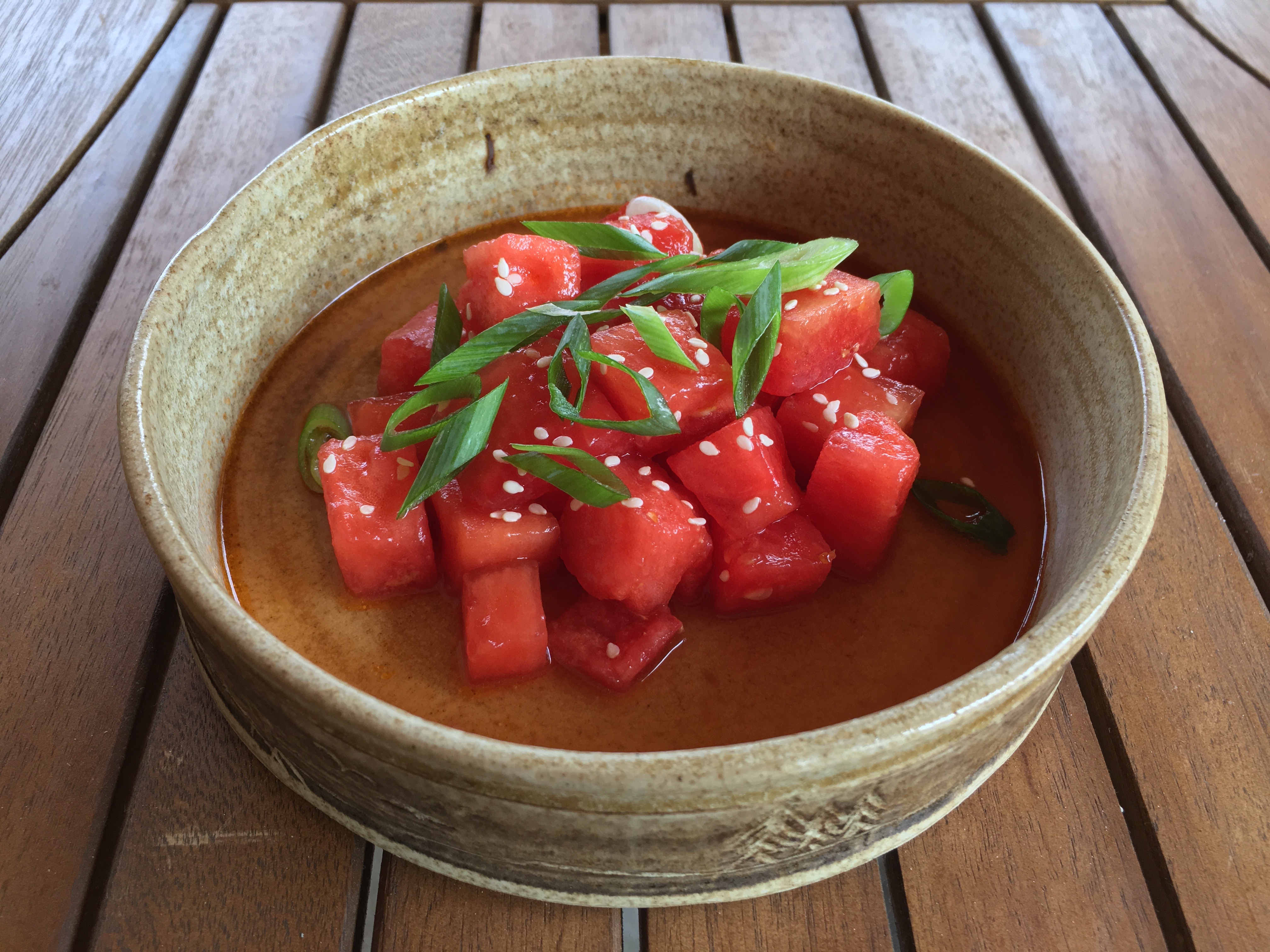
    Enter watermelon poke.


    If you eat at anyone of our amazing local sushi joints you will probably recognize the “poke” part as a dish commonly made with ahi tuna marinated in a sesame-soy dressing. (Personally, it’s one of my go to’s and I can easily crush an entire bowl to myself.) So when on a blistering hot day one of my favourite blog sites posted a recipe replicating this traditional Hawaiian dish using watermelon I was beyond excited. I immediately biked to the grocery store, bought a watermelon, got extremely sweaty in the process and ate the crap out of the final product… and so has everyone else I’ve fed it too.


    Here’s my take on 101 Cookbooks recipe: the link will take you to the actual recipe if you don’t like free balling like me. I also prefer to make it a day or few hours before consumption to allow the watermelon to marinade and soak up all the sauce.


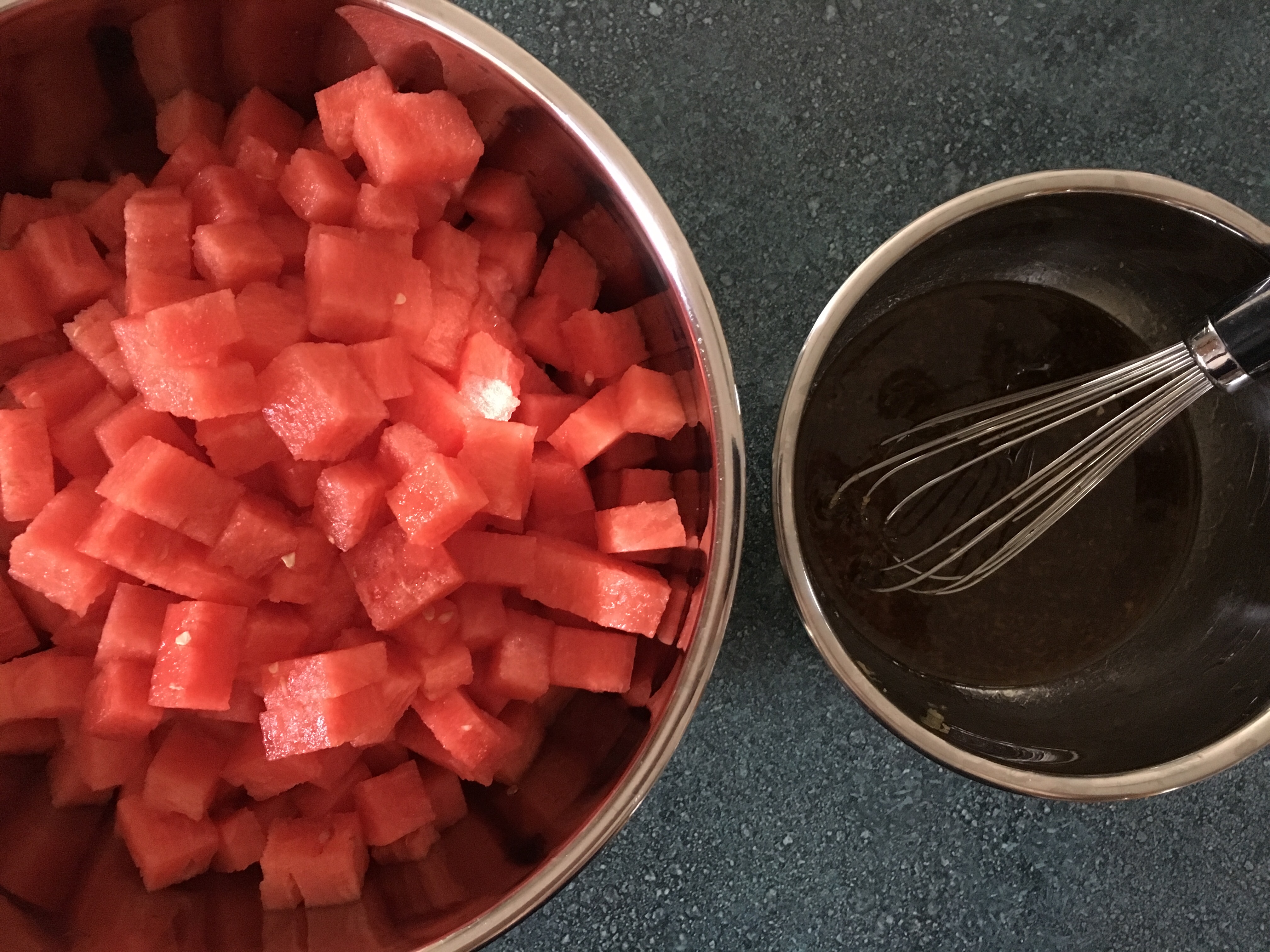
    Step Uno: Deal with your watermelon.


    • Slice a bunch into small cubes ½“ – 1” cubes, I like a good variety of sizes. Use a small to medium sized melon depending on how many folks your feeding.


    Step Two: Make your sauce.


    • Combine the zest & juice of one lemon (or lime whatever is on hand), some ponzu, rice wine vinegar and sriracha (to taste) then whisk in some sesame oil and avocado oil.


    Step 3: Combine everything together and let sit in the refrigerator until you’re ready to eat!

     IMG_5090

    Step Quatro: Dress it up.


    • Serve topped with green onions, sesame seeds and long ribbons of cucumber or daikon radish.

    IMG_5096

    Don’t forget to save some slices of watermelon for the kids and the hound!