Category: food

  • For the love of baking: Zoe Martin shares a cranberry orange scone recipe

    For the love of baking: Zoe Martin shares a cranberry orange scone recipe

    I am that person. The one in a restaurant who looks at the dessert menu first before deciding whether or not to order a starter. I am the person who would much rather have a chocolate bar over a packet of crisps, sorry chips.

    Yes, I have a sweet tooth, to which my waistline can attest, and I put it down to my genes. For example, my dad could polish off half a packet of digestive biscuits in one sitting, but he could also cycle for miles on end so that he worked them off again!

    Throughout my childhood, I loved to visit my Granny’s house as there would inevitably be the chance to lick the spoon clean, god forbid nowadays, of some kind of raw cake mixture. (BTW I survived just fine!) She would always have drop scones, griddle scones, cherry cake, tea cake or shortbread on hand in a tin in the larder. The first two of which were mouth-wateringly delicious, especially with her home-made Bramble Jelly, something that I have yet to attempt to make.

    So if you invite me to a potluck, or if I’m popping round to friends, I am likely going to be the one bringing something sweet – brownies, cupcakes, muffins, apple pies – you get my drift. (Good job I don’t have many gluten free friends!)

    When my husband was away recently I found myself at a loose end and what better thing to do than make something? For this particular occasion I decided that scones seemed like a good idea so set off in search of the perfect recipe – Pinterest is great tool for research! I happened upon this one for Cranberry Orange Scones which looked like they might go particularly well with a cup of tea while catching up with a friend. And they did! Soft, fluffy and buttery with the perfect hint of orange (I had even added a bit more than suggested in the recipe), chewy cranberries and, actually, not overly sweet.

    fullsizeoutput_7beNow that I have this recipe tested I should be able to take the basic recipe and create my own flavours. As they say, practise makes perfect!

    Ingredients for the scones:

    • 2 1/2 cups all-purpose flour
    • 2 tbsp sugar
    • 1 tbsp baking powder
    • 1/4 tsp salt
    • 1/2 tbsp grated orange zest (from 1/2 orange)
    • 1/2 cup (1 stick) cold butter, cut into chunks
    • 2 large eggs, lightly beaten
    • 1/2 cup heavy whipping cream + 1 tbsp to brush the top
    • 3/4 cup dried cranberries
    • 1 tbsp coarse/raw sugar to sprinkle the top, optional

    fullsizeoutput_7bc

    Ingredients for the glaze:

    • 2/3 cup powdered sugar
    • 1 Tbsp freshly squeezed orange juice

    How to make:

    Makes 12. Preheat oven to 400˚F and line a large baking sheet with parchment paper.

    1. In a large bowl, stir together the flour, sugar, baking powder, salt and grated orange zest. Add the butter pieces and use a pastry cutter (or 2 knives, or hands like I did) to cut the butter into the mixture until you have coarse pea-sized crumbs.
    2. Toss in the dried cranberries and stir gently to combine. Make a well in the centre and set aside.
    3. In a medium bowl, whisk together the eggs and 1/2 cup of heavy cream. Pour the egg mixture into the flour mixture and use a spatula to stir until just moistened.
    4. Turn the dough out onto a generously floured surface and pull it together into a round disk, about 3/4″ thick. (Note – it doesn’t have to be perfect, in fact it looks more home-made when uneven and rough looking!)
    5. Cut the disk into 12 equal wedges and pull apart slightly. Brush the tops of scones with 1 tbsp of heavy cream and sprinkle the top with raw sugar, if desired.
    6. Bake for 15-17 minutes until golden.
    7. Place the scones on a wire cooling rack and let cool for 15 minutes.
    8. Whisk together the powdered sugar and the freshly squeezed orange juice, adding more or less for desired thickness, and then drizzle over cranberry scones.
    9. Eat and enjoy!

    fullsizeoutput_7bd

  • Anna Helmer’s Farm Story continues

    Anna Helmer’s Farm Story continues

    Deep winter confessions of lavish plan-hatching and mild delusions, meet work in someone else’s root house. (Just don’t call it mindless.)

    A farming luxury: to lavishly plan the work of the coming season when there is no chance of starting any of it for at least two months. Cue careless disregard for work. Sloppy accounting of work requirements. Expansive imaginings absent anything but the faintest work alarm bells, easily ignored.

    The carrot crop proposal, for example. With a foot of snow on the ground and the clouds heavy with more, it seems totally reasonable to be planning to plant 2 acres of them this summer. The chefs are asking for more and the customers say they are the best at market. Ergo the ego demands, therefore the farmer plans, hence we can ignore the actual work involved. 2 acres. At least.

    I am not totally unaware of how things will unfold in real life. There will certainly be a privately raised eyebrow when enthusiastic planning first encounters carrot reality and the 5-gallon pails of seed start showing up sometime next month.  Second thoughts will come flooding in, assuming they haven’t already, when I find myself still seeding well into the evening come that day in June. Assuming (again) that I follow through with seeding the entire 2 acres, the subsequent weeding and irrigation requirements will cause heart palpitations in July and August, and the harvest will be frankly sobering, or perhaps borderline terrifying, because it will take for freakin’ ever to get them all out of the ground. And exactly one year from now, on a snowy day in mid-February, there will be tears because by now the unsold remaining crop will be sprouting hairs and getting soft in storage.

    For now, however, it’s a really clever and enterprising idea, worth pursuing and budgeting for. It’s even spawning tangential plans: a cooler expansion. My optimism knows no limits. These days are golden.

    To stay in farming shape, to maintain my farming bona fides now that markets are done for the season, and basically to keep it real, I am moonlighting as a forklift operator at a local seed potato farm, which is not as glamorous as it sounds.


    More precisely, I am stationed at the end of a seed potato sorting conveyor line and every 15 minutes I get to hop on an electric forklift and pick up a 2200lb sack of Red La Soda seed potatoes. I take it to the scale. If it’s too heavy, I remove potatoes; too light and I add them. Weight confirmed, I check that I remembered to slip the tag into the attached tag-holder and I move the sack to the collection area. That done, I return the forklift to the ready position and help my work partner manage the next bag. Twenty-two sacks make a full load on an 18-wheeler. It takes about a day to get it done, if nothing breaks down. It is unusual for nothing to break down.

    I like working on other people’s farms because I love considering a mechanical time-out to be an opportunity to get a walk in the sunshine. When they occur on my own farm, they can be expensive, disappointing and dreaded.

    It really goes on and on, doing the same thing over and over, with one hour for lunch. In these circumstances, a good co-worker makes a very positive difference. I have just the guy. His good humour rarely falters – the one time it did, he had an orange and was completely restored. The other thing I liked was that he never stopped trying to do a good job. There are a lot of challenges to managing 2200lb of potatoes every 15 minutes, none the least of which is staying focused, and we worked as hard on the first bag as we did on the 22nd.

    I am going to stop you right there before you call this mindless work. It is not. I think that phrase was floated by someone who could not handle the pressure of coming up with his/her own stuff to think about. (S)He panicked, quit, and branded it mindless.

    It is not mindless. Once you have sorted out the physical aspects of what you are doing, your mind is free to be engaged. How do you think this article got written? Still and all, it can be nice when there are breakdowns to liven up the day.

    So. Work. Thank goodness I have some to do or my theoretical planning for the summer might be absent a whiff of reality and I wouldn’t want that.

    Anna Helmer wrote a slim volume and put it on Amazon where it is a best seller in that category.

    Portrait by Maureen Douglas.


  • The Dirt on Food and it’s Power to Heal

    The Dirt on Food and it’s Power to Heal


    chooks

    Fuck calories.

    To which I would add, fuck “clean eating”, fuck salmonella poisoning, and fuck the commodities trading of food futures.

    Let’s bring eating back to earth.

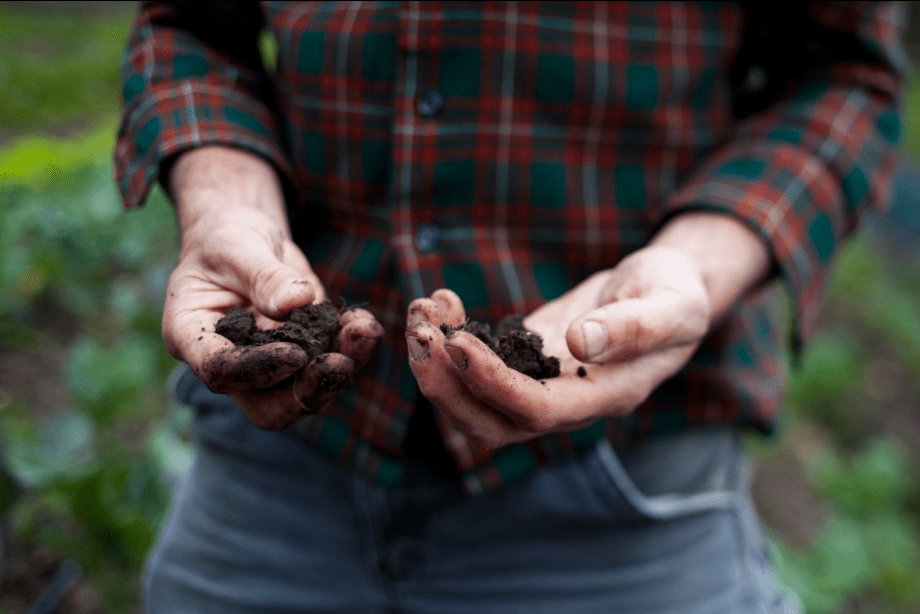
    By which I mean, let’s put the dirt back on your produce, the scruffiness into your hospitality, and relationships back into your consumption.

    Let’s put ecology back on the table.

    Literally, let’s place the dinner table into a web, instead of at the end of supply chain. Let it be part again of a network of living things, that flow through and from the table, in a million different forms – energy, sunlight, worm food, fresh produce, dead animals; as an anchor to conversation, to nourishment, to relationship, to healing.

    Reclaim the table, and the garden, the power that food has heal – not just our bodies, but our relationships, our sense of agency, and our role as stewards and restorers of the earth. And the opportunity food offers us, to grow – not just out there in the soil, but as humans.

    We’ve been consumers for long enough.

    This website is a place to map food stories, from the heart of the Pemberton Valley, in order to turn consumers on to the idea of being growers, creators, culture-shapers and restorers of the planet. Without guilt. Without pressure. With joyful messy experimentation, scrappy gardens, candour and dirt.

    Community Garden