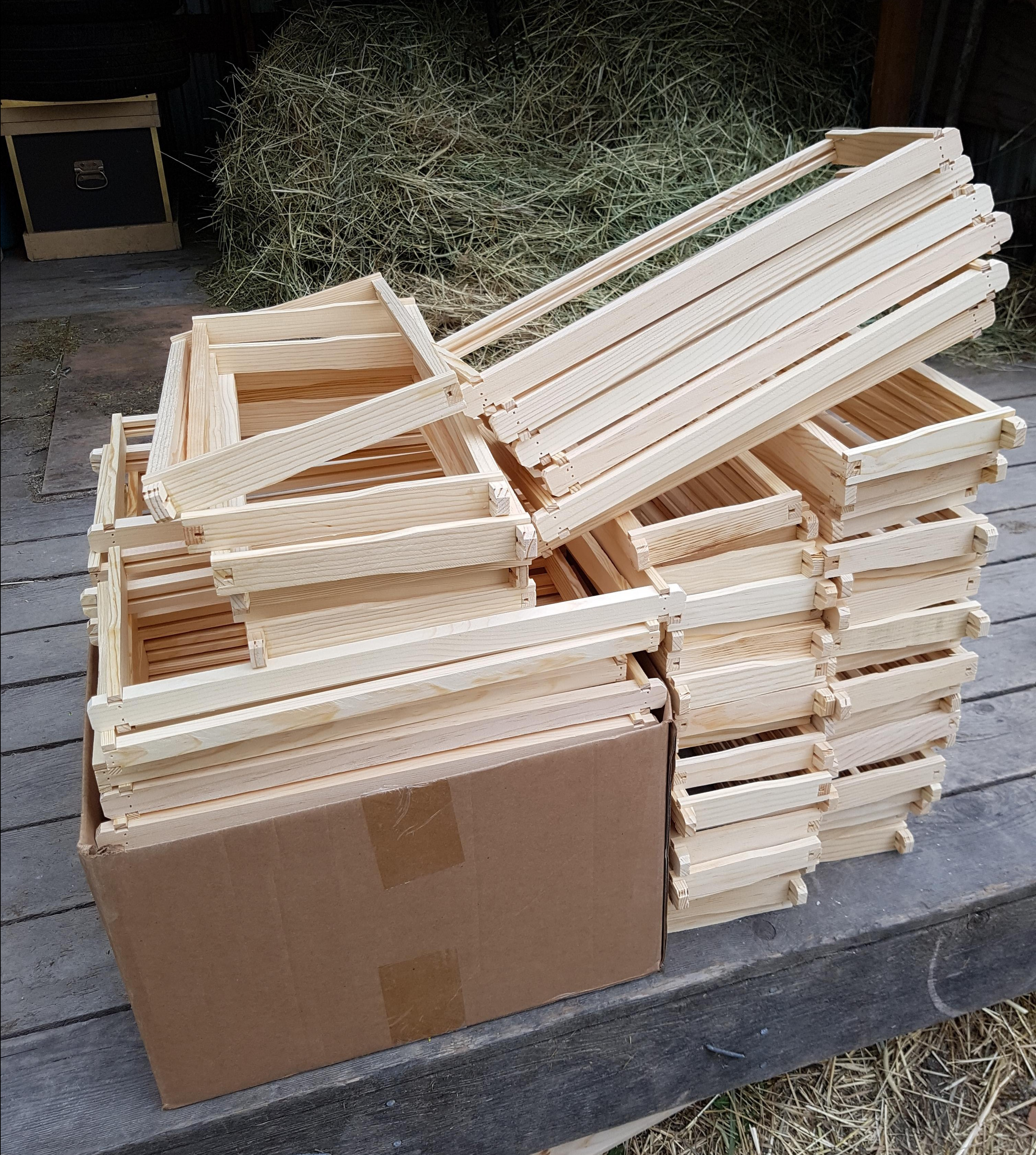
If you recall from my first post (A Bee Journey Vol 1), I mentioned that getting into beekeeping is not cheap. So how did a frugal girl reduce her start-up costs? She asked her carpenter boyfriend to help her make bee boxes instead of buying them! So, on a Saturday in April, we stopped at Home Depot for wood and spent 5 very productive hours in the workshop, cutting enough wood to make 4 bee hives. While he cut, I gave cutting directions and sanded the newly cut pieces. The total savings were $300, which was about the amount that I had to spend on frames (this is where the bees store their honey, eggs, pollen, etc.) I needed to buy 120 frames for only for 4 hives. Imagine how many you’d need for a 50-hive apiary (that’s around 1500 frames!).
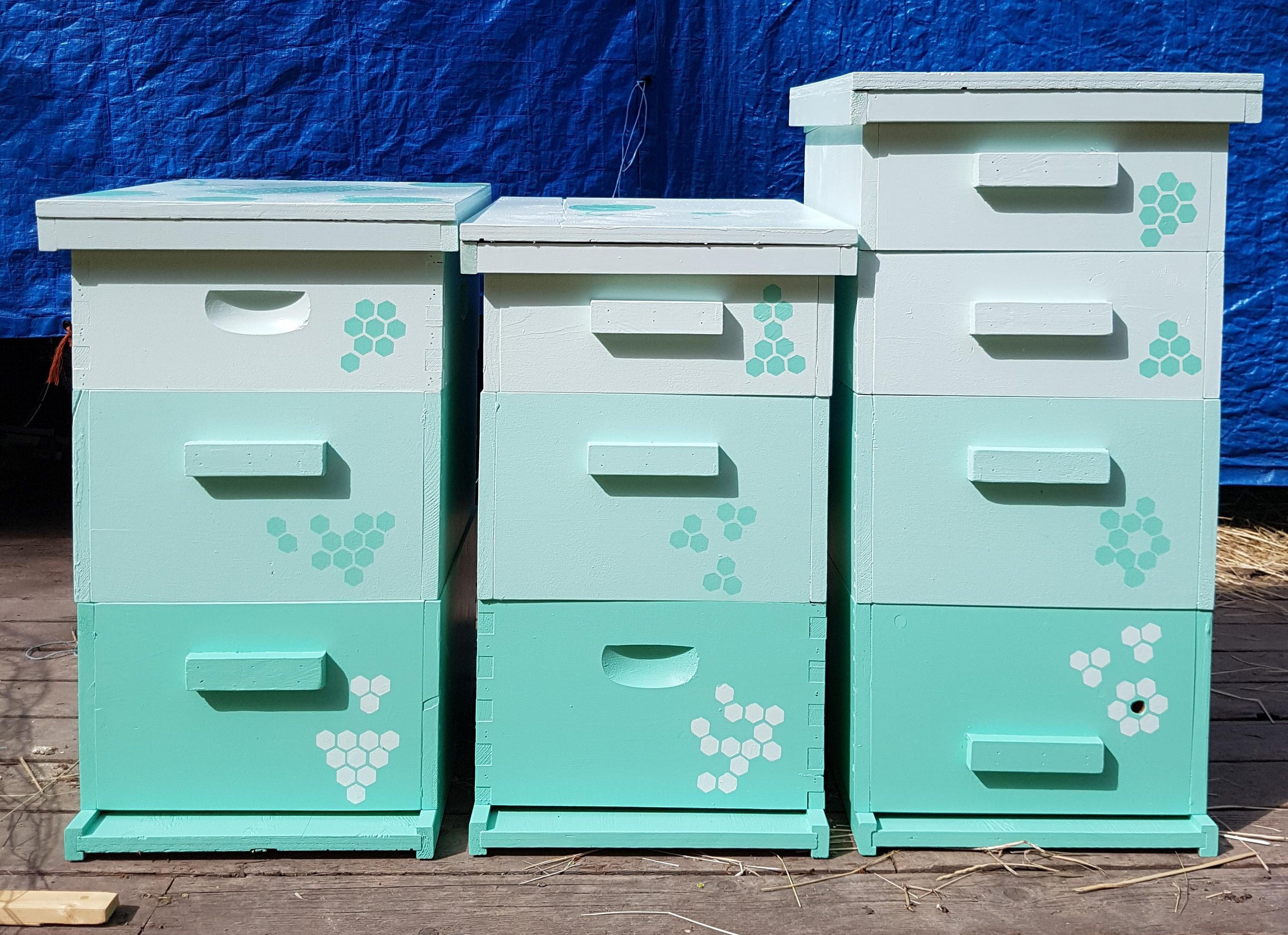
Then came the fun part, picking paint colours! My favorite colour is teal, so three shades of teal it was. Bees see blue, green and ultraviolet, which means they see colours differently than we do (humans see red, blue and green). So any colour in their spectrum works, but not red. Bees don’t like red! You don’t want too dark a paint as it will increase the internal hive temperature, which will make the bees have to work harder to keep the hive at 34C. This will cause them stress and we don’t want that. Many factors affect honeybee survival and it’s the beekeeper’s job to manage factors that can cause them stress.
So, now I had unassembled hive boxes and paint. We spent a good portion of a day gluing, nailing and screwing the boxes and frames together. Then another afternoon of painting. And I think they turned out pretty good. Now I just have to be patient and wait for the bees!
The kids started sanding on their own!Frames, frames and more frames!
The awkward question often arises when meeting people: “What do you do?”
While in any given day I could list at least a half a dozen of the different things I have accomplished, I’m always hesitant to call myself a farmer. How did this happen to me? I certainly didn’t foresee this while in University studying Landscape Architecture. Problem is I couldn’t sit still at a desk. I needed to be in the dirt with a shovel in my hand rather than a pencil.
I do come by it honestly having spent my entire adult life landscape gardening. It’s in my blood. I started mowing lawns and gardening at 15. My company was called “Shovels and Rakes.” Researching 400 years of homesteading history in Canada, almost all my ancestors’ occupations are listed as “cultivator”. I’m programmed to grow and nurture plants and be a steward of my little piece of this earth – my attempt at some form of authentic sustainability. It’s my happy place, my spirituality.
But farmer as occupation is just not glamorous (except at the Farmers Market). As a business model, it rates as one of the lowest paying, highest labour and riskiest endeavours. Unless you are part of the mega-agribusiness, (no thank you), the odds are against you and the competition is fierce. There is no salary, no pension, no paid holidays, no insurance, no benefits or any security whatsoever. You are at the mercy of nature’s elements.
So why? I know I could use my skills elsewhere, make good money set myself up. The reality is that I have to accept that this life chose me. I am set up! I breathe clean air , access the best water, have a family that is awesome and involved. We eat the freshest food, and spend our days just making a living in the purest sense. It is not a job, it’s a lifestyle. Oh, and by the way in the winter months, I’m a snowcat groomer. 27 years as a snow farmer as well.
The time has come for a column on farm fashion. All the chick farm columnists eventually get around to a “what to wear” piece, don’t they? This one is all about what happens when fashion is slave to function and haute couture ain’t in it.
When choosing an outfit for the day, I consider the potential for getting dirty, wet, cold, greasy, dusty, sun-burned, heat-stroked, or photographed for Elle magazine.
The cows have very exacting standards. In forage. In fashion, they’re a bit more chill. Unless, of course, you’re wearing leather.
Evaluation complete, I don yesterday’s work pants, (hopefully, but unlikely) complete with small crescent wrench and pen-knife in the pockets, clean work shirt, work boots (rubber or leather), and make obvious weather-related adjustments. A seasonal ball cap or toque, with occasional forays into wide brimmed sun hats, offers warmth, shade, and hair control. I don’t bother with make-up.
There are two items in my functional farm-chic wardrobe to which a more detailed examination is due. They score particularly low on fashion but shoot the lights out on functionality; a by no means unusual description for just about everything I wear out there. Let us then consider coveralls, and the mosquito bag net.
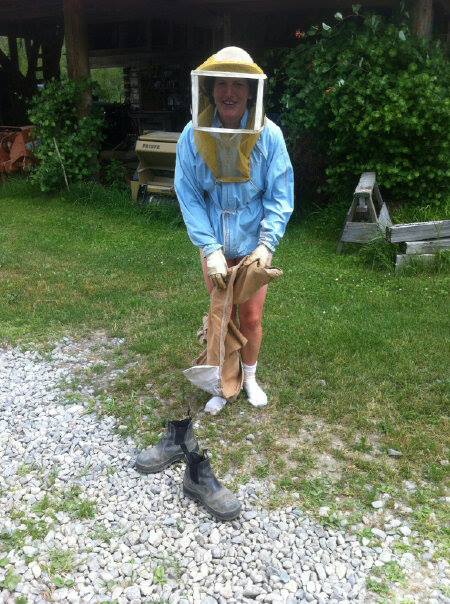
Anna Helmer gets into her bee-suit, and someone takes a photo and puts it on Facebook.
Until I went to welding class in the city, where we were required to wear coveralls, I had decided against that look for myself. I tried wearing them a few years ago and felt about as alluring as an old hockey bag. Never having been what you might call an instinctively feminine dresser, I felt wearing coveralls would sever completely any connection to my embattled femininity. I had to draw the line.
In welding school I was not given any choice in the matter and I initially bemoaned my baggy figure. Eventually however, I noticed that my good jeans (worn mistakenly to class) stayed clean, protected by the Big Blues (pet name for my coveralls) which got sooty and smoky. Perhaps, I began to think, there was yet wine to be squeezed from this stone.
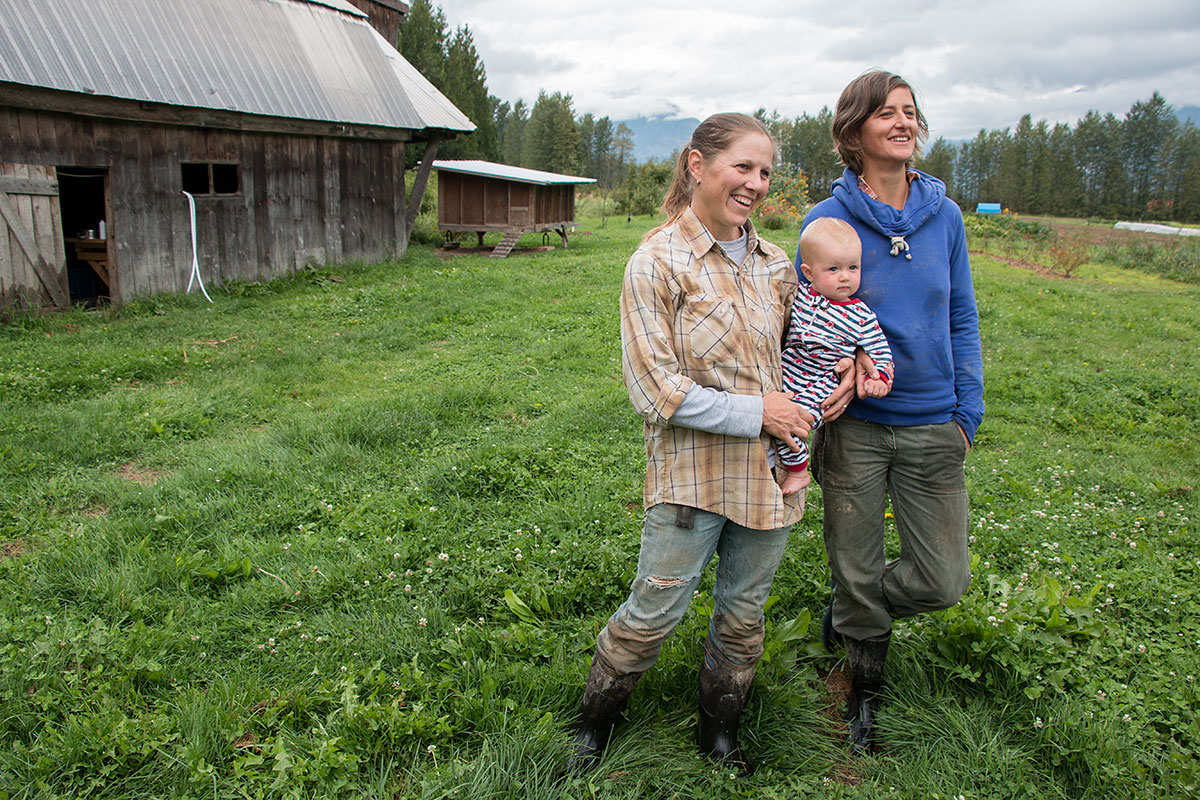
Sarah and Simone from Rootdown Organics demonstrate the key farm fashion accessories: soiled pants, rubber boots, cute baby who is actually in charge.
I have come to realize that the coveralls represent a new opportunity for me. I can stay a little cleaner on the farm, and not arrive home resembling a diesel spill in a dust bowl. Not only can I look presentable at the end of the day, but if Elle magazine does happen to show up for a photo shoot, I can be assured of a clean outfit underneath. They will still have to bring their own make-up person.
Alyssa and David from Plenty Wild Farms must have had enough time to shower before their photo shoot. Do farmers really ever look this clean when out in the fields?
Turning now to the mosquito bag net; my choice for most essential farm fashion accessory.
In my net I am bug-free; I blithely disregard the scornful sniggering of other slaves to fashion on the farm, slathered as they are in dodgy chemicals, and/or in a high state of denial over the level of torment they endure as bag-less labourers in mosquito country. There is no bigger slap in the face to high fashion than dropping a bag over your head, but neither can I countenance flies in my eyes.
Bruce Miller models the ultimate in Pemberton farm fashion, the Slow Food Cycle Sunday t-shirt.
To conclude, it would be nice to point to an item in my farm wardrobe that is more fashion than function, but I am at a loss. I suppose my pink John Deere ball cap tilts the balance slightly in favour of glam, but looses ground as its grubbiness increases with every passing day of summer. In an uncharacteristic eruption of reckless consumerism, I have purchased a brand new one for this summer.
Anna Helmer believes farmers are under-represented on the fashion run-way but sort of sympathizes.
Not being able to stage a photo shoot of Anna’s farm fashion moments during planting season, we’ve poached these illustrative photos of Pemberton’s organic farmers in their sartorial best, from BeyondYourEye.com photography, via the BC Organic Farmers.
Several years ago my Aunt had honey bees. My sister Lia, @pembeehives, was cuckoo about those bees. I thought they were pretty cool until I started walking up to the hive and had a massive panic attack. I was certain they could feel my fear and that the whole hive would ascend on me and sting me to death. Death by bees, no thanks!! Since then I have had ZERO interest in raising bees. My sister, on the other hand, has only grown more fond, more bee crazy.
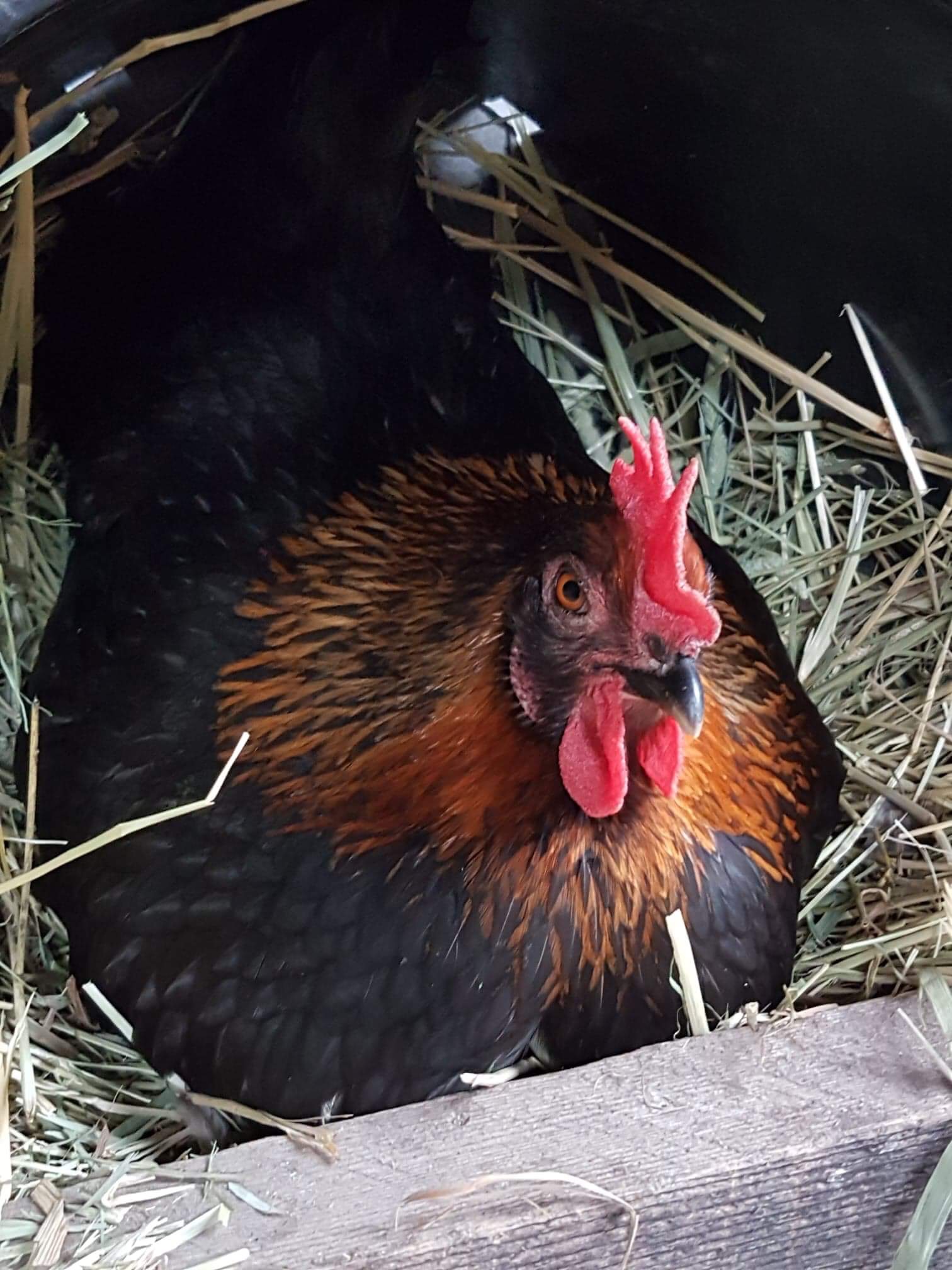
Last fall, my kids and I moved back into my childhood home. A little house on 2 acres. A small green patch of freedom to plant, grow, raise, and love. I brought my chickens, added a few more to the flock, and then a few more and maybe a few more after that! I also got 2 more horses so that my boy Banjo wouldn’t be lonely.
Horses and chickens, dogs, cats, rats and kids. I was set, and I am busy!! Then I had a thought. My sister loves bees, maybe she would like to get some bees and they could have a little spot here and she could be the crazy bee lady and I will be the crazy chicken lady and everything would be fantastic!
Bees? Why not!!
I forgot about the fact that I was terrified of a colony of bees coming after me while I weeded my garden or fed my horses, stinging me while I was just minding my own business. Lia, @pembeehives, was all in! She was already dreaming of hives, long before I offered. She and Alex built hives, they brought them up and she painted them with my kids.
The 2 nucs (boxes of bees) were ordered and the site for the hives planned, changed, replanned, changed and planned again. Still, here I am scared of bees. Terrified.
On Saturday, Lia and I went up to Delores’ for a bee keeping workshop. A few hours of listening to Delores talk about bees, watching her take the hives apart, standing closer to a swirl of bees than I ever thought I would, and I discovered that I am no longer afraid of bees! They are fascinating!
When I first put our names down for this bee-keepers’ workshop, I was going into it as a non-interested party. I was going for my sister, so that when she wasn’t around I would have a bit of knowledge and if anything needed to be done while she was in Vancouver I could help the hive out.
In the end, I have had the chance to face my fears and now I can go into this as a partner, not just a watcher. I can go into this beekeeping adventure with less fear and more enthusiasm, though I think I will let Lia hold the reins, and stick, for the most part, to being a crazy chicken lady.
It is a busy time in the life of a vegetable farmer, especially with the hot sunny weather we have been having! While the motto of April may have been “hurry up and wait”, May is definitely the month of “don’t stop moving” here at Four Beat Farm.
Most hours of the day (OK and the evening too sometimes) are devoted to preparing the fields for planting, transplanting and seeding the earlier vegetables, planning for markets and harvest season, keeping an eye on the early salad plantings to ensure that the weeds do not take hold, and putting the final tweaks onto those “spring projects” that somehow never did quite get finished. It is still spring in the calendar, though the temperatures might indicate otherwise. There is little time for reflection or lounging around, yet there is a sense of fun and excitement in the air as the days grow longer and momentum starts to build.
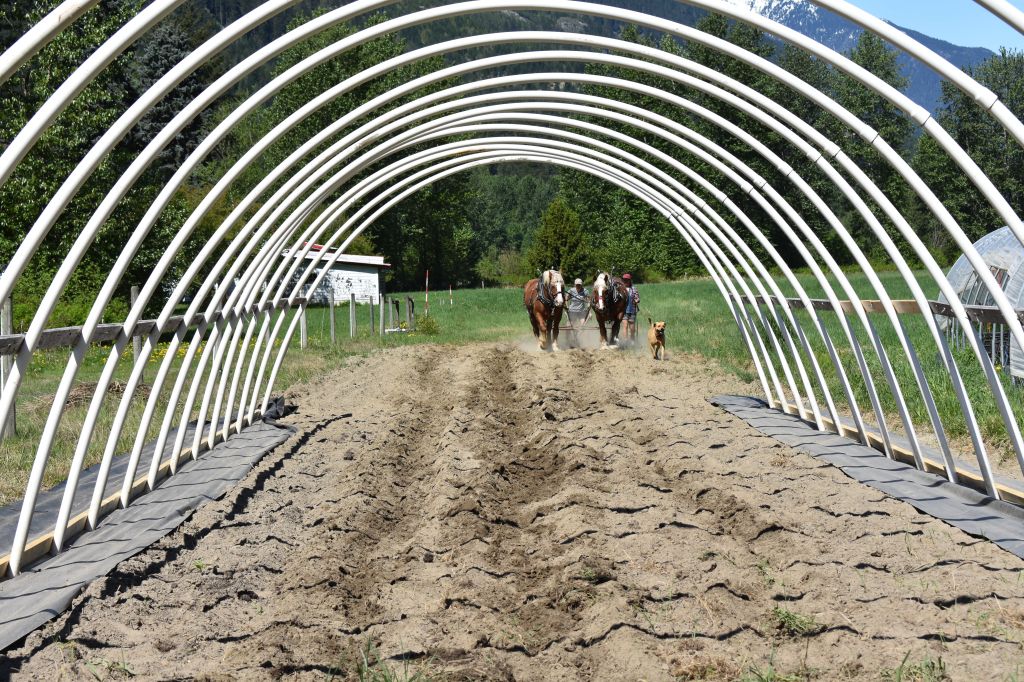
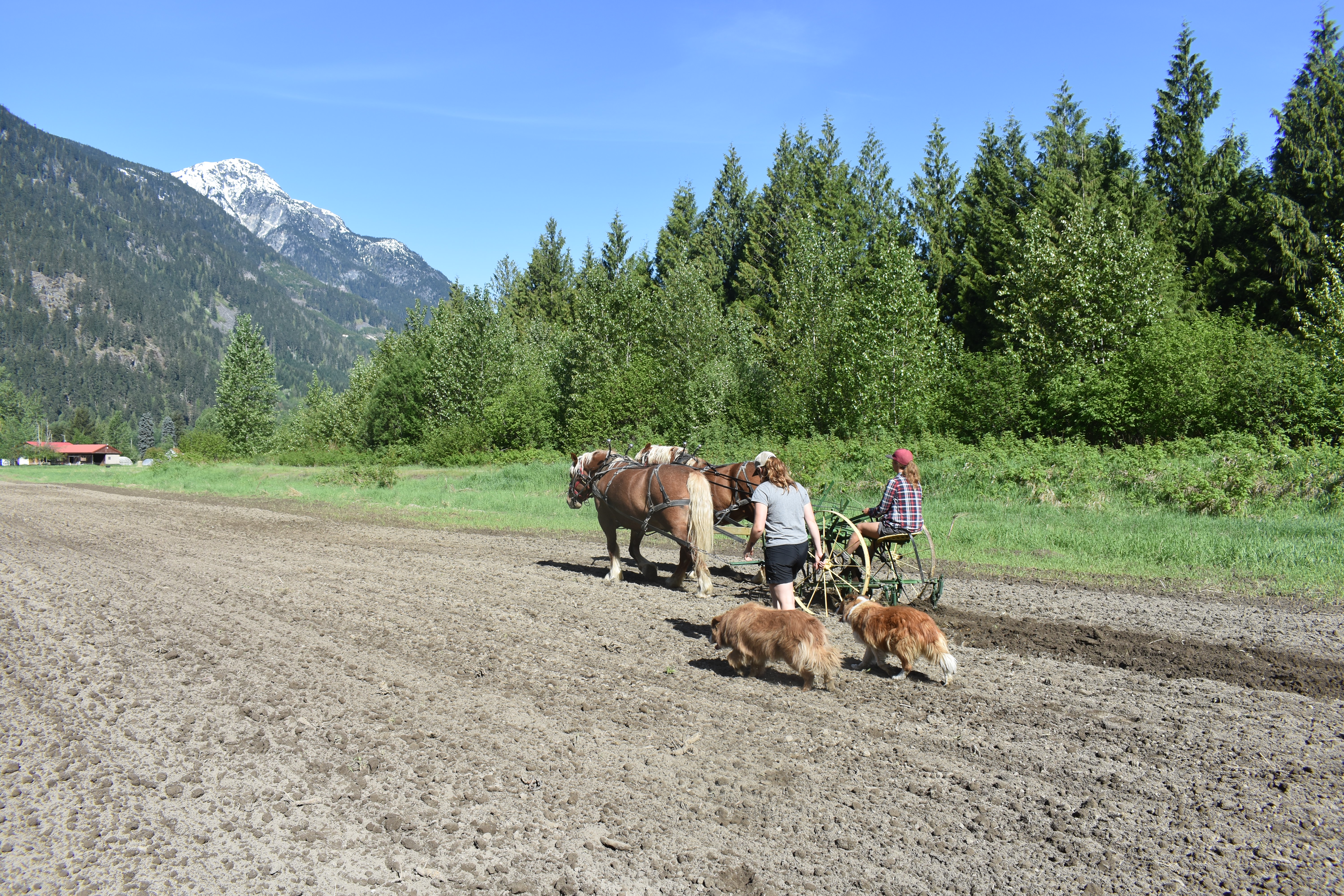
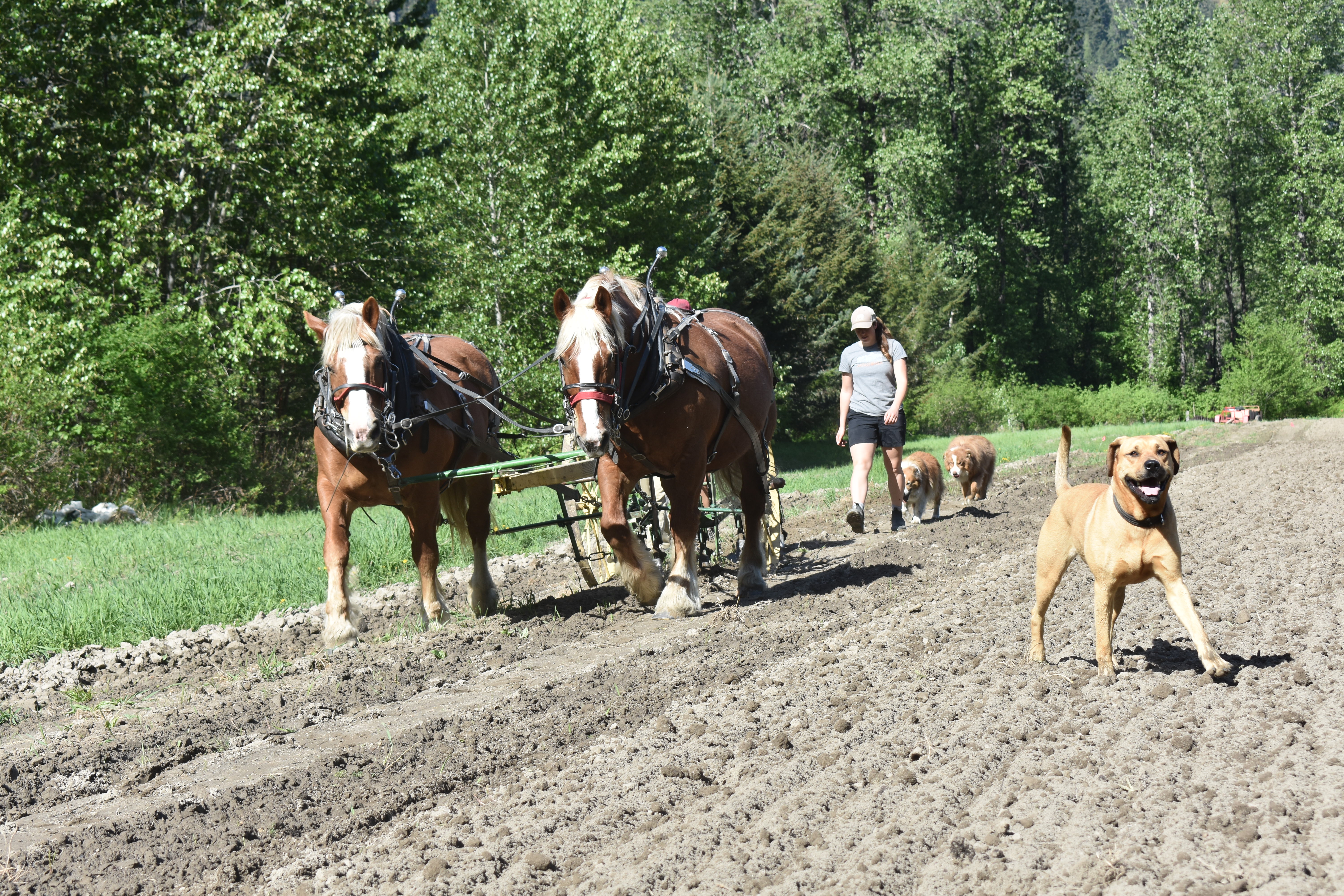
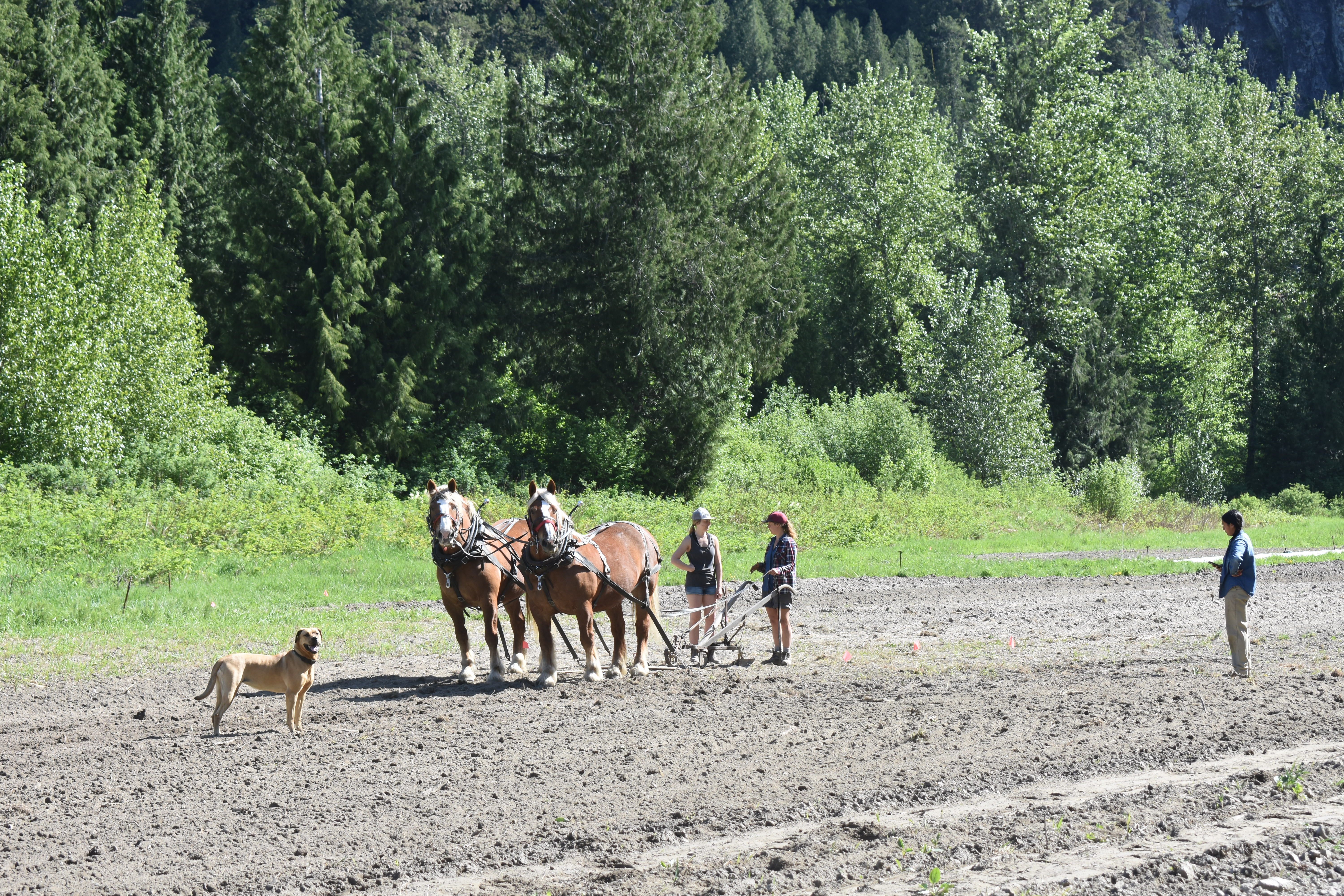
Even though there does not seem to be much time to go for a hike at the moment, there is fun to be had in the field, such as on this Saturday morning with some canine, equine, and human friends testing out a few new (to us) ways of cultivating in the vegetable field.
Hello everyone, my name is Anni Kolbe and I work for the Sea to Sky Community Services (SSCS) in Pemberton. My job title for SSCS is a Settlement and Outreach worker for the Pemberton Multicultural Network. So what that means is I help immigrants settle into life in Canada and meet other people.
In order for people to meet I plan and implement life skill workshops. Throughout the years I have learned that people in Pemberton will attend your workshops if it relates to food and gardening.
I wanted to share a workshop I did a few weeks ago at the Pemberton Public Library on garden journals and companion planting.
A garden journal is a great way to keep track of important information about your garden such as the weather, pests, what you planted and when you planted. Those are just a few things you can keep track of.
Take a peek through the slide show to get more ideas of how to keep a garden journal.
I’m writing this while at a three day craft market in Vancouver selling my handcrafted shrubs (Thirsty Whale Elixirs – small batch cocktail mixers made with organic apple cider vinegar, fruit, and cane sugar) and sending emails for my full time job. You might say, “I’m busy as a bee!” – so why not add another hobby on top of sewing, crafting, making sourdough and helping with our family’s brewery (Pemberton Valley BeerWorks)?!
I have always wanted to have bees. Growing up, my Grandfather had bees (Don Miller of Miller Meadow Farms – now Across the Creek Organics). I have memories of his hives out by the rhubarb and grape vines – little white boxes of magic. Memories of full gallon jars of liquid gold in Grandma’s pantry. Memories of covering her homemade biscuits in sugary love. He eventually had to stop beekeeping as he developed a bee sting allergy (And this being Pemberton in the ‘80s with no EpiPens available and only a small clinic a 15 minute drive away, I totally understand why he stopped.).
My first time “getting my hands dirty” or sticky in a hive was about 8 years ago on the farm when my Aunt got her first hive. I had no idea what I was doing, but no one got stung and we harvested 11 liters of amazing honey. Unfortunately, the hive didn’t survive the winter and now I have inherited some of her equipment.
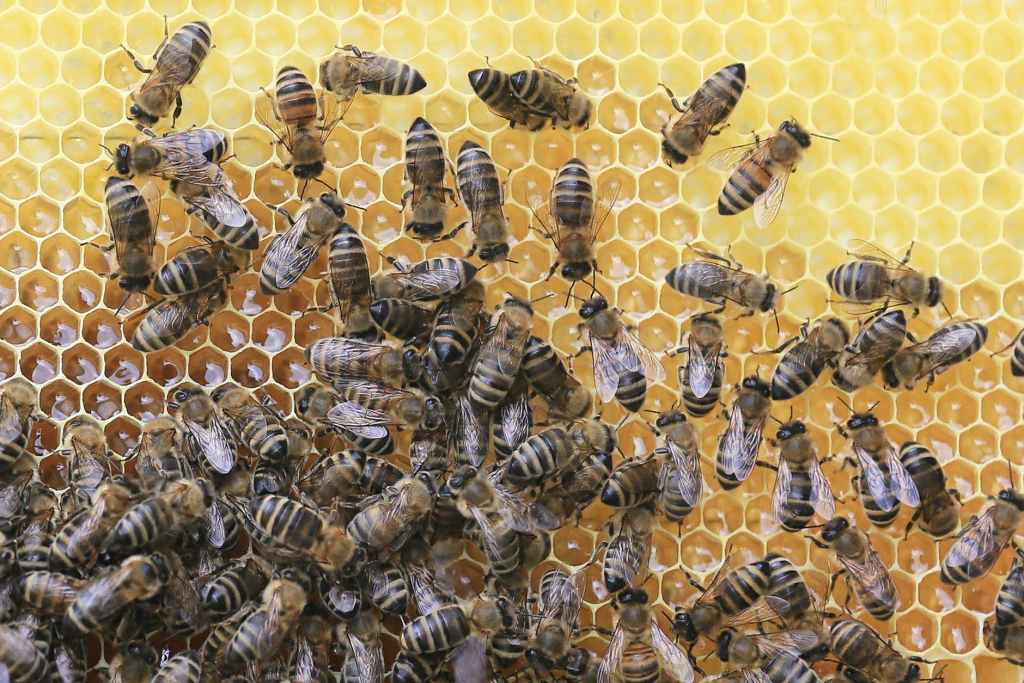
Beekeeping is not a cheap hobby, but if you are lucky and not too greedy you can make some money selling honey to family and friends. Why not be greedy? Well, bees collect flower nectar and convert it into honey, (honey is their carbohydrate and pollen their protein), so they need to store enough of both to last through the winter.
In preparation for receiving my first two bee nucs (or nucleus, a small bee colony made from larger ones) at the end of May, I have taken a three day beekeeping course, read four books, talked to local bee keepers, watched countless educational videos online, and I still don’t know anything!
The real learning will come once I get my hands sticky again. And then even after a few years, I still probably won’t know enough.
All I can say is that I’m fascinated by Apis Melifera (the Western/European Honey Bee) and I can’t wait to learn more and share my journey with anyone who wants to read about it!
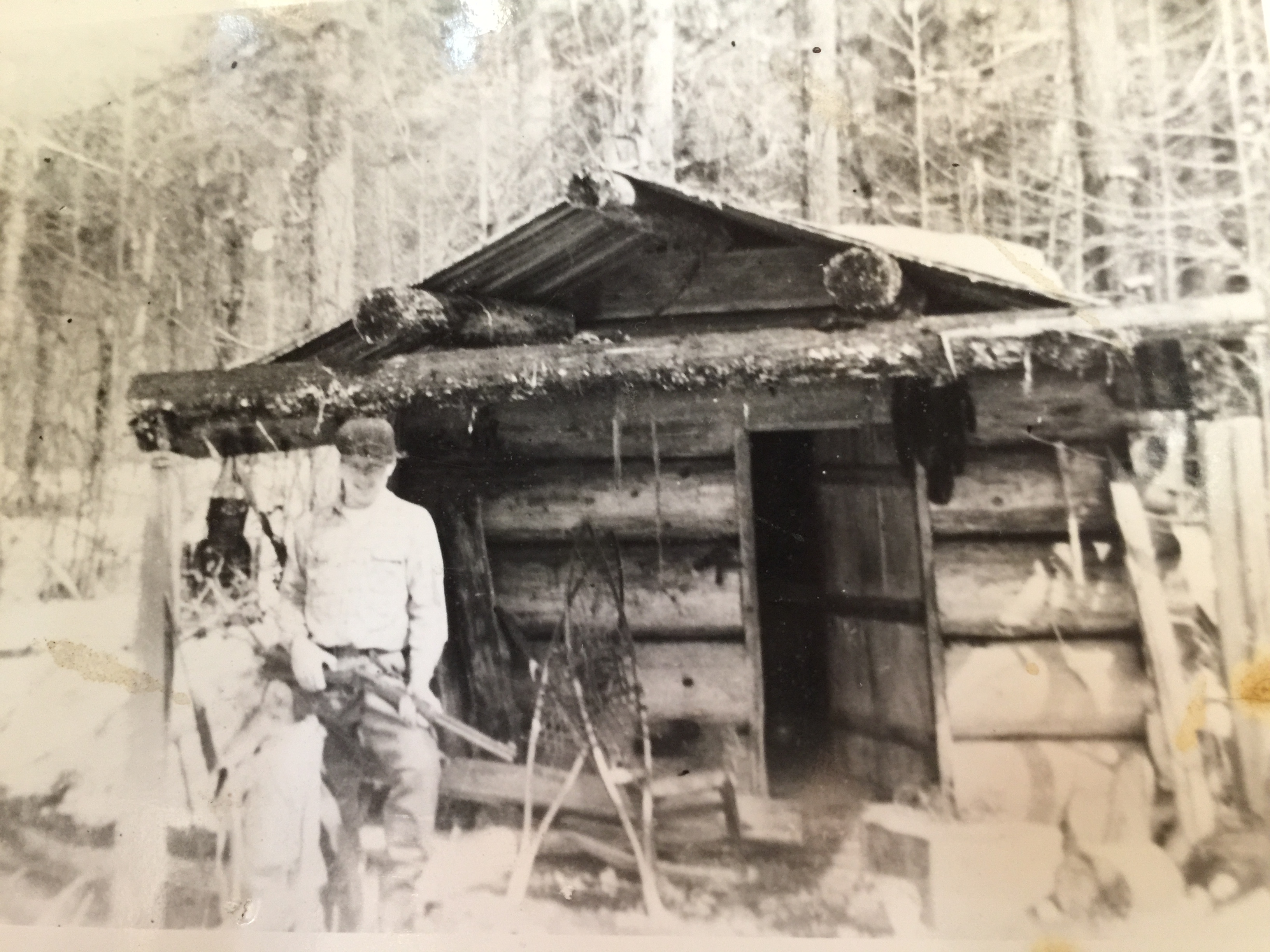
Boy, oh boy, Dad was mad that night. He arrived home in the dark as per his MO. He was back early from his trip because a Grizzly had damaged his trapper’s cabin.
He spenta week down in the basement building a snare and talked about what the hide would fetch at the fur auction. It seems it was the insult as much as the damagedone and it seemed personal. The Grizzly had come in through the roof, destroyed everything, and, without consideration ofthe time it would take to fix the place, left through the window.
Dad took some consolation in the one can of beans that the Grizzly missed in his rage/romp. We have an old cooking poton the wall of the shop with teeth holes in it that dad brought home to show us the power of his new pal on the trapline.
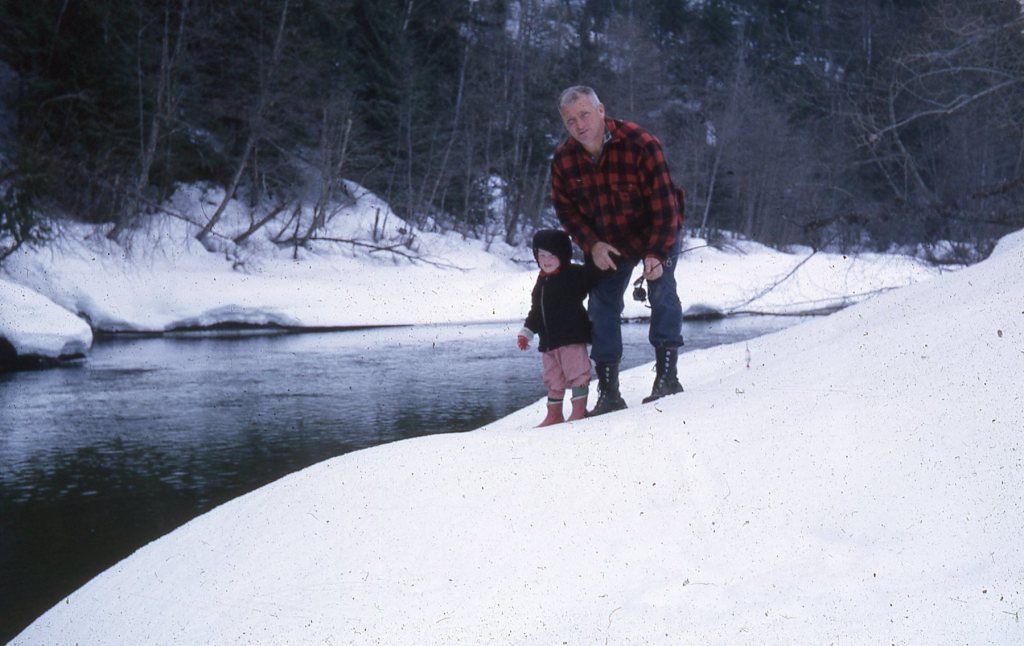
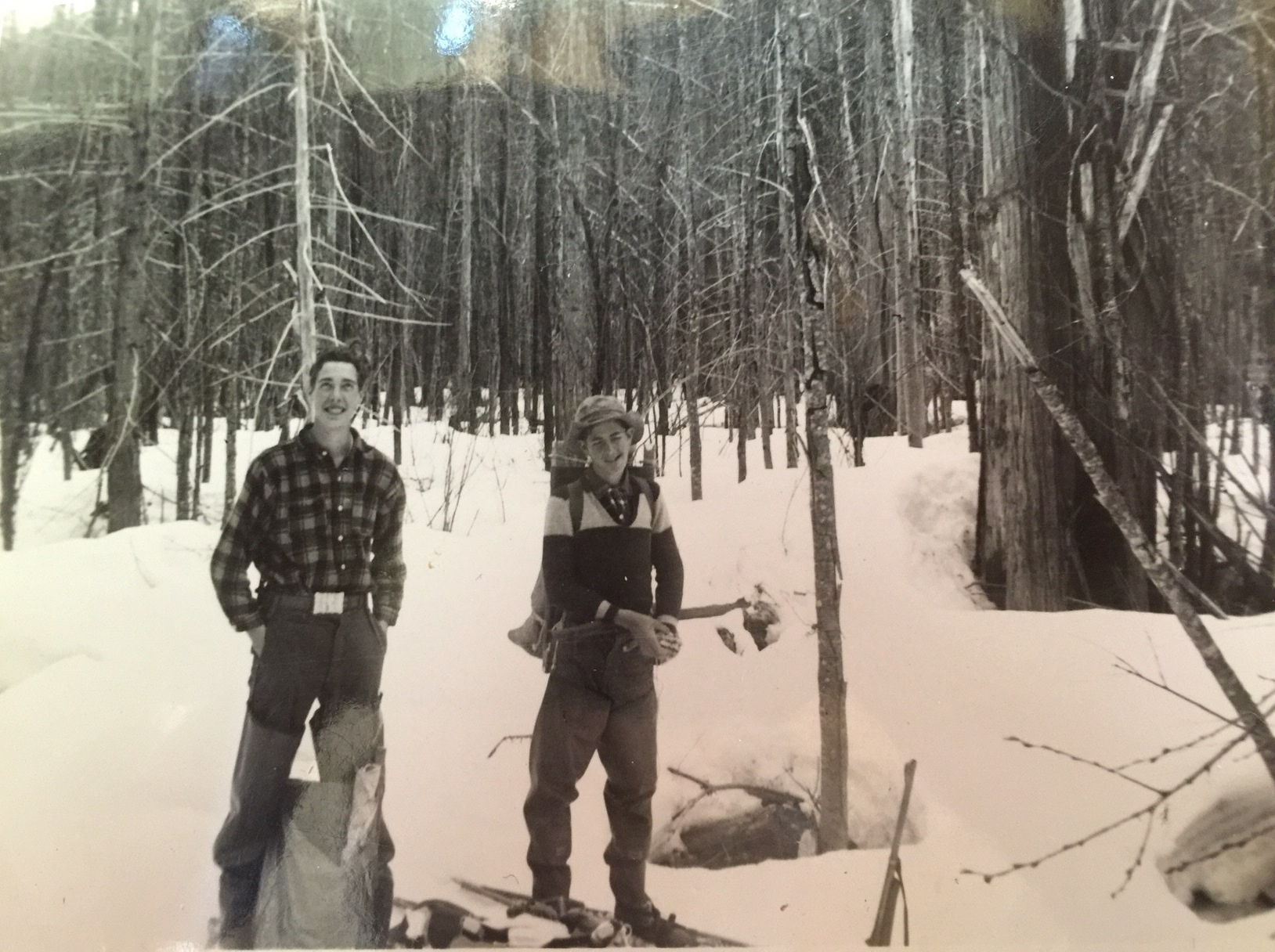
My dad had a trapline from North Creek to Meager Creek. I think he started it around 1949, when he came back from the war. Trapping was a pretty common way to make money backin those days in Pemberton, and farming was real tough. He would walk in on snowshoes for 17 miles, spend about a month trapping and skinning, then walk out with the pelts. Once the pelts were safe at home, he would head out and do it again. Usually one of his nephews would meet him on the trail and help pack out. One nephew was eager to show his strength but after dad split the load in half, couldn’t carry the weight. My dad was pretty strong.
Most of my trips to Dad’s Cabin were as a teenager on spring fishing trips.We would walk the crust and fish for Dollies. One time I took two of my nephews fishing up there and had to crawl a mile out because the snow had weakened the crust and I crashed through every step. They were light enough to scoot along on top and found it pretty amusing.
He used to piggy-back me on all the slippery river crossings. When I was about sixteen or so, I shakily carried him across, and was pretty proud of myself. We weren’t real huggers, ourfamily, so it was wrestling and river crossings, and it was wonderful.
The summer I turned 11, my family packed our camper and set off on a massive adventure that lasted over a month. The leg of our trip that resonated the most with me was the coast of BC. There was something about the mountains and ocean that spoke to me – it made me feel free. I vowed right then that I would return to live in this place.
Life on the west coast became a reality when my art skills got me into the University of Victoria. However, I quickly discovered I was not like my classmates and had zero desire to become any entity that encompassed being an artist. I lasted 2 years before I bought a car, learned to drive standard in a mall parking lot and set forth for Whistler because it seemed like a cool place to go and get lost.
Fast forward to my years in landscape construction and maintenance where I learned design and plant knowledge and in time I was let loose to create spaces for clients. These playful experiences naturally paired well with my understanding colour and sense of flow. Eventually I realized that I was still creating; it was just a different type of medium.
Now I spend countless hours every year drafting my garden plans for the following season. Notes on notes on notes as to what was great, what was horrible, where to plant what, what not to plant, what I want more of. Lots of mindless staring out the window at my plot fantasizing its potential; then scavenging bits of wood and rocks to add into the landscape. And, like clockwork when it comes to planting time, the plans that have come to fruition are loosely used and I stuff seeds and starters in the beds as I see fit.
Maybe it’s the old artist in me coming out to play and wanting to just be free to experiment with what feels good at the last minute. This is an integral part of the learning process in gardening and I highly encourage it. Sure we can read books and learn what we should or shouldn’t do but at the end of the day if we are satisfied with the results then, who gives a shit.
Feel it out. Plant what makes sense. Plant what you love. Look at your space and see it as a blank canvas in which to create your sanctuary. It can be whatever you want it to be. Let it evolve. You can always return to your canvas and paint over something you don’t love.
Eighteen year later since arriving home in the Sea to Sky I have finally accepted that I’m a gardener and a landscaper: an artist after all.
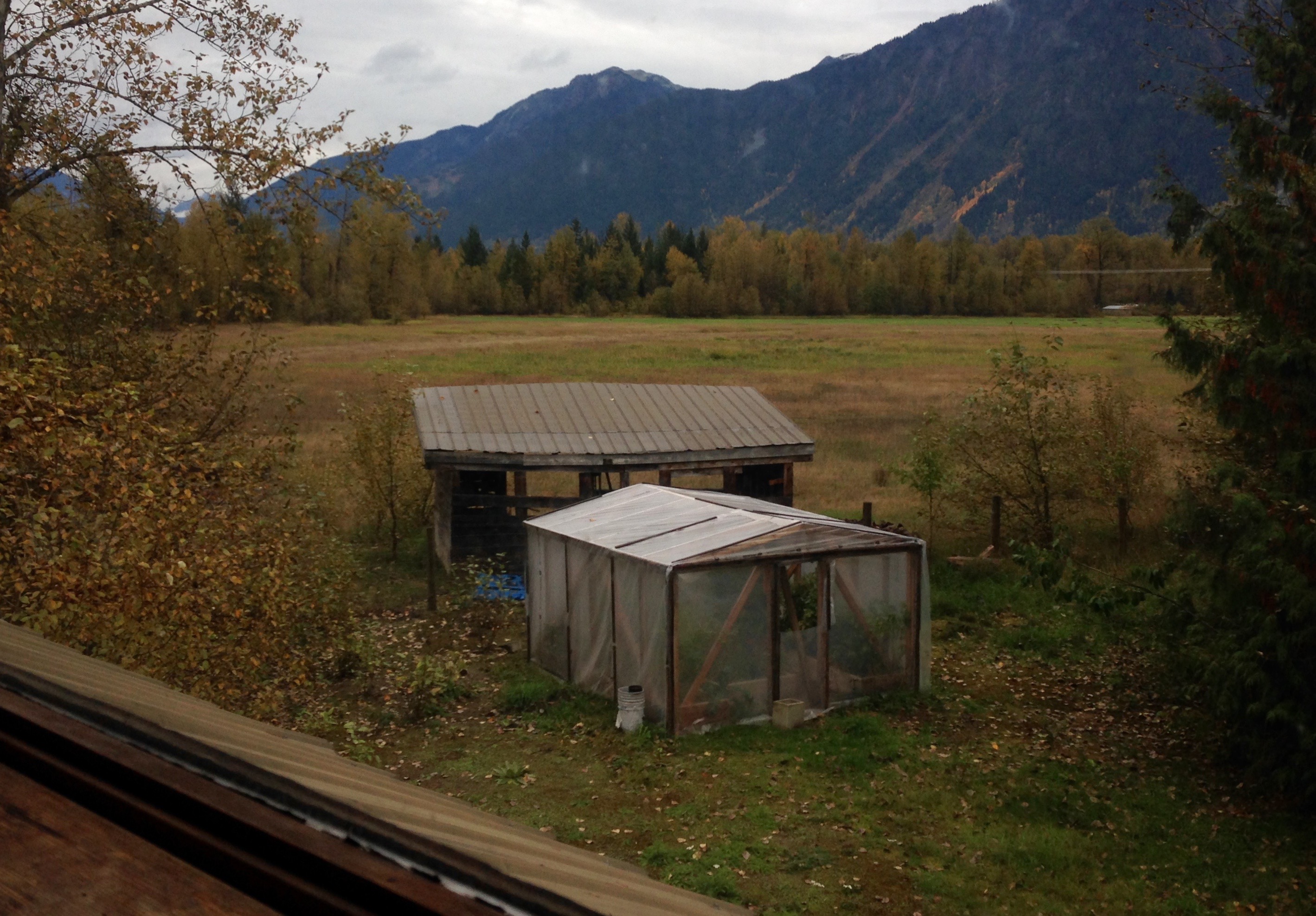
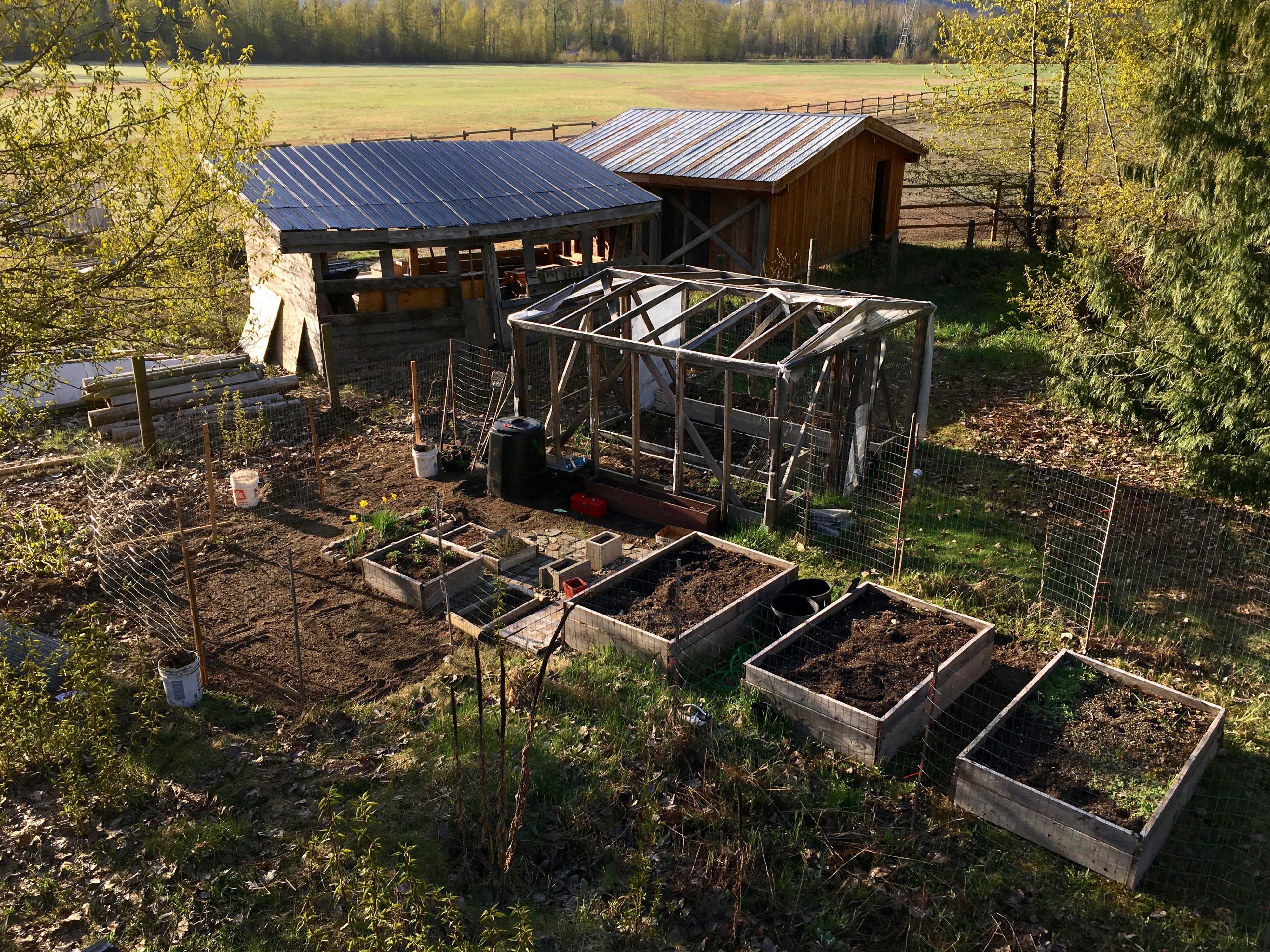
Photo notes – The main photo (above) was taken out the window when I moved into our current residence from where I sit every day drinking coffee. The picture below was taken this morning and I can guarantee in a month it will look even different. Stay tuned!
Calving time on the farm is almost over. It starts in late January and finishes up around now. We have a small herd and have six new additions to the group. All born healthy and with no problems.
I was lucky to be there when this little one was born on a beautiful sunny day. I ran to get my camera and recorded her first steps.
Mama is licking her clean to dry her off. This is an important first step for Mama as it helps to imprint her calf to her. Within a few hours this little one will be trying to run and play with the other babes.















 Traced Elements